

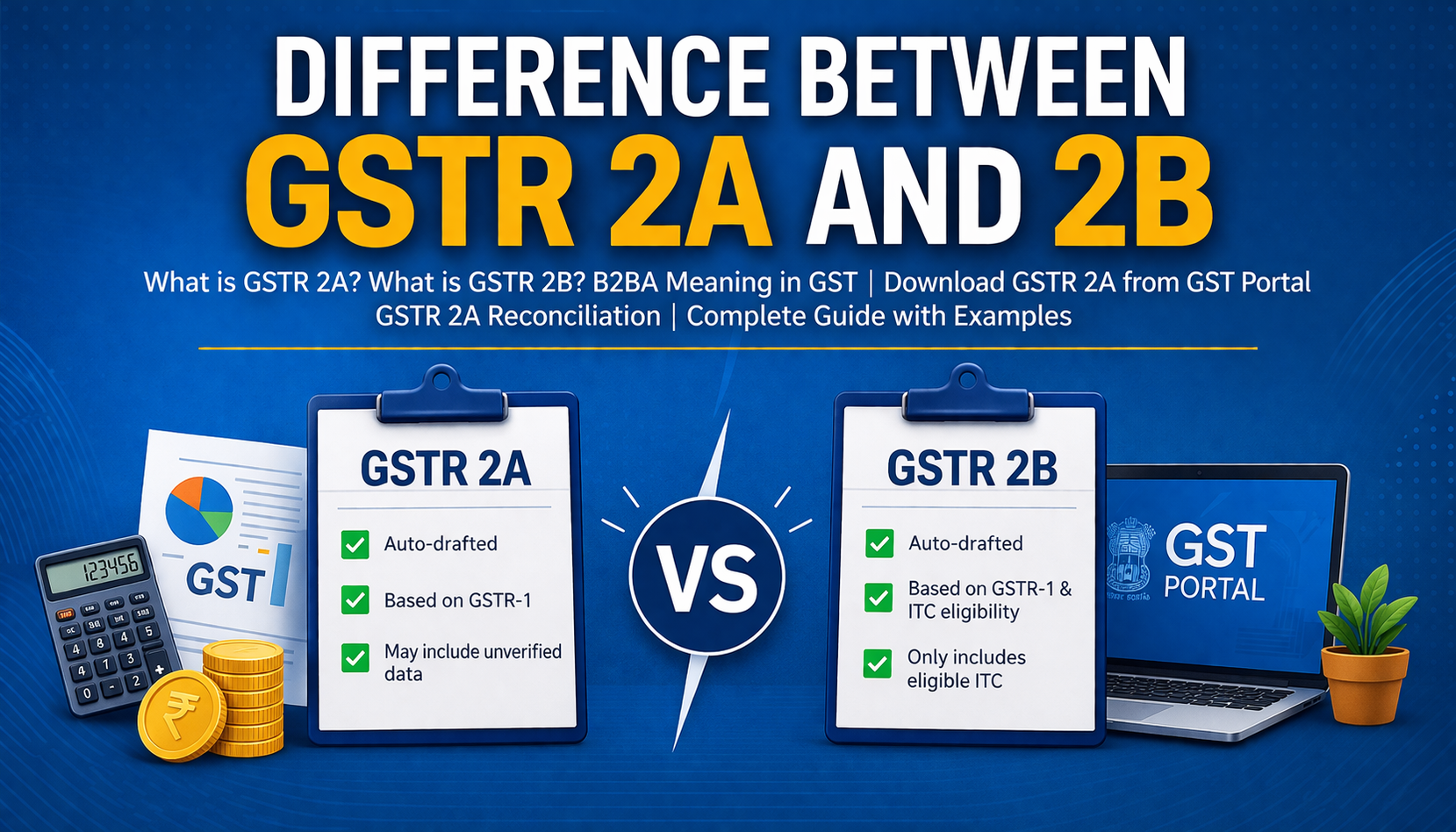
Difference Between GSTR 2A and 2B: Complete 2026 Guide for Businesses
GST compliance is one of the most critical aspects of running a business in India. For businesses to accurately claim Input Tax Credit (ITC), understanding GSTR 2A, GSTR 2B, and related B2B invoices is essential. This guide explains the difference between GSTR 2A and 2B, how they are used, and tips for accurate reconciliation.
What is GSTR 2A?
GSTR 2A is an auto-drafted statement of ITC, generated dynamically based on the invoices uploaded by your suppliers. It provides businesses with a detailed view of tax credits available from their suppliers for a particular period.
Key Points:
- Dynamic Statement: Updates in real-time whenever suppliers file their GSTR-1.
- Purpose: Helps businesses track and claim ITC accurately.
- GSTR 2A Download: You can easily download it from the GST portal for review.
How to Download GSTR 2A from GST Portal:
- Log in to the GST portal.
- Navigate to Returns > GSTR 2A.
- Select the financial period.
- Click Download to save the Excel or PDF file.
This statement allows businesses to reconcile the ITC claims with their purchase invoices and avoid discrepancies.
What is GSTR 2B?
GSTR 2B is a static ITC statement designed to provide a fixed snapshot of the eligible input tax credit for a given tax period. Unlike 2A, which changes dynamically, 2B provides a more reliable and consistent view for claiming ITC.
Key Features of GSTR 2B:
- Static Snapshot: Updated monthly and does not change after the month ends.
- Purpose: Simplifies ITC reconciliation by providing a stable reference point.
- Benefit: Reduces errors and disputes during GST audits.
Key Difference Between GSTR 2A and 2B
| Feature | GSTR 2A | GSTR 2B |
|---|---|---|
| Nature | Dynamic | Static |
| Update Frequency | Real-time | Monthly snapshot |
| Use | Track supplier uploads | Reconcile ITC claims |
| Reliability | May vary | More reliable for ITC claims |
| Downloadable | Yes | Yes |
Understanding B2BA in GST
B2BA meaning in GST refers to B2B consolidated invoices. It aggregates all invoices issued by a supplier to a recipient for a particular month.
What is B2BA in GST?
- Simplifies reporting for businesses with multiple transactions.
- Helps in GSTR 2A reconciliation, as B2BA details all B2B invoices in one sheet.
- Ensures accuracy when cross-checking ITC claims.
GSTR 2A Reconciliation: Why It Matters
GSTR 2A reconciliation is the process of matching ITC claimed in your books with the ITC available in GSTR 2A.
Steps for Reconciliation:
- Compare GSTR 2A entries with your purchase invoices.
- Identify discrepancies or missing invoices.
- Verify B2BA details if multiple invoices are consolidated.
- Make necessary adjustments before filing GSTR 3B.
Regular reconciliation reduces the risk of ITC denial during audits and ensures compliance.
How to Download GSTR 2A and 2B
- GSTR 2A Download: From GST portal under Returns > GSTR 2A.
- GSTR 2B Download: From GST portal under Returns > GSTR 2B, select the required month.
Having both statements handy helps businesses compare and reconcile ITC accurately.
FAQs
- Where can I download GSTR 2A and 2B?
Both statements are available on the GST portal under Returns > GSTR 2A/2B. - How often is GSTR 2A updated?
It updates dynamically whenever suppliers file their invoices. - Can ITC be claimed from GSTR 2A and 2B?
Yes, but GSTR 2B provides a more reliable snapshot for claiming ITC. - What is the difference between GSTR 2A, 2B, and B2BA?
2A is dynamic, 2B is static, and B2BA consolidates B2B invoices for easier reconciliation. - How to reconcile GSTR 2A with purchase invoices?
Compare entries, identify mismatches, check B2BA, and adjust before filing GSTR 3B.
Conclusion
Understanding the difference between GSTR 2A and 2B, along with B2BA insights, is crucial for businesses to claim eligible Input Tax Credit efficiently. By downloading, reconciling, and tracking these statements, companies can ensure compliance, avoid errors, and make the GST filing process smoother.