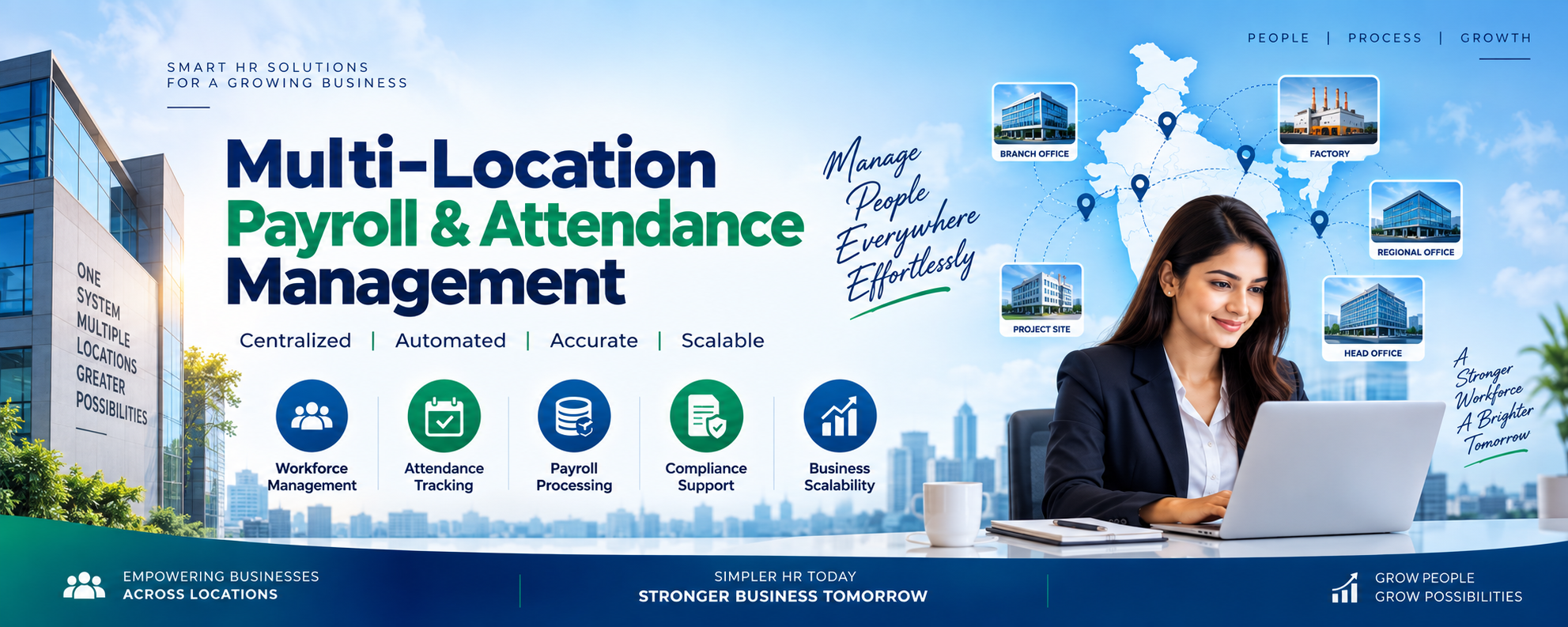

Payroll administration calls for accuracy, endurance, and unwavering focus, much like running a marathon. With constantly shifting tax laws, complicated compliance requirements, and the extremely diverse workforce in India, managing payroll internally can be daunting for many Indian businesses. The difficulties range from managing Employee State Insurance (ESI) contributions in Tamil Nadu to calculating professional tax in Maharashtra. But what if this marathon could be made into an easy sprint? Now, HR Outsourcing is a smart move that allows you to outsource the complicated duties to professionals like EDPS so you can concentrate on expanding your company.
We'll take you step-by-step through a seamless transition from in-house to outsourced payroll in this blog. This guide is designed for you, whether you're a manufacturing facility in Gujarat managing temporary staff or a startup in Bangalore growing quickly. Let's get started!
Why Consider HR Outsourcing? The Benefits You Can’t Ignore
Let's address the "why" before moving on to the "how." Why should Indian companies consider payroll outsourcing at all? Here’s the lowdown:
-
Cost Efficiency: Salaries, software licenses, and training expenses are associated with keeping an internal payroll staff. You only pay for the services you require when you use HR Outsourcing. For example, EDPS provides flexible plans that are ideal for both small and large businesses.
-
Compliance Made Easy: India's labor laws are as vibrant as its holidays. Penalties can result from missing a PF filing deadline or from calculating TDS incorrectly. In order to keep your company compliant, outsourcing partners keep ahead of these developments.
-
Time to Focus on Core Growth: Your HR team can focus on areas that directly affect growth, like employee engagement or talent retention, rather than working out at salary slips.
-
Scalability: During the Diwali sales, hiring seasonal workers? Getting into a new state? HR Outsourcing allows you to grow with your business without having to make internal changes.
Consider a Delhi-based retail chain that made the move to HR Outsourcing a year ago. They redirected more than 200 hours per month to store manager training, and they cut payroll errors by 70%. That's the strength of delegating the work to professionals!
Step 1: Assess Your Current Payroll Process
Knowing what is and is not working is the first step. Sit down with your HR team, grab a chai, and conduct an audit of your current workflow. Inquire about things like:
-
How much time is spent on filings, deductions, and salary calculations?
-
Do income tax or PF calculations frequently contain errors?
-
Are updates related to compliance missed?
For instance, an IT company in Pune discovered that their internal staff was spending thirty hours every month simply balancing payroll and attendance records. They knew exactly what to outsource after locating the problem.
Pro Tip: Make a list of all the things you need to do (like processing salaries, filing statutory documents, and handling grievances) and order them according to their level of difficulty. This will make it clear which functions require professional assistance.
Step 2: Choose the Right HR Outsourcing Partner
Not all service providers are equal. You need a partner that grows with your goals and is aware of the complexity of regional compliance in India. What to search for is as follows:
-
Verified Experience in India: Does the provider manage professional tax, PF, and ESI in all states? One dependable option is EDPS, which specializes in pan-India compliance.
-
The Value of Technology: Tracking is made easier by cloud-based platforms that have employee self-service portals. Make sure the supplier employs safe, easy-to-use tools.
-
Customer Support: Will the team at your Chennai office reply to a payroll inquiry at 10 PM? Give top priority to partners who provide round-the-clock assistance.
Before selecting EDPS, a Mumbai startup disclosed that they reviewed three providers since their platform enabled real-time salary adjustments during rapid hiring.
Step 3: Plan the Transition Like a Pro
A clear roadmap is necessary for a seamless transition. Before implementing payroll for the entire organization, start with a pilot project. This increases confidence and reduces risk.
-
Data Migration: Safely exchange tax information, payroll history, and employee details. Here, encryption cannot be compromised.
-
Timeline: Establish reasonable due dates. For simpler reporting, for instance, schedule the transition so it aligns with the accounting period.
-
Communication: Give workers advance notice. By declaring, "We're upgrading our payroll system to serve you better!" a manufacturing facility in Nagpur managed to prevent panic.
Step 4: Train Your Team and Employees
Change can be scary. To familiarize your HR staff with the provider's resources, host workshops. Give staff members a 30-minute training on how to use the new portal to view pay slips or submit queries.
For factories with multilingual employees, EDPS frequently distributes brief training videos in regional languages.
Step 5: Monitor, Feedback, Optimize
Monitor metrics such as processing time, error rates, and employee satisfaction after the transition. To deal with problems, schedule monthly reviews with your provider.
An anonymous "Feedback Friday" was instituted by a Coimbatore SME to allow staff members to voice concerns about payroll. Their satisfaction rating increased from 3.8 to 4.7/5 in a matter of months.
Pitfalls to Avoid
-
Hurrying: Making a change in the middle of the fiscal year? A bad idea. Plan when there is little activity.
-
Disregarding Employee Concerns: Ask questions like "Will my data be safe?" up front.
-
Picking Price Over Quality: A less expensive supplier may compromise on compliance.
Conclusion: Let EDPS Handle the Hard Work
Making the switch to HR Outsourcing is about giving your company the tools it needs to succeed, not just about saving money. You get accuracy, peace of mind, and the ability to concentrate on what really counts—your people and your vision—when you work with a partner like EDPS.
Are you prepared to switch? Keep in mind that the objective is to improve your company's operations, not just outsource payroll. And that upgrade is only a discussion away with EDPS.