
What is Statutory Compliance in HR | Complete Guide
What is Statutory Compliance in HR: A Complete Guide for Businesses
In today’s corporate environment, human resource management goes beyond hiring and payroll. One of the most critical responsibilities of HR professionals is ensuring statutory compliance in HR. Statutory compliance refers to the adherence of an organization to all the laws, regulations, and rules mandated by government authorities concerning employment, labor, and workplace practices. For businesses, maintaining statutory compliance is not just a legal obligation—it protects the company, employees, and overall organizational reputation.
Whether you are a small startup or a large enterprise, understanding statutory compliance, its components, and best practices is essential for smooth HR operations and sustainable growth.
Why Statutory Compliance in HR Matters
Non-compliance with labor laws and HR regulations can lead to penalties, legal action, or reputational damage. Statutory compliance ensures that organizations operate legally while protecting the rights of employees.
- Legal Safety: Avoid fines, penalties, or lawsuits.
- Employee Trust: Employees are more satisfied when their rights and benefits are ensured.
- Operational Efficiency: Smooth HR operations without legal interruptions.
- Reputation Management: Companies following statutory rules are viewed as responsible and professional.
Components of Statutory Compliance in HR
1. Labor Laws Compliance
HR must ensure the organization complies with laws regarding:
- Working hours, breaks, and overtime.
- Minimum wage and salary structures.
- Leave policies and termination rules.
- Equal opportunity employment and anti-discrimination regulations.
2. Payroll and Tax Compliance
Organizations must deduct, calculate, and remit statutory contributions such as:
- Provident Fund (PF) – Retirement savings contributions.
- Employee State Insurance (ESI) – Health coverage for eligible employees.
- Professional Tax – State-mandated tax deductions.
- Income Tax (TDS) – Deducted from employee salaries.
3. Health, Safety, and Workplace Compliance
- Compliance with occupational safety laws, fire safety, and hazardous material handling.
- Regular audits to ensure safe work environments.
4. Employment and Contract Compliance
- Maintaining employment contracts and records.
- Adhering to industrial dispute regulations.
- Ensuring maternity, paternity, and other statutory leaves are provided.
5. Reporting and Documentation
- Filing statutory reports with government agencies on time.
- Maintaining employee records for audits and inspections.
Examples of Statutory Compliance in HR (India Context)
| Law / Act | Key Requirement | Applicability |
|---|---|---|
| Provident Fund (PF) | Deduct 12% of basic salary & contribute | All eligible employees |
| Employee State Insurance (ESI) | Employer + employee contributions for health insurance | Employees with salary below threshold |
| Payment of Gratuity Act | Gratuity after 5 years of service | Permanent employees |
| Minimum Wages Act | Pay at least minimum wages | All employees |
| Professional Tax | State-specific payroll tax deduction | All employees as per state rules |
Benefits of Statutory Compliance in HR
- Legal Protection: Minimizes risks of litigation and penalties.
- Employee Satisfaction: Ensures timely benefits and salary compliance.
- Operational Efficiency: Reduces administrative errors and streamlines HR processes.
- Brand Reputation: Companies are seen as trustworthy and employee-friendly.
- Better Decision-Making: Accurate records and compliance reporting aid strategic planning.
Best Practices for Ensuring Statutory Compliance
- Regular Audits: Conduct periodic checks of payroll, contracts, and employee records.
- Automate HR Processes: Use HR software to manage PF, ESI, taxes, and leave.
- Staff Training: Educate HR and payroll teams on legal updates.
- Document Everything: Keep digital and physical records for inspections and audits.
- Stay Updated: Monitor legal amendments to labor laws and HR regulations.
Practical Tips for Businesses
- Use cloud-based HR compliance software to reduce manual errors.
- Maintain a centralized employee database for easy reporting.
- Implement checklists for statutory deadlines to avoid last-minute penalties.
- Create employee self-service portals for salary slips, PF statements, and leave balances.
FAQs About Statutory Compliance in HR
Q1: What is statutory compliance in HR?
Statutory compliance in HR is adhering to all government-mandated employment laws and regulations regarding payroll, labor, and workplace safety.
Q2: Why is statutory compliance important for businesses?
It ensures legal safety, builds employee trust, avoids penalties, and maintains a company’s reputation.
Q3: Which HR areas require statutory compliance?
Payroll, taxation, labor laws, health and safety, employee contracts, reporting, and record-keeping.
Q4: Can small businesses benefit from statutory compliance?
Yes. Compliance protects small businesses from legal risks and ensures employee satisfaction, aiding retention and growth.
Q5: How can organizations ensure statutory compliance?
By auditing HR processes, automating payroll and benefits, training staff, and staying updated with laws and regulations.
Suggested Visuals and Engagement Enhancements
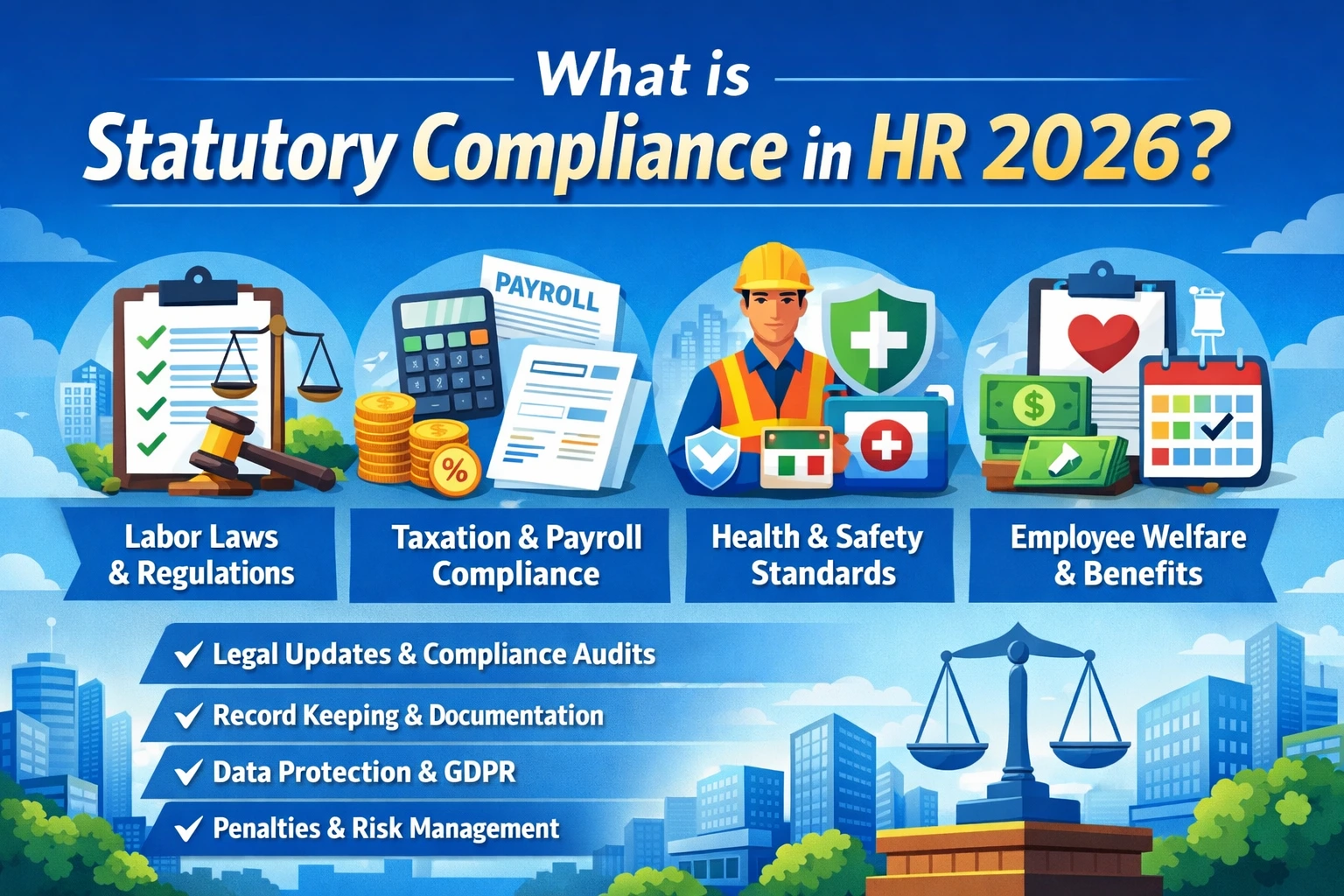
- Infographic: “Components of Statutory Compliance in HR” with payroll, safety, and labor laws.
- Step-by-Step Flowchart: How HR ensures compliance from hiring to payroll.
- Comparison Table: Manual vs. automated compliance efficiency.
- Video Embed: Short explainer video on statutory compliance best practices.
Conclusion
Statutory compliance in HR is a cornerstone of effective human resource management. By adhering to labor laws, payroll regulations, and workplace safety standards, organizations not only avoid legal penalties but also build a trustworthy and efficient workplace. Automation, regular audits, staff training, and accurate record-keeping are key steps to achieve compliance. Businesses that prioritize statutory compliance enjoy operational efficiency, employee satisfaction, and sustainable growth.
© 2026 EDPS. All Rights Reserved.