
10 Interview Do’s and Don’ts Every Job Seeker Should Know
An interview is more than just answering questions. It is an opportunity for an employer to understand your skills, experience, communication style, and whether you are a good fit for the role.
Even qualified candidates can miss out on opportunities because they did not prepare properly or made a simple mistake during the interview.
Whether you are a fresher attending your first interview or an experienced professional looking for a new opportunity, knowing the right interview do’s and don’ts can help you make a strong impression.
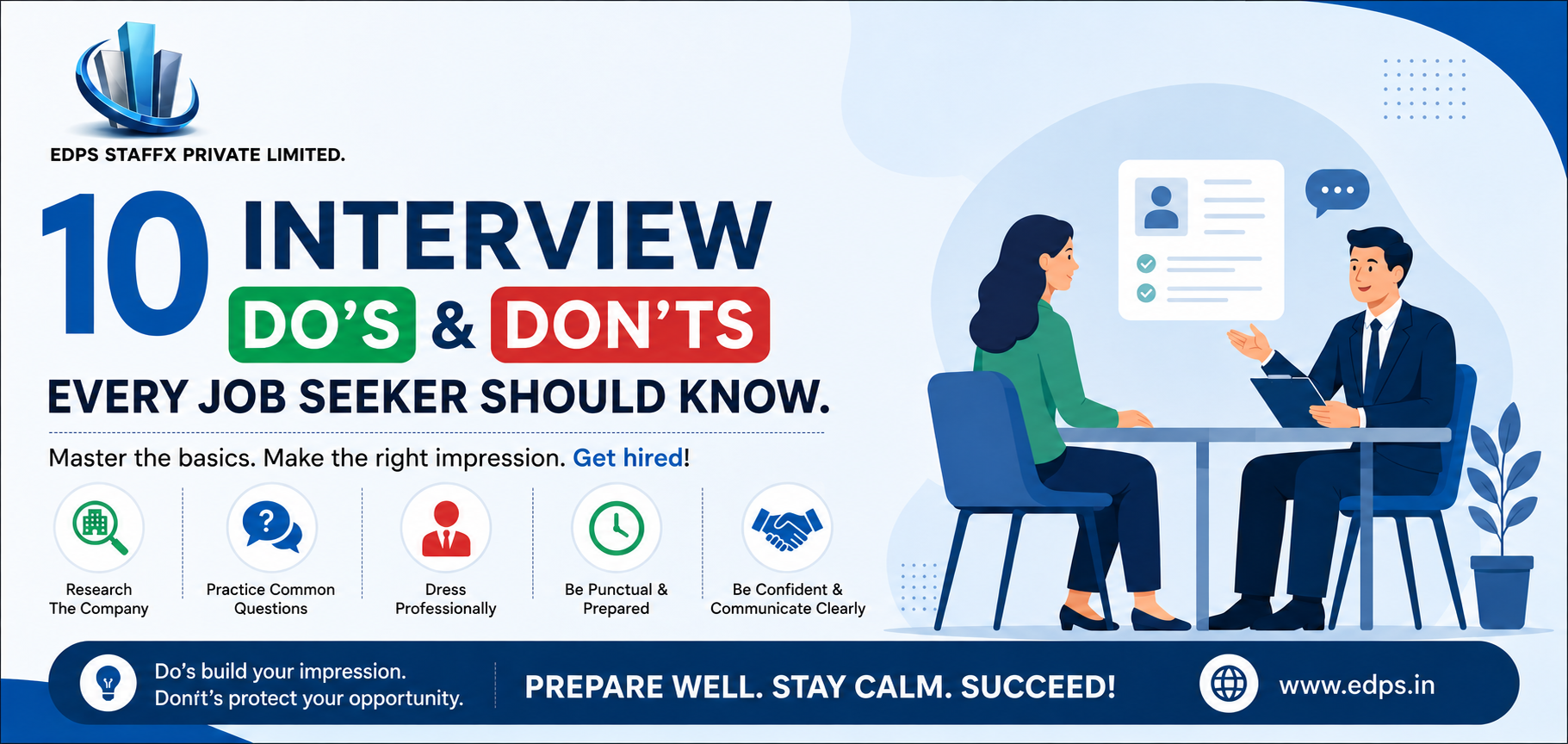
Here are 10 important interview do’s and don’ts that every job seeker should keep in mind before their next interview.
1. Do Research the Company
One of the best ways to prepare for an interview is to learn about the company beforehand.
Visit the company's website and understand its products or services, industry, work culture, and the role you have applied for. You should also have a clear idea of why you want to work for the company.
Don’t Attend Without Preparation
Avoid going to an interview without knowing anything about the company. You do not need to memorize every detail, but having basic knowledge shows that you are genuinely interested in the position and have taken the opportunity seriously.
2. Do Analyze the Job Description
Carefully read the job description before your interview. Identify the key skills, qualifications, responsibilities, and experience required for the position.
Think about examples from your education, previous jobs, projects, or other experiences that demonstrate those skills.
Don’t Give Generic Answers
Avoid giving the same answers in every interview. Instead, connect your skills and experience to the specific requirements of the position. This helps the interviewer understand why you are suitable for the role.
3. Do Practice Common Interview Questions
Preparing for common interview questions can help you feel more confident and reduce nervousness.
Some questions you may want to practice include:
- Tell me about yourself.
- Why do you want this job?
- What are your strengths?
- What is one area you are working to improve?
- Why should we hire you?
- What makes you a good fit for this role?
Practice your responses, but do not memorize them word for word. Focus on the key points you want to communicate.
Don’t Sound Rehearsed
An interview should feel like a professional conversation rather than a speech.
Interviewers can often tell when a candidate has memorized every answer. Instead of memorizing complete responses, understand the important points you want to make and communicate them naturally.
4. Do Dress Professionally
Your appearance contributes to the first impression you make. Wear clean, well-fitting, and professional clothing that is appropriate for the company and the role.
Looking presentable shows that you take the interview and the opportunity seriously.
Don’t Ignore Workplace Culture
Professional dressing does not always mean wearing formal business attire. Consider the company's work culture and dress appropriately for the organization and position.
The goal is to look neat, confident, and professional.
5. Do Arrive on Time
Punctuality is an important part of professionalism. Plan your route in advance and allow extra time for traffic, parking, security checks, or unexpected delays.
For an online interview, test your internet connection, camera, microphone, and meeting link before the scheduled time.
Don’t Arrive at the Last Minute
Arriving just before the interview can make you appear stressed and unprepared.
For an in-person interview, try to arrive around 10–15 minutes early. This gives you enough time to settle down and prepare yourself mentally.
6. Do Communicate Clearly
Good communication is one of the most important interview skills.
Listen carefully to each question, take a moment to organize your thoughts, and answer clearly and concisely. If you do not understand a question, politely ask the interviewer to clarify it.
Don’t Interrupt
Allow the interviewer to finish speaking before you respond.
Interrupting can make the conversation uncomfortable and may give the impression that you are not listening carefully. Good communication involves both speaking and listening.
7. Do Show Confidence
Your body language can influence how an interviewer perceives you.
Maintain natural eye contact, sit upright, listen attentively, and smile when appropriate. Keep your phone away and avoid unnecessary movements that may distract from the conversation.
Confidence means being comfortable discussing your skills, experience, and achievements.
Don’t Confuse Confidence with Arrogance
Being confident does not mean exaggerating your abilities or speaking negatively about other people.
Be confident, respectful, and honest. Talk about your strengths without putting down previous employers, colleagues, or other candidates.
8. Do Be Honest
Honesty should always be part of your interview approach.
If you do not know the answer to a question, it is better to be honest and explain how you would find the answer rather than making something up.
Employers value candidates who are willing to learn and acknowledge what they do not know.
Don’t Overstate Your Skills
Never lie about your qualifications, experience, certifications, or technical skills.
Information provided during the hiring process may be verified, and false claims can create serious problems later. Be honest about your abilities and focus on your willingness to learn and improve.
9. Do Ask Relevant Questions
An interview is not only an opportunity for the company to evaluate you. It is also your chance to understand the role, team, company, and expectations better.
At the end of the interview, you can ask relevant questions such as:
- What does success look like in this role?
- What are the team's current priorities?
- What would a typical day in this position look like?
- What opportunities are available for learning and growth?
Don’t Focus Only on Salary
Salary and benefits are important, but making them your only focus may create the wrong impression.
Show interest in the responsibilities, team, workplace environment, learning opportunities, career growth, and expectations of the role as well.
10. Do Follow Up Professionally
After the interview, sending a brief and professional thank-you message can help create a positive final impression.
Thank the interviewer for their time and let them know that you appreciate the opportunity and remain interested in the position.
Don’t Send Repeated Messages
There is nothing wrong with following up professionally, but avoid sending multiple messages within a short period.
If the interviewer provides a timeline for the next step, wait until that period has passed before following up.
Common Interview Mistakes to Avoid
While following these interview tips for job seekers, make sure you also avoid common mistakes that could negatively affect your chances.
Some common interview mistakes include:
- Arriving late
- Not researching the company
- Giving unclear or overly lengthy answers
- Using your phone during the interview
- Making negative comments about previous employers
- Exaggerating your qualifications
- Not listening carefully
- Failing to ask questions
- Dressing inappropriately
- Not understanding the job role
- Giving generic answers
- Appearing unprepared or uninterested
Avoiding these mistakes can make your overall interview more professional and help you create a stronger impression.
How to Prepare for a Job Interview
If you are wondering how to prepare for a job interview, follow this simple checklist.
Before the Interview
- Research the company.
- Read the job description carefully.
- Practice common interview questions.
- Prepare examples from your education or work experience.
- Prepare questions to ask the interviewer.
- Test the interview location or online meeting link.
- Keep your resume and other required documents ready.
- Plan your travel time if the interview is in person.
During the Interview
- Arrive or join on time.
- Listen carefully to the interviewer.
- Communicate clearly and confidently.
- Keep your answers relevant and professional.
- Be honest about your skills and experience.
- Show genuine interest in the role.
- Maintain positive and professional body language.
After the Interview
- Thank the interviewer for their time.
- Reflect on your performance.
- Identify areas where you can improve.
- Follow up professionally when appropriate.
Final Thoughts
A good interview is not about having the perfect answer to every question. It is an opportunity to demonstrate your preparation, skills, communication, professionalism, and interest in the role.
Following these interview do’s and don’ts can help you avoid common mistakes and enter your next interview feeling more confident and prepared.
For employers, finding the right candidate is equally important. A well-defined recruitment process can help organizations identify suitable talent more efficiently.
For companies looking to improve and streamline their hiring process, EDP Services offers a customized Recruitment Management Service to support organizations in managing and conducting their recruitment activities effectively.
Remember, every interview is a learning opportunity. Do your research, prepare well, be genuine, communicate clearly, and focus on what you can bring to the organization.