

EPFO ECR Due Date Extended for December 2025 | Latest EPF Compliance Update
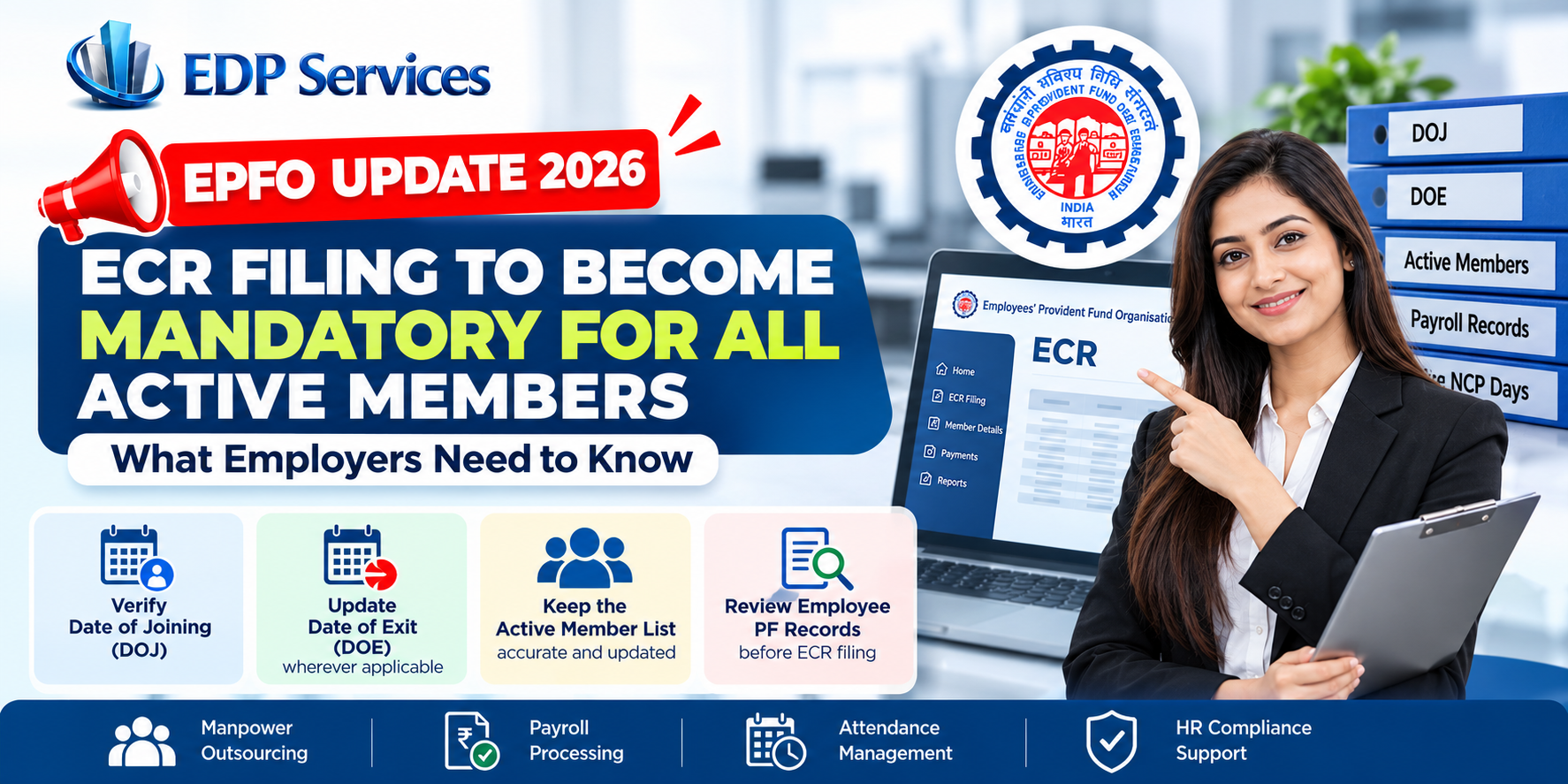
The Employees’ Provident Fund Organisation (EPFO) has issued an important EPFO latest notification providing compliance relief to employers. As per the EPFO circular on ECR due date extension, the due date for filing Electronic Challan-cum-Return (ECR) for the December 2025 wage month has been extended.
EPFO ECR Deadline 2026
This update is highly relevant for employers, HR professionals, payroll managers, and compliance consultants searching for EPF ECR due date, EPFO updates today, and PF compliance news.
EPFO ECR Due Date – January 2026 Update
-
Original EPF ECR due date: 15 January 2026
-
Extended EPFO ECR due date: 20 January 2026
-
Extension period: 5 days
View Official Notification EPFO
This extension has been granted due to technical and operational issues reported by employers while filing returns on the EPFO portal.
Key Highlights of EPFO Circular on ECR Filing
-
Applicable only for EPF ECR filing for December 2025 salary
-
No EPF interest or damages will be charged if ECR is filed within the extended deadline
-
Relief provided as a one-time EPFO compliance relaxation
-
Approved by the Central Provident Fund Commissioner (CPFC)
This announcement is trending among users searching for:
EPFO circular today, EPF ECR extension news, PF return filing update, and EPFO portal issues.
Who Should Follow This EPFO Update?
This notification is important for:
-
Employers registered under EPF & MP Act, 1952
-
HR and payroll teams managing monthly EPF returns
-
Payroll service providers and compliance professionals
-
Accounts teams handling EPF challan payment
What Employers Should Do – EPF Compliance Checklist
To avoid penalties and ensure smooth compliance:
-
Verify December 2025 payroll data
Check wages, EPF contribution calculations, and UAN details. -
Check EPFO portal status
Ensure login access and resolve any EPFO technical issues. -
Complete ECR filing before 20 January 2026
Early filing helps avoid last-minute EPFO portal slowdowns. -
Download EPF challan and acknowledgement
Maintain records for audits and future reference.
Important EPFO Compliance Reminder
This EPFO ECR due date extension applies only for December 2025 wages. For upcoming months, employers must continue to follow the regular EPF due date of the 15th of every month.
Delayed filing after the extended date may attract EPF interest and penalty.
Final Words on EPFO ECR Extension
The EPFO ECR filing extension January 2026 provides temporary relief to employers facing operational challenges. However, timely and accurate EPF compliance remains critical to avoid penalties and ensure uninterrupted employee provident fund benefits.
For regular updates, employers should stay alert for:
EPFO latest news, EPF compliance updates, ECR filing process, and PF return due dates.
Frequently Asked Questions
EDP’s approach is strategic—focusing on workforce planning, long-term skill alignment, employer branding, and proactive candidate pipelines.
- Monthly salary processing
- Payslip generation
- Income tax calculations
- Bonus & incentive tracking
- Full & final settlements
- Provident Fund (PF)
- Employee State Insurance (ESI)
- Professional Tax (PT)
- Labour Welfare Fund (LWF)
- Shops & Establishment Act compliance
Including monthly returns and audits.
The platform auto-generates monthly reports and challans for:
- PF
- ESI (ESIC contributions report)
- PT
- LWF
- TDS returns
Export-ready formats (Excel, TXT, XML) for government portals are provided.
Yes. Admins can enforce IP whitelisting, geo-blocking, and session timeout controls for internal teams.
- Biometric devices (eSSL, ZKTeco, etc.)
- Accounting software (Tally, QuickBooks)
- Banks (for salary disbursement)
- Government portals (EPFO, ESIC, ITD)
- Email & SMS APIs for alerts
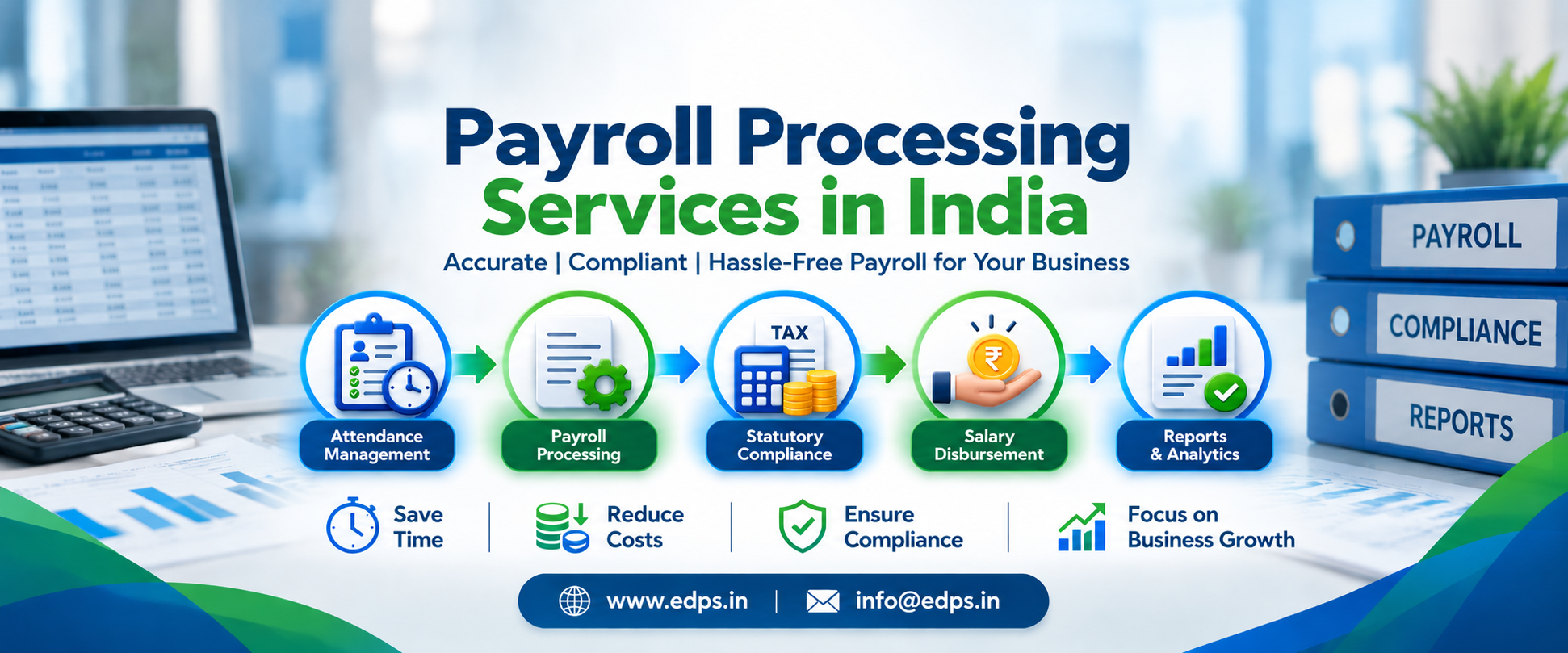
Payroll services encompass the calculations of employee salaries, the tax deductions and compliance that accompany them, and the correct disbursement of salaries at the end of every month.
Payroll is mostly processed every month, though, depending on the company policy, it can also be processed on a weekly or bi-weekly schedule.
Indeed, payroll services are secure as payroll service providers encrypt and use secured servers to hold and protect employee and financial details.