
Managing payrolls is one of the most important duties in any business. Whether you are just starting out, running a small business or scaling a company, there are several benefits to preparing payroll correctly: your employees will be happy (and less likely to leave), your already stressed team can relax knowing that they’re compliant, and the money in the bank accounts won’t run out. Payroll mistakes cause penalties, disgruntled employees and loss of confidence. This guide is a simple, nitty gritty solution on how to process salary payroll in an easy, beginner friendly and practical way.
What Is Salary Payroll?
What is salary payroll? It encompasses computation of salaries, deductions, keeping record and legal statements conforming to Statutory laws i.e. ESI Act 1948, EPF Act 1952 including other Taxation Laws (Payslip). Payroll can be generated monthly (our example), weekly, or bi-weekly based on a company’s preferences.
How to Make Salary Payroll?
Before doing a salary payroll, you should know the structure of every employee's salary. This comprises the pay, allowance, rewards and legal deductions. The process of processing payroll starts with the collection pre requisites details of every employee such as Bank Details, PAN, PF/ESI details (If they are eligible), and attendance report. After this data is compiled, wages are PAYSOLVed.
An organized payroll system also minimizes the chances of human error and inconsistency cash cycles.
Steps in Preparing Salary Payroll
Create Employee Master Data:
The first step is to keep detailed records of your employees. It also contains details such as employee name, designation, department salary structure, current bank account and tax details and statutory registrations. This information provides the basis for payroll processing.
Track Attendance and Leaves
Attendance directly impacts salary calculation. Track working days, paid leave, unpaid leave, overtime and holiday. Larger companies may have biometric systems or attendance software, while smaller ones run manual registers or Excel sheets.
Define Salary Components
But salary can be broken down into different pieces like:
- Basic Salary
- House Rent Allowance (HRA)
- Conveyance Allowance
- Special Allowance
- Bonuses or Incentives
There are tax and compliance implications to each that speak to the need to structure them appropriately.
Calculate Gross Salary
The amount of salary is gross, before any deductions. It is the sum of basic pay and all allowances including incentives that are paid during a given payroll.
Apply Deductions
Deductions are required and voluntary amounts withheld from gross salary. Common deductions include:
- Provident Fund (PF)
- Employee State Insurance (ESI)
- Professional Tax
- Income Tax (TDS)
- Loan or advance deductions
Calculate Net Salary
Net Salary: Payable is the total value paid to an employee after deductions.
Net Salary = Gross Salary - Total Deductions
Salary Approval and Disbursement
When the payroll is prepared, it must be authorised by management or accounts. Salaries are paid into the bank, by cheque or other approved methods.
Generate Payslips and Reports
They should hand out payslips which give a clear breakdown of salaries. Payroll reporting is also kept for accounting, audit, and regulatory compliance.
Payroll Salary Calculation Formula
Knowing the payroll calculations goes a long way in preventing misunderstanding and errors.
Gross Salary = Basic Pay + DA + HRA + Conveyance Allowance + Incentives
Net Salary = Gross Salary - (PF + ESI + Professional Tax + Income Tax + Any Other Deductions)
Most payroll software, manual or automated utilizes this simple formula.
How to Pay Salary in Payroll?
Employees are paid their salary in the following manner:
- Bank transfer (NEFT/RTGS/IMPS)
- Salary accounts
- Cheques (less common now)
Businesses like payments in digital form because they are fast, traceable and regulatory compliant. Payslips are then distributed electronically or in paper form once payment is made.
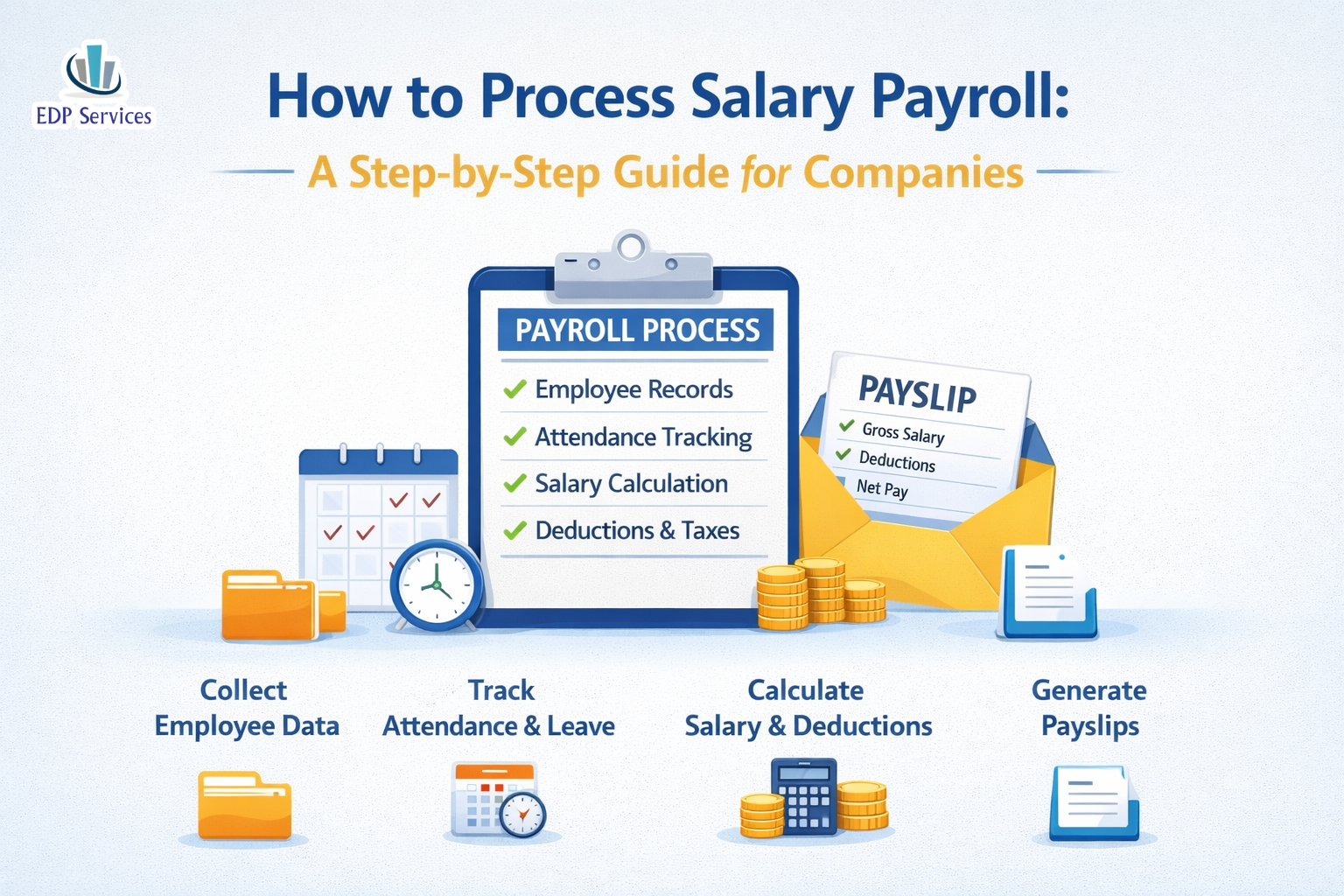
Basics of the Payroll Process
- Collect and update employee data
- Process attendance and leave records
- Calculate salary and deductions
- Ensure statutory compliance
- Disburse salary and issue payslips
Consistently carry out these methods to have a faithful payroll with no error.
Can Payroll Be Done in Excel?
Yes you can run your payroll in Excel, notably for small companies and startups. You can create Salary Sheets in Excel & calculate, formulas & deduce Pay Slips manually also. But there are limitations with Excel payroll which mainly include lack of automation, increased error risk and challenges in maintaining compliance for large groups.
When numbers of employees compound, businesses may move to payroll software for ease and accuracy.
Common Payroll Mistakes to Avoid
- Incorrect attendance data
- Wrong tax or statutory calculations
- Missing compliance deadlines
- Not maintaining payroll records
- Manual mistakes as a result of no check and balance
Preventing these errors saves time, money and legal woe.
Why Accurate Payroll Is Important?
Payroll that is accurate and timely allows everyone to be paid properly, fosters trust, and maintains the company’s compliance with labor laws. It is also useful for financial planning, audits, and reporting. If you have a good payroll system it will help to show that your business is professional and well run.
Final Thoughts
Prepping salary payroll process seems like it’s complicated but with the right procedure, it is workable and systematised. Whether you are using Excel or a payroll software, the No. 1 thing to keep in mind is accuracy, compliance and consistency. By using this manual, we are going to explain how companies can process the payroll with ease.