
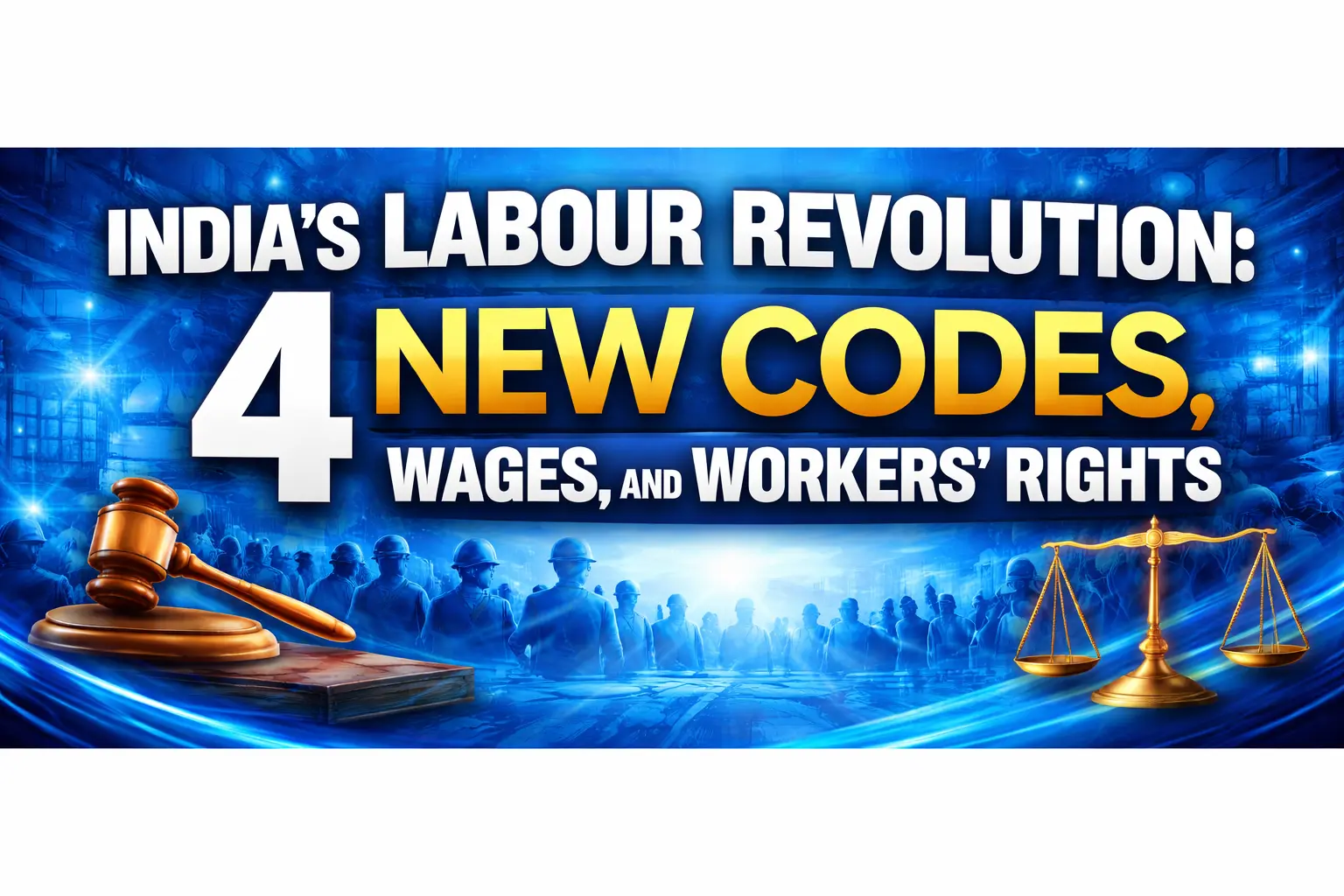
India's labour laws have undergone a significant transformation with the introduction of four new labour codes. These reforms are aimed at simplifying the complex legal framework, enhancing workers' rights, and making compliance easier for employers. The new codes have the potential to impact millions of workers across the country, as well as businesses that employ them. In this article, we’ll explore how these new codes affect wages, rights, and overall workplace dynamics in India.
1. The Four Labour Codes: An Overview
The four new codes that have replaced India's previous labour laws are:
-
Code on Wages, 2019
-
Code on Social Security, 2020
-
Code on Industrial Relations, 2020
-
Code on Occupational Safety, Health and Working Conditions, 2020
Each code addresses a critical aspect of the labour landscape, from ensuring fair wages and benefits to promoting safer and more equitable working conditions.
Impact on Wages: Ensuring Fair Pay
One of the most significant changes brought about by the new labour codes is the focus on ensuring fair wages for workers.
- Minimum Wage Standards: The Code on Wages establishes a national minimum wage that will apply across various sectors. This is designed to protect workers from exploitation by setting a baseline for wages.
- Timely Payments: The new law also emphasizes the timely payment of wages, helping to ensure that workers receive their due compensation without delay. This provision aims to minimize disputes related to non-payment or delayed payments.
- Equal Pay for Equal Work: The wage code also reinforces the principle of "equal pay for equal work," prohibiting gender-based wage discrimination and promoting wage parity across different sectors and industries.
These changes directly impact the financial security of workers by guaranteeing a minimum standard of pay and ensuring timely compensation for their work.
Workers’ Rights: Strengthening Protections
The new labour codes focus not only on wages but also on enhancing workers' rights in India.
- Social Security Provisions: The Code on Social Security includes provisions for more comprehensive social security benefits, including provident funds (PF), maternity benefits, and medical insurance. Additionally, it acknowledges the rights of gig and platform workers, extending social security coverage to those working in non-traditional jobs like delivery personnel and ride-share drivers.
- Health and Safety: The Code on Occupational Safety, Health, and Working Conditions ensures that workers are provided with a safe working environment. It includes measures to protect workers from hazardous conditions and mandates that employers take responsibility for their health and safety. This is especially important for sectors like construction, mining, and manufacturing, where workers are exposed to high risks.
- Social Security for Gig Workers: Gig workers, often excluded from traditional labour laws, are now included under the social security framework. This marks a major shift in the protection of workers in the gig economy, providing them with benefits like insurance and retirement savings.
These changes aim to ensure that workers are not just paid fairly but are also protected in their workplace, which is a fundamental right.
How These Codes Affect Employers?
While the new codes have improved the protection and rights of workers, they also bring about several changes for employers. Here’s how businesses are impacted:
- Simplified Compliance: One of the key benefits for employers is the simplification of compliance. Previously, businesses had to navigate through multiple laws, each with its own set of regulations. The new codes combine these laws into a more streamlined framework, making it easier for businesses to stay compliant and avoid legal issues.
- HR and Payroll Management: Employers will need to revise their HR practices, including payroll systems, to comply with the new wage and social security rules. This may require updating payroll software and systems to ensure that wages are paid according to the new guidelines.
- Enhanced Reporting: Businesses will also need to comply with new reporting requirements, such as the documentation of workers' wages, working conditions, and compliance with safety measures. This could involve adopting new HR technology solutions for better tracking and reporting.
For employers, the shift to a simplified framework is a welcome change, but it will require some investment in HR management systems and processes.
5. The Role of Technology in Managing These Changes
To ensure that businesses stay compliant with the new labour codes, many are turning to technology. Solutions like cloud-based HR services, time and attendance management systems, and payroll software are helping businesses streamline compliance and reduce administrative burdens.
For instance, cloud-based HR services enable businesses to manage employee data, payroll, and compliance in one integrated system. These systems automate many aspects of HR management, reducing the risk of errors and ensuring timely compliance with the new codes.
For more on streamlining HR processes and ensuring compliance, visit EDP Services.
Conclusion: A Step Towards a Fairer, More Transparent Labour System
India’s labour revolution, driven by the implementation of the four new labour codes, represents a major step forward for both workers and employers. By simplifying and streamlining the regulatory framework, these reforms ensure that workers are paid fairly, receive better social security, and are protected in their workplaces. For employers, the new system offers easier compliance, reduced administrative overhead, and more clarity in managing their workforce.
As businesses continue to adapt to these changes, leveraging technology solutions such as HR Outsourcing Solutions and Payroll Services will be essential for staying ahead in a rapidly evolving labour landscape.
India's new labour codes are not just a legal update—they are a revolution in the way wages and workers’ rights are viewed, ensuring a better, fairer work environment for all.