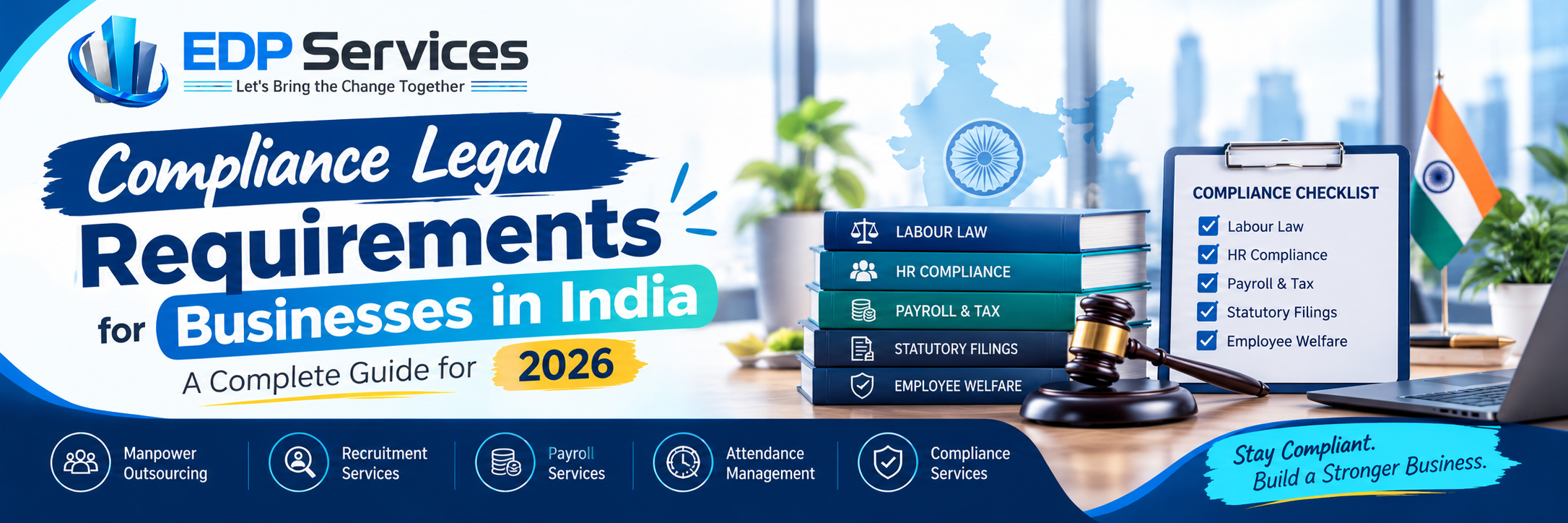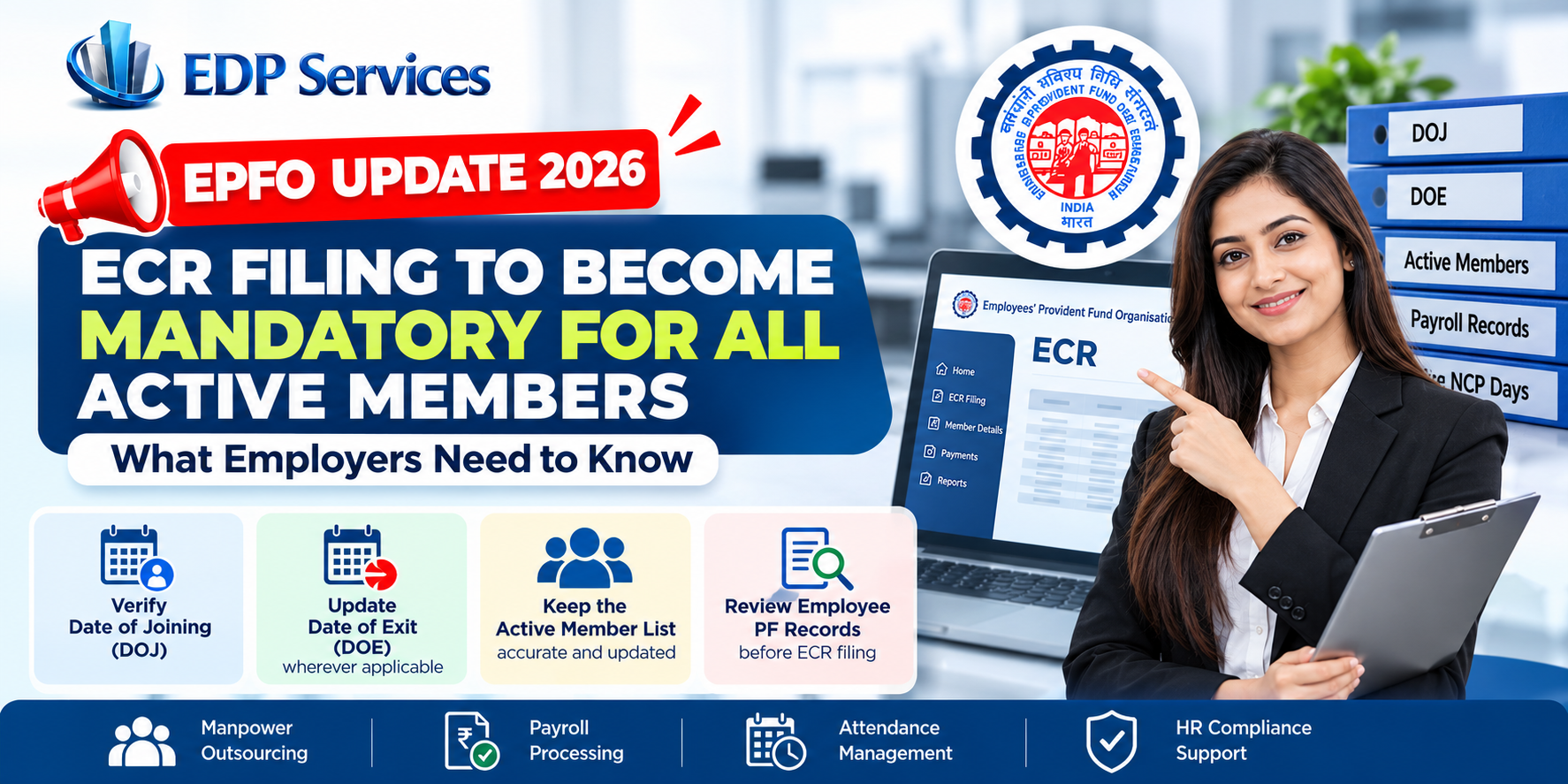

In India, managing a business is similar to navigating a busy marketplace, which is full of opportunities but also filled with laws, rules, and unexpected turns. If you make a mistake, you will be subject to fines, legal issues, or even negative publicity. One of the trickiest parts of this the journey? HR compliance.
Managing HR compliance can be difficult due to state-specific labor laws and changing legal requirements. The good news is that you can make compliance a competitive advantage by using appropriate strategies and the assistance of HR outsourcing partners like EDPS. Let's know how.
Why HR Compliance in India Feels Like a Maze?
The regulatory environment in India is extensive, complex, and frequently changing. Staying compliant requires businesses, particularly startups and SMEs, to understand dozens of laws that differ by location, industry, and even employee count. These are the main obstacles:
-
Multiple Labor Laws: The Shops and Establishments Act, the Industrial Disputes Act, and the more recent Labor Codes are just a few of India's more than 100 state and central labor laws. This could result in three different sets of regulations for working hours, leave policies, and termination procedures for a business that operates in three states.
-
Statutory Compliances: Calculating the Provident Fund (PF), Employee State Insurance (ESI), Professional Tax, and Gratuity is certainly mandatory, it is also time-consuming. Penalties can arise from missing a PF filing deadline by one day, and audits can be initiated due to mistakes in ESI contributions.
-
Payroll Complexity: Consider a company that employs people from Uttar Pradesh, Maharashtra, and Karnataka. Professional tax slabs, bonus structures, and PF contribution rates vary by state. Handling this by hand is an invitation to make mistakes.
-
Contract Labor and Gig Workers: Traditional definitions of employment have become unclear due to the growth of gig economy platforms and contract labor. Incomplete classification of workers can give rise to disputes under the Contract Labor Act.
-
Record-Keeping Requirements: According to Indian laws, careful documentation, including tax returns, pay slips, and attendance registers, must be kept on file for many years. Fines will be imposed for a single misplaced file during an inspection.
5 Practical Tips to Simplify HR Compliance
1. Partner with Experts in HR outsourcing
Let's be honest: You didn't launch your company to spend endless hours trying to understand the Minimum Wages Act. HR outsourcing excels in this situation. Working with experts like EDPS allows you to assign compliance responsibilities to experts who are familiar with these rules.
For instance, EDPS handles everything from creating pay slips that comply with local laws to managing PF/ESI registrations. Their teams keep informed of the most recent changes, guaranteeing that your company is always prepared for audits. Imagine having a dedicated compliance officer without having to pay for their employment.
2. Centralize Payroll with Technology
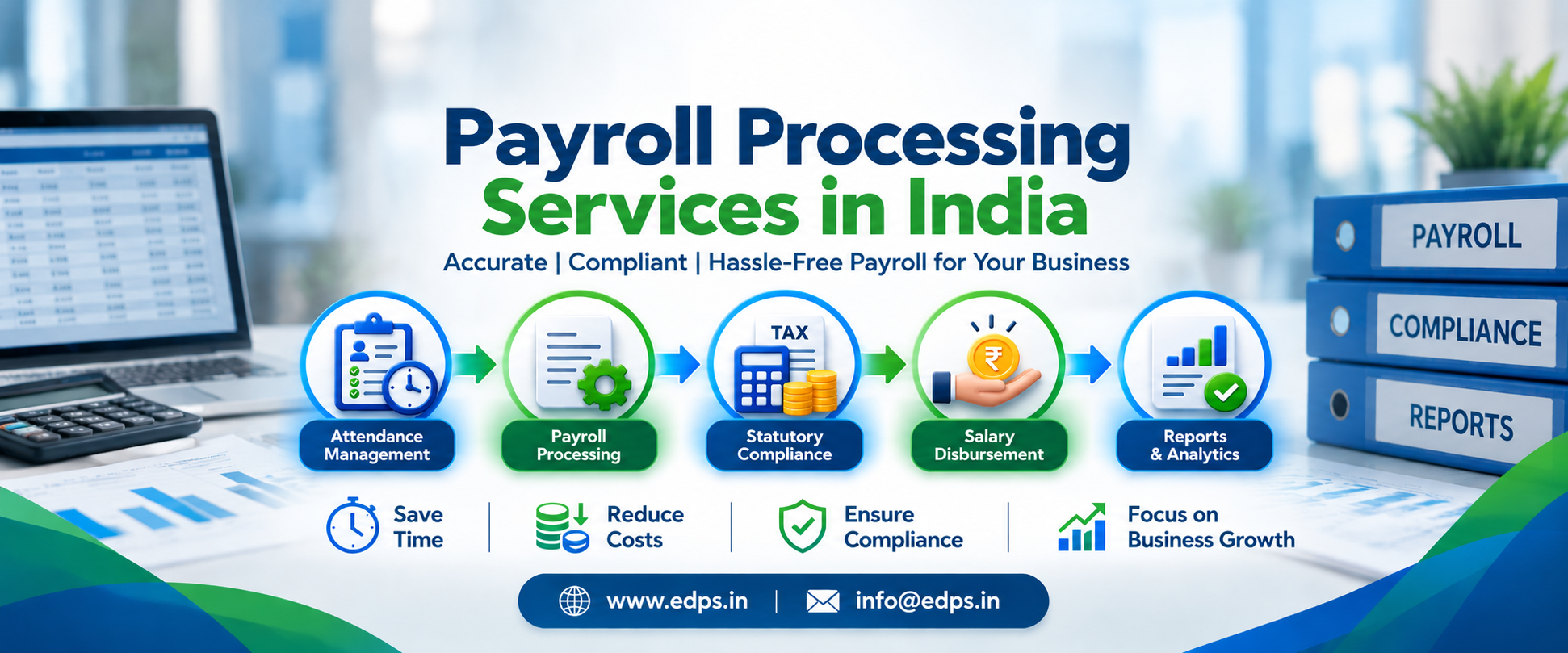
Payroll processing by hand is risky. Employee complaints or legal notices can result from a single error in overtime or gratuity calculations. Payroll calculations are automated by modern HR outsourcing platforms, such as those provided by EDPS, which also take local regulations into account.
Consider professional tax, which ranges from ₹200 per month in Karnataka to ₹2,500 per month in Maharashtra. Errors are decreased by an automated system that instantly modifies these rates. Additionally, cloud-based record-keeping guarantees that all information is safe and available for inspection.
3. Conduct Regular Compliance Audits
Gaps can appear in even the most effective systems. Plan audits every three months to examine filings, records, and policies. For example, see whether your maternity leave policies comply with state standards or whether your employee contracts reflect the most recent Sexual Harassment (POSH) Act guidelines.
4. Train Your Team on Compliance Basics
Your managers should understand the fundamentals of the law, but they don't have to be legal experts. For instance:
-
Under the Industrial Disputes Act, temporary employees who are employed for more than 240 days may be eligible for permanent status.
-
Regardless of position, employees making up to ₹21,000 per month are eligible for ESI.
Workshops can be held by HR outsourcing partners such as EDPS to teach your staff how to avoid common mistakes like incorrectly classifying freelancers or failing to notice the need for POSH committee formations.
5. Stay Ahead of Regulatory Changes
The labor laws of India are changing. When fully enacted, the new Labor Codes (2020) will change working hours, wage definitions, and employee rights by combining 29 laws into four codes. In the same way, freelancers are covered by the Social Security Code, which affects services like Uber and Swiggy.
You can make sure you're never caught off guard by subscribing to EDPS updates. Their professionals proactively modify policies after analyzing the impact of changes on your company.
How EDPS Makes HR outsourcing a Strategic Move?
The goal of HR outsourcing is to create an efficient company, not just save time. EDPS provides value in the following ways:
-
Scalability: From onboarding assistance to exit procedures, EDPS scales its services to meet your needs, regardless of how many employees you hire—10 or 1,000.
-
Risk Mitigation: EDPS reduces the chance of penalties by ensuring that statutory filings are made accurately and on time.
-
Concentrate on Growth: Let EDPS take care of the heavy lifting of compliance, freeing up your internal teams to concentrate on innovation and culture development.
Take the example of an IT startup from Mumbai that is growing into Tamil Nadu. They collaborate with EDPS rather than employing a local HR staff to interpret the state's particular labor laws. Employee handbooks are updated, PF registrations are submitted, and payroll is modified for Tamil Nadu's professional tax in a matter of days—all without the founders having to do a thing.
Final Thoughts: Compliance as a Culture
Building trust is more important than avoiding fines when navigating HR compliance in India. Clients favor partners with a spotless compliance record, and employees remain faithful to organizations that uphold their rights. By including HR outsourcing into your plan, you're investing in peace of mind rather than just outsourcing work.
EDPS is a partner in your journey of personal development, not just a provider of services. With their knowledge, you can put an end to your concerns about compliance and feel secure knowing that every form, filing, and policy complies with India's ever-changing legal requirements.
Frequently Asked Questions
- Provident Fund (PF)
- Employee State Insurance (ESI)
- Professional Tax (PT)
- Labour Welfare Fund (LWF)
- Shops & Establishment Act compliance
Including monthly returns and audits.
Yes, auditors or consultants can be granted limited access to compliance reports, employee files, and past returns without compromising system integrity.
The HR and compliance documents are vital in ensuring your company adheres to rules and laws governing employment. A well-organized document protects both employees and your company by clearly defining roles, obligations and expectations. It can help avoid legal issues, decreases the possibility of penalizations and facilitates daily operations.
We ensure compliance by keeping current with the most recent laws and regulations regarding labor. Our experts work with businesses to design specific documents tailored to the specific requirements of your business and ensure full compliance with state, local and national laws. We also help with filings required by law and audits to ensure that your company is legally safe.
HR compliance means making sure that the company adheres to all laws or regulations as well as industry guidelines regarding the treatment of employees. This means adhering to the rules regarding benefits, wages such as workplace safety, non-discrimination, tax deductions and rights of employees. This helps safeguard both the employees and the company by reducing legal risks and ensuring ethical business practices.