
In India, managing a small or medium-sized business (SME) is no easy task. Payroll management is a crucial but time-consuming duty. Payroll can easily turn into a headache, from figuring out salaries and deductions to making sure you're in compliance with constantly shifting tax laws—especially when your main business requires your full focus.
Payroll outsourcing can be a game-changer in this situation. But do SMEs really get value for their money? Let's analyze it.
The Hidden Struggles of In-House Payroll
Assume you are the owner of a growing retail chain in Mumbai. Over the past 12 months, your team has grown from 10 to 50 members. It feels like a full-time job now to process salaries, PF contributions, and TDS, which used to only take a few hours each month. One mistake in ESI calculations recently resulted in a penalty, and your accountant is stressed out. Sound familiar?
For many SMEs, handling payroll internally means:
-
Time Drain: Hours spent to repetitive duties such as creating pay slips, tracking leaves, and data entry.
-
Compliance Risks: Missing updates on labor laws, GST revisions, or new statutory requirements.
-
Resource Costs: Hiring and training dedicated staff or investing in expensive payroll software.
-
Human Errors: Miscalculations that lead to disgruntled employees or legal trouble.
What Exactly is Payroll outsourcing?
Simply put, Payroll outsourcing involves handing over all payroll-related responsibilities to a specialized third-party provider (such as EDPS). Processing salaries, tax deductions, compliance filings, and even report generation are all included in this. Consider it as bringing in a group of professionals to help your HR department avoid becoming slowed down in spreadsheets and instead concentrate on strategic objectives like employee engagement or talent retention.
For instance, an IT startup in Pune outsourced their payroll and used the time saved by their HR manager to plan workshops for upskilling. The outcome? 20% more productivity and happier workers.
Why SMEs Are Turning to Payroll outsourcing?
1. Free Up Time to Focus on Growth
Payroll takes up every minute that could be used to grow your company. You can get those hours back with Payroll outsourcing. By outsourcing, a logistics company based in Delhi was able to increase their fleet and negotiate better freight rates, saving 15 hours per month.
2. Avoid Costly Compliance Mistakes
Indian labor laws are dynamic and complex. The Wage Code, maternity benefits, and EPFO regulations were updated in 2023 alone. In order to protect your company from fines, providers such as EDPS keep on top of these changes. An outsourcing partner's prompt compliance alerts helped one Hyderabad SME avoid a ₹2 lakh fine.
3. Reduce Operational Costs
Salaries, software licenses, and training expenses are associated with hiring an internal payroll staff. These fixed costs are transformed into a predictable monthly fee through Payroll outsourcing. Outsourcing reduced payroll-related expenses for a 70-person manufacturing facility in Kochi by 40% a year.
4. Enhance Data Security
Payroll data is private. Reputable companies like EDPS protect employee data with secure servers and encrypted systems, which is a luxury that many SMEs cannot afford on their own.
5. Scalability Without Stress
Outsourcing adjusts to your needs, whether you're expanding into new states or hiring seasonal workers. During peak season, a textile SME in Jaipur handled payroll for 100 temporary employees with ease and without putting too much strain on their core staff.
Breaking Down the Investment: Is It Worth It?
Let's talk about the cost, the big issue. It is true that Payroll outsourcing has a cost. Nevertheless, when taken as a whole, the ROI frequently exceeds the cost.
Consider this:
-
Direct Savings: No need for hiring employees (₹4–₹6 lakh/year for a junior accountant) or purchasing payroll software (₹20,000–₹50,000/year).
-
Indirect Savings: Penalty risk is decreased, employee disputes over salary errors are decreased, and hours are reallocated to tasks that generate income.
-
Peace of Mind: Knowing experts are handling compliance is priceless.
How EDPS Makes Payroll outsourcing Effortless?
Not all providers are created equal. EDPS stands out in India’s crowded market by offering:
-
Tailored Solutions: EDPS adapts services to meet your needs, whether you are a startup with 10 employees or a factory with 500.
-
Tech-Driven Accuracy: Our cloud-based platform integrates with current HR tools, creates real-time reports, and automates computations.
-
Local Expertise: EDPS guarantees compliance across regions by having in-depth knowledge of state-specific laws (such as Gujarat's GST nuances or Karnataka's Shop and Establishment Act).
-
Dedicated Support: A responsive team that responds to inquiries in either English or simple Hindi, without the use of automated scripts.
When Should SMEs Consider Outsourcing?
The majority of SMEs gain from Payroll outsourcing, but it's especially beneficial if:
- You spend more than 10 to 15 hours per month on payroll.
-
Your staff is inexperienced with tax compliance and filing.
-
You're operating in several states or growing quickly.
-
There is an increase in employee complaints regarding payroll errors.
It's time to consider the investment if any of these strike a chord.
Payroll outsourcing is a strategic decision for SMEs looking to reduce risks, streamline operations, and scale effectively—it's not just a "nice-to-have." The long-term savings, compliance security, and time optimization make it a wise investment, even though the initial cost might seem high.
Providers such as EDPS make the transition easier by offering localized support and transparent, reasonably priced services.
Frequently Asked Questions
- Monthly salary processing
- Payslip generation
- Income tax calculations
- Bonus & incentive tracking
- Full & final settlements
EDP provides structured training programs in technical, managerial, and soft skills—delivered by experienced corporate trainers and industry mentors.
EDPS provides flexible, customizable HR solutions that are tailored to meet your specific business requirements. Support from experts seamless integration to the existing system, and continual advancement, EDPS helps streamline HR procedures and boosts business growth.
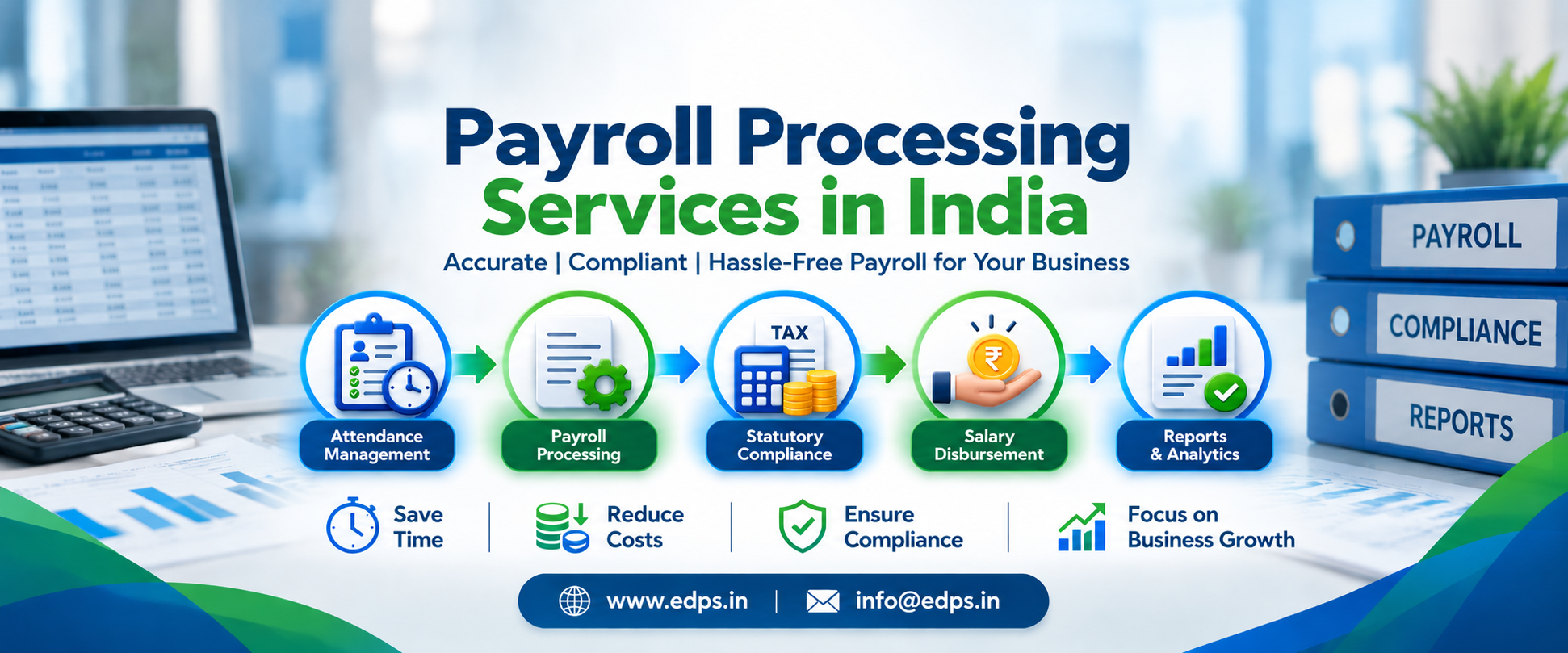
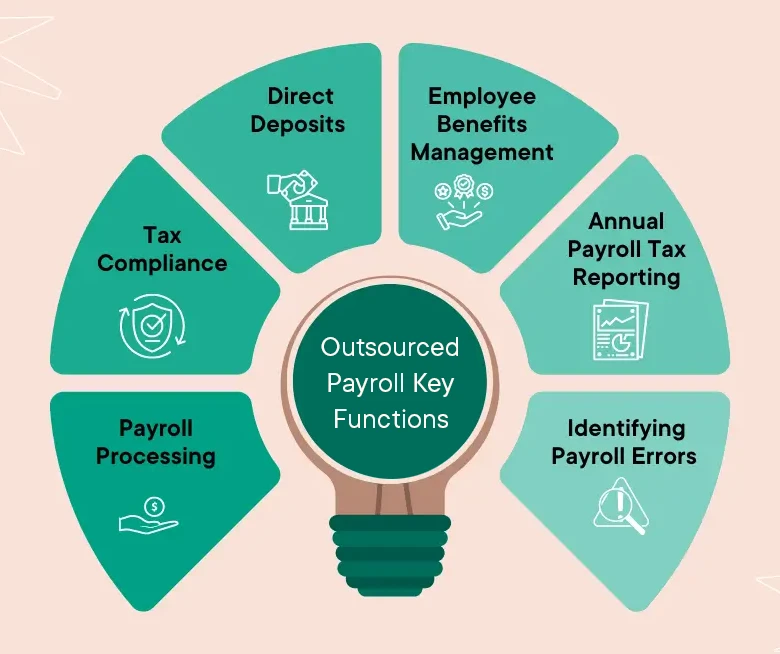
Payroll services encompass the calculations of employee salaries, the tax deductions and compliance that accompany them, and the correct disbursement of salaries at the end of every month.
It involves the computation of salaries, tracking attendance, managing leaves, and the generation of payslips along with deductions like TDS, PF, ESI, and any applicable bonuses.
In fact, payroll services are perfect for small and medium businesses that wish to simplify the HR functions and payroll workflows.
Manpower deployed refers to workers who are already assigned and actively working on a project or task.
Organizations can deploy manpower better by analyzing workload, assigning skills-based tasks, using workforce planning tools, and avoiding underutilization or overstaffing.