
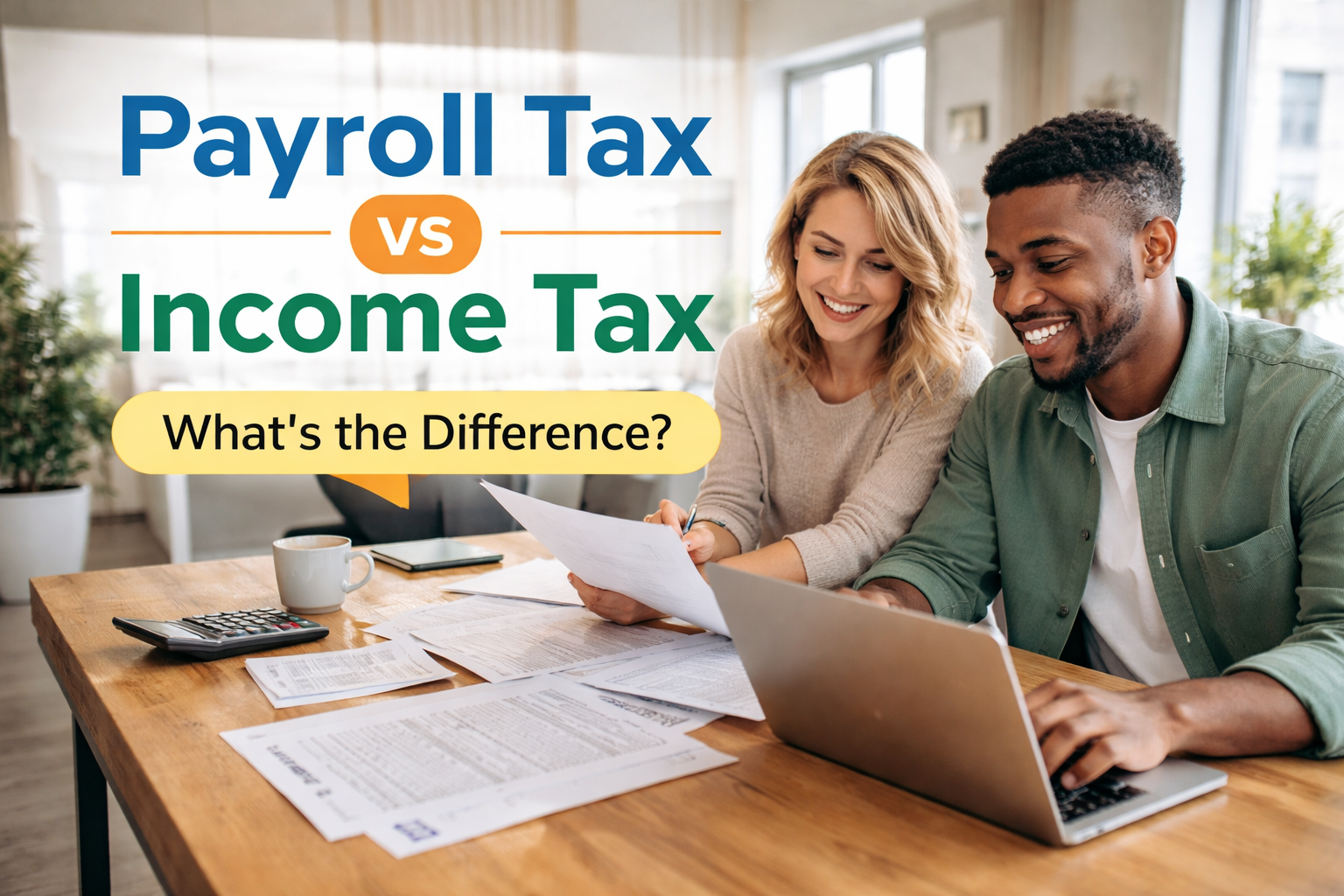
Payroll Tax vs Income Tax: Understanding the Difference and Navigating the Future (2026 Guide)
Taxes are an inevitable part of economic life—but not all taxes are alike. Two of the most common forms encountered by individuals and businesses are payroll tax and income tax. While both relate to earnings, they serve different purposes, are calculated differently, and affect decision‑making across organizations and personal financial planning.
In this comprehensive guide, we’ll explore:
- The fundamental differences between payroll tax and income tax
- Latest trends shaping tax application in 2026
- Challenges businesses and individuals face
- Future predictions and upcoming regulatory shifts
- Real‑world case studies
- Expert insights
- Clear, actionable strategies you can implement
What Is Payroll Tax?
Payroll tax refers to taxes that employers are required to withhold and/or contribute based on employee wages. These typically fund social programs such as:
- Social Security
- Medicare
- Unemployment insurance
- Workers’ compensation (in some regions)
In many countries, payroll tax is shared between employers and employees. For example, the employer pays a portion, and the employee’s share is deducted from their paycheck.
Key characteristics:
- Tied directly to wages earned
- Usually mandatory
- Designed to fund social insurance programs
- Often varies by region and contribution thresholds
What Is Income Tax?
Income tax is a broader tax levied on the total earnings of individuals or entities, including:
- Salaries and wages
- Investment income (interest, dividends)
- Business profits
- Rental income
Income tax is generally calculated annually and can be progressive, proportional, or flat.
Key characteristics:
- Levied on individuals, corporations, and entities
- Can involve deductions and exemptions
- Often subject to tax brackets
- Used to fund general government expenditures
Fundamental Differences
| Feature | Payroll Tax | Income Tax |
|---|---|---|
| What it’s based on | Wages and salaries | Total taxable income |
| Who pays | Employer & employee | Individual or business |
| Funding purpose | Social security systems | Government operations |
| Frequency | Withheld per pay period | Annually (with estimates throughout year) |
| Deductions allowed | Generally limited | Typically many (e.g., dependents, education) |
Latest Trends (2024–2026)
1. Global Shift Toward Wage‑Linked Tax Structures
Many countries are redesigning payroll taxes to respond to:
- an aging workforce
- mounting pensions and healthcare costs
- shrinking worker‑to‑retiree ratios
Trend Insight: Governments in Europe, North America, and Asia are increasing payroll tax rates or expanding social security brackets to maintain solvency.
2. Remote Work & Tax Jurisdiction Complexity
Remote work has blurred tax boundaries. Employees can report income in one jurisdiction while the employer is in another—triggering:
- multiple payroll tax requirements
- cross‑border compliance complexity
- double taxation risks
This has forced taxation authorities to issue new guidelines simplifying remote payroll reporting.
3. Adoption of Automated Tax Tools
Tax and accounting software (e.g., AI‑powered payroll systems) are reducing manual errors and ensuring compliance.
Trend Insight: Businesses are increasingly automating payroll and tax functions using tools like:
- AI‑driven payroll processors
- Compliance bots
- Cloud tax platforms
These tools reduce the risk of misclassification, missed deadlines, and fines.
Common Challenges in 2026
Rising Tax Rates Amid Economic Stagnation
Governments are increasing payroll tax rates to fund social programs, while income tax regimes are becoming more complex to counter budget deficits. This increases the compliance burden.
Complex Multinational Compliance
Multinational companies face:
- Differing tax laws
- Payroll reporting standards
- Cross‑border withholding challenges
This requires robust tax planning and international tax expertise.
Data Privacy in Automated Tax Platforms
With automated systems comes a heightened risk of data breaches. Storing sensitive tax and payroll information creates cybersecurity concerns.
Future Predictions for 2026 and Beyond
1. Universal Digital Tax IDs
Many countries are adopting unique digital tax IDs that streamline filing, reduce fraud, and automate cross‑agency reporting.
2. AI‑Assisted Tax Compliance
AI will increasingly:
- predict tax liabilities
- alert for compliance gaps
- auto‑suggest deductions
- simulate tax outcomes
This means less manual intervention and faster reporting.
3. Tax Harmonization Across Borders
To reduce compliance complexity, regional trade bodies (e.g., EU, ASEAN) might push for harmonized tax rules—especially for payroll.
Real‑World Case Studies
Case Study 1: Tech Startup Using Payroll Automation
Company: A mid‑sized software startup
Challenge: Manual payroll errors, compliance fines
Action Taken: Integrated an AI‑powered payroll platform that automatically:
- updates tax rates
- calculates deductions
- files reports
Result:
- 30% reduction in payroll errors
- 40% time saved in tax filing
Insight: Automation greatly reduced compliance risk and improved operational efficiency.
Case Study 2: Remote Workforce Tax Misclassification
Company: International consulting firm
Issue: Employees working from different countries caused payroll tax misclassification
Solution: Partnered with specialized tax compliance consultants and adopted tax reporting software that accounts for cross‑border taxation.
Outcome:
- Proper withholding in correct tax jurisdictions
- Avoidance of penalties
- Increased transparency
Expert Perspectives
“Payroll tax serves as the backbone of social programs, while income tax funds broader government functions. Treating them as interchangeable often leads to compliance failure.”
— Tax Consultant, Deloitte
“Automation is a game changer. Enterprises using AI‑enabled tax tools are better positioned to handle the ever‑changing tax landscape of 2026.”
— CPA & Tech Tax Advisor
“Remote work has permanently altered how payroll tax is applied. Employers need proactive tax solutions to avoid costly missteps.”
— International Tax Counsel
Actionable Strategies to Stay Ahead
Whether you’re a small business owner, HR professional, freelancer, or individual taxpayer, here are practical steps you can implement:
For Businesses
1. Adopt Smart Payroll Systems
Look for tools that:
- Auto‑update tax rules
- Handle multi‑jurisdiction payroll
- Integrate compliance reporting
Examples include modern cloud payroll software with AI capabilities.
2. Conduct Regular Compliance Audits
Review:
- payroll classifications
- employee tax withholding
- benefits taxation
- contractor vs employee status
This avoids costly penalties.
3. Collaborate with Tax Experts
Engage tax professionals who:
- understand international rules
- offer real‑time guidance
- help with treaty benefits
4. Educate Employees
Hold periodic workshops explaining:
- how payroll tax affects take‑home pay
- available exemptions and deductions
- reporting responsibilities
For Individuals
1. Understand Your Tax Brackets
Know your income tax brackets and how:
- deductions
- exemptions
- retirement contributions
can lower your liability.
2. Track Withholding Status
Use tools like paycheck calculators to ensure proper withholding.
3. Leverage Tax‑Advantaged Accounts
Examples:
- retirement savings accounts
- health savings accounts
- educational savings
These can reduce current taxable income.
4. Consult a Tax Professional
Especially if you:
- have investments
- work freelance
- earn overseas income
A professional can help optimize your tax strategy.
Final Thoughts
Payroll tax and income tax are both vital to economic systems, but they serve distinct roles. Payroll tax funds social programs through wage‑linked contributions, while income tax funds broader government activities based on total income.
In 2026, rapid technological evolution and changing work structures are reshaping how taxes are computed, reported, and enforced. Staying compliant requires clarity, automation, and expert guidance.
Whether an individual preparing for tax season or a business managing global payroll, understanding these differences—paired with forward‑thinking strategies—can drive better financial outcomes and minimize risk.
Frequently Asked Questions
- Monthly salary processing
- Payslip generation
- Income tax calculations
- Bonus & incentive tracking
- Full & final settlements
It involves the computation of salaries, tracking attendance, managing leaves, and the generation of payslips along with deductions like TDS, PF, ESI, and any applicable bonuses.
Yes, most cloud HR systems are subscription-based, meaning small businesses only pay for what they use—making it budget-friendly.
HR outsourcing includes payroll processing, compliance management, recruitment, attendance management, and employee lifecycle support.
Outsourcing payroll to specialists significantly reduces compliance risks by ensuring accurate filings and adherence to updated labor laws.
Yes, payroll outsourcing is completely legal in India as long as statutory requirements like PF, ESI, TDS, and labor laws are followed correctly.