
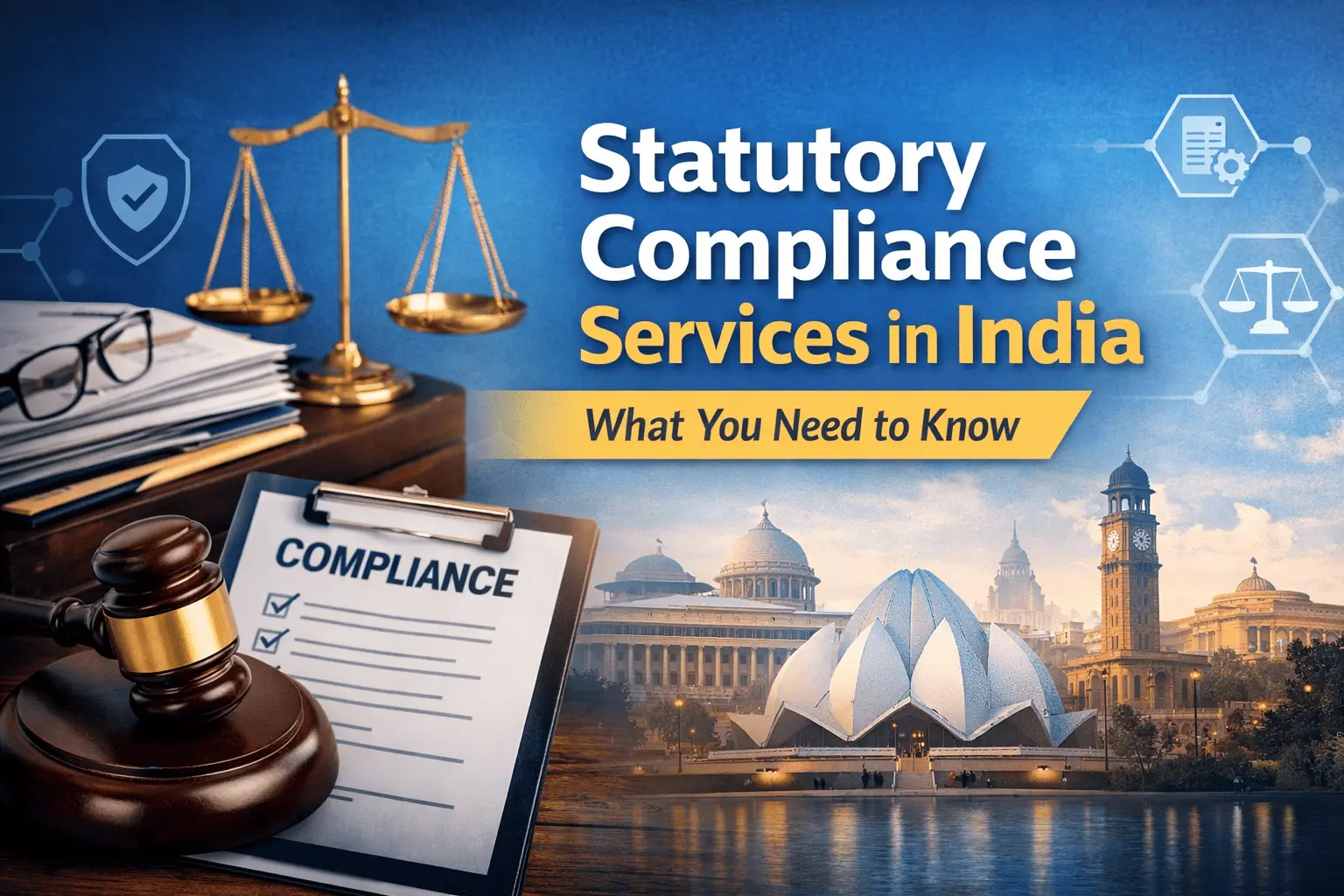
Statutory compliance refers to the basic legal requirements and obligations that the organization must fulfill to operate, and it can be a bit of a nightmare for any business, but when looking to run your business in India, that nightmare can become your living hell. While the daunting complexity of controls and constantly changing laws might lead to penalties for failure to comply, effective compliance becomes a brand-recognizable service for gains and a competitive advantage towards sustainable compliance.
This article will cover the basics of statutory compliance services in India, their importance, and how any organization can comply with statutory compliance.
What Are Statutory Compliance Services?
Statutory compliance is the legal compliance that any business has to comply with under multiple industrial laws. These obligations are different for different countries in India it covers various sectors like labor laws, taxation, environment, and others. In brief, Statutory compliance services in India allow businesses to stay on the good side of the law through the right legal process.
Statutory compliance: It involves processes like correct deduction and filing of employees’ provident fund (EPF) or Goods and Services Tax (GST) returns. Failure to carry these tasks out comes at an enormous cost, as businesses can face enormous fines, legal complications, or even be required to close down operationally.
Why is statutory compliance needed for businesses in India?
Legal Protection
Statutory compliance services save the business from legal actions. Regulatory non-compliance can lead to fines, penalties, or litigation, all of which bring an organization a bad name.
Employee Trust
Your employees expect your business to comply with labor laws, including paying salaries on time, making provident fund contributions, and providing a safe and healthy workplace. A compliance culture shows strong credibility with employees, thus developing mutual trust.
Business Continuity
Adhering to legal standards enables businesses to run smoothly at all times. Used by auditors to verify compliance of companies. In more serious cases, taxes can pass to non-compliant companies, resulting in forced audits that disturb the regular running of businesses and lead to extra costs.
Financial Health
Non-compliance could have an impact on a company. In addition, non-compliance could lead to loss of business licenses or other openings that have an impact on revenue, in addition to fines. This is an additional financial burden that businesses can avoid by staying compliant.
Key Statutory Compliance Areas for Indian Businesses
Understanding the various areas of statutory compliance is vital for managing it effectively. Here are some of the most critical aspects:
1. Labor Laws Compliance
Labor laws in India are designed to protect workers' rights and ensure fair treatment. These laws include:
- Payment of Wages Act, 1936
- Employees’ Provident Funds and Miscellaneous Provisions Act, 1952
- Payment of Gratuity Act, 1972
- Maternity Benefit Act, 1961
Compliance with these laws ensures that workers are provided their rightful benefits and are protected from exploitation.
2. Taxation Compliance
The Goods and Services Tax (GST) is a crucial part of India’s tax structure, and businesses must comply by filing returns regularly. Similarly, companies must also follow other tax laws such as Income Tax, Professional Tax, and Tax Deducted at Source (TDS).
Failing to file taxes correctly or on time can result in severe penalties, making professional compliance services invaluable in managing taxation. For businesses seeking to stay on top of their compliance obligations, consider seeking help from professionals offering comprehensive payroll services.
3. Environmental Compliance
Indian companies are also bound by laws relating to environmental protection, especially if their operations affect natural resources or generate waste. Compliance with regulations such as the Environment Protection Act, 1986, and Pollution Control Laws is crucial.
4. Health and Safety Laws
Workplace health and safety laws like the Factories Act, 1948, ensure that businesses provide a safe working environment. Compliance with these laws helps in preventing workplace accidents and illnesses, thus avoiding liability issues.
How to Effectively Manage Statutory Compliance in India?
Now that we understand the importance of statutory compliance, let’s dive into actionable steps businesses can take to stay compliant without overwhelming themselves.
1. Hire Compliance Professionals
Many businesses prefer outsourcing compliance responsibilities to dedicated professionals or third-party service providers. Statutory compliance service providers specialize in navigating complex legal frameworks, ensuring that all the required filings and documents are submitted timely and accurately. You can find more details on HR and compliance documentation services to help businesses meet these requirements.
These professionals track deadlines, fill out paperwork, and handle audits, giving you peace of mind and freeing up time to focus on your core business functions.
2. Invest in Technology
You will find various compliance management software in the market that can automate processes such as payroll management, tax filing, and document tracking, etc. Incorporating these tools into your operations will help reduce your workforce risk and drive compliance faster.
3. Regular Audits and Reviews
Even if you choose to delegate compliance externally, you need to perform internal audits at regular intervals. This allows for assurance that the compliance service provider is doing a good job and mitigates and picks up any issues that can become a problem.
4. Stay Updated on Legal Changes
Statutory compliance is not a constant—laws change all the time. Ensure that your compliance team or service provider has rapid access to new rules or amendments. Routine training and development can also keep your team updated on varying legal requirements as they arise.
The following is a real-world example (the details have been somewhat anonymized):
Take an example of a company sitting in India that has not filed its GST return on time for many months. This is what led to the corporation being fined close to INR 3 lakhs. Worse, they were audited by tax authorities, taking them out of action and costing the business a bundle of money.
This situation could have been avoided had the company availed itself of the services of a professional statutory compliance services provider. Successiveness would have meant that all the returns were submitted in a timely manner; hence, there was no penalty and no hindrance to business operations.
Conclusion: Statutory Compliance—the Key to Success of a Business
Statutory Compliance in India is no longer a legal compulsion but good business sense in the present difficult scenario. Helping your company stay in compliance with verifiable laws keeps your business, employees, and reputation safe.
If you take the initiative to comply, in-house or via a third-party service provider, you can shield your business from all kinds of future disruptions, so you can keep running without interruptions.
Remind yourself: It is continuous exercise; compliance with laws is not a one-time task. It is a continual process that requires attention, caution, and current information. It's great to keep that in mind, and it will make compliance the default in your business model.
Ready to bring your compliance under control? Now, contact a professional statutory compliance service and keep your business functioning smoothly, legally, and sustainably. Hold off on waiting for penalties to come knocking and take action to avoid the penalties now! Learn more about compliance services at EDPS Services to ensure you stay on track.
Frequently Asked Questions
- Provident Fund (PF)
- Employee State Insurance (ESI)
- Professional Tax (PT)
- Labour Welfare Fund (LWF)
- Shops & Establishment Act compliance
Including monthly returns and audits.
Yes, auditors or consultants can be granted limited access to compliance reports, employee files, and past returns without compromising system integrity.
The HR and compliance documents are vital in ensuring your company adheres to rules and laws governing employment. A well-organized document protects both employees and your company by clearly defining roles, obligations and expectations. It can help avoid legal issues, decreases the possibility of penalizations and facilitates daily operations.
We ensure compliance by keeping current with the most recent laws and regulations regarding labor. Our experts work with businesses to design specific documents tailored to the specific requirements of your business and ensure full compliance with state, local and national laws. We also help with filings required by law and audits to ensure that your company is legally safe.
HR compliance means making sure that the company adheres to all laws or regulations as well as industry guidelines regarding the treatment of employees. This means adhering to the rules regarding benefits, wages such as workplace safety, non-discrimination, tax deductions and rights of employees. This helps safeguard both the employees and the company by reducing legal risks and ensuring ethical business practices.
Yes. A good HRM software automates payroll calculations and ensures compliance with Indian labor laws. It manages PF, ESI, professional tax, income tax deductions, and statutory reports, reducing errors, penalties, and manual workload for small business owners.
Outsourcing payroll to specialists significantly reduces compliance risks by ensuring accurate filings and adherence to updated labor laws.
Yes, most payroll outsourcing companies manage PF, ESI, TDS, professional tax, and labor law compliance.
HR managers influence salary structures, declarations, payroll inputs, reimbursements, and final settlements. Errors in these areas can directly affect TDS accuracy and employee tax experience.