
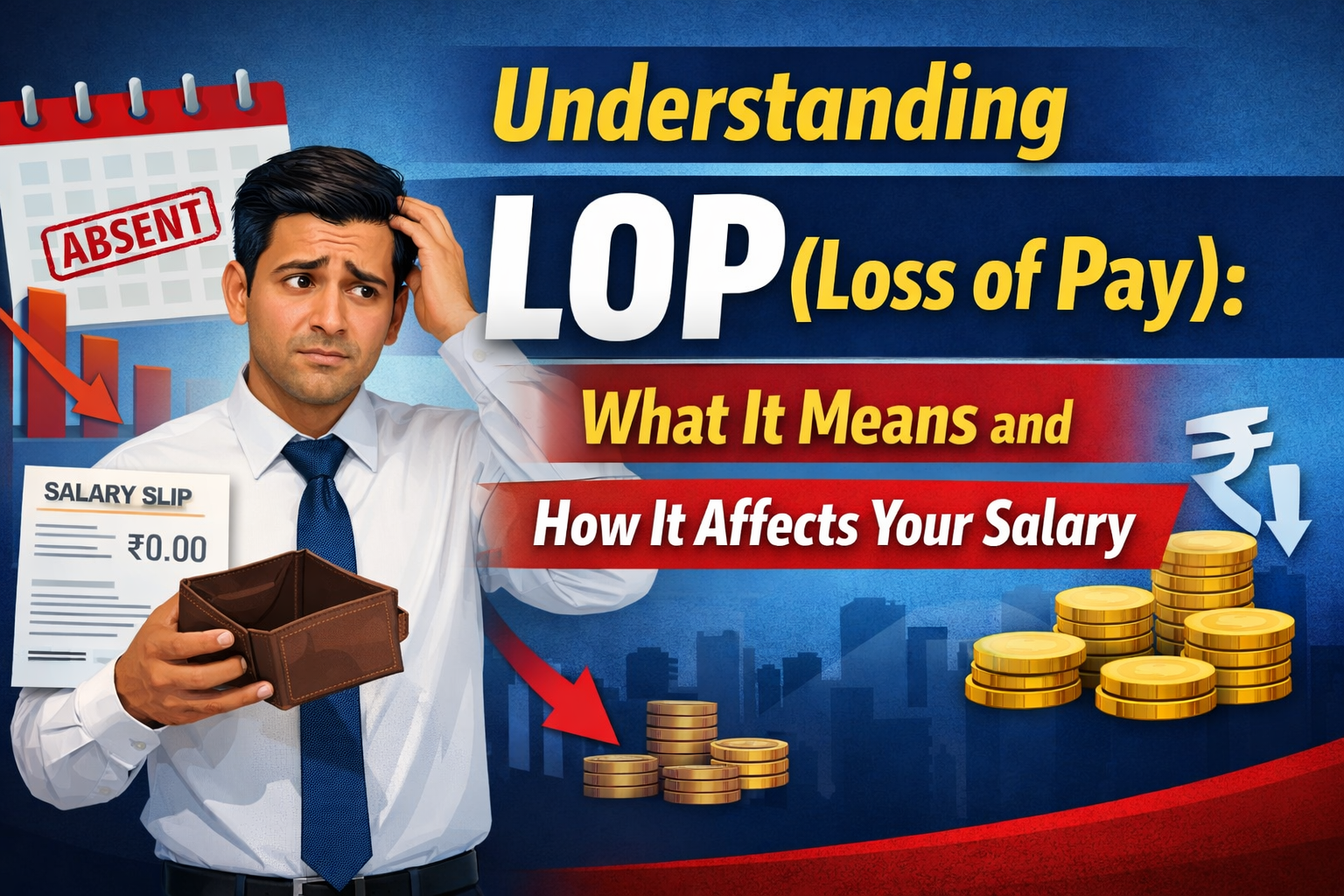
Understanding LOP (Loss of Pay): What It Means and How It Affects Your Salary
Loss of Pay (LOP) refers to the reduction in an employee's salary due to an absence from work without approved leave or for any unauthorized leaves taken by the employee. In India, LOP is a critical concept that can affect salary disbursements, employee attendance, and overall productivity. Employers must manage this deduction with care to avoid compliance risks. For more details on employee rights and HR best practices, visit our guide on payroll compliance.
Featured Snippet
LOP (Loss of Pay) refers to salary deductions for unauthorized leave or unapproved absences from work. It impacts both employees and employers in terms of financial planning and compliance.
Table of Contents
- What is LOP?
- Legal Framework / Regulatory Background
- Eligibility / Coverage
- Financial Structure / Contribution / Cost Impact
- Step-by-Step Process
- Documentation Checklist
- Common Mistakes & Compliance Risks
- Employer/HR Practical Checklist
- Comparison Table
- Future Outlook / Recent Amendments
- FAQs
What is LOP?
Loss of Pay (LOP) is a situation where an employee's salary is reduced due to absences from work that are not covered by paid leave. LOP occurs when employees miss work without prior approval or if they exhaust all available leave days (sick leave, casual leave, etc.). It is a common payroll deduction and has significant implications for both employees and employers in terms of salary management and HR policies.
Legal Framework / Regulatory Background
In India, LOP is governed by various labor laws and employment contracts. There is no specific national law that regulates LOP, but it is typically addressed through individual employment contracts and the terms set forth by the employer. However, laws like the Factories Act, 1948, Shops and Establishment Act, and various state-specific labor regulations guide how leave and pay deductions are handled. Employers must ensure that the policies regarding LOP are in compliance with these laws to avoid any legal complications.
Eligibility / Coverage
Not all employees are subject to LOP. The eligibility for LOP primarily depends on company policies, the type of leave taken, and the terms of the employment contract. Employees who have exhausted all their paid leave options may be subject to LOP for any further absences. Additionally, employees taking unauthorized leave or being absent without notice may also incur LOP deductions. In some industries, employees on probation or those working on short-term contracts may be more vulnerable to LOP deductions, as they are typically not entitled to paid leave benefits.
Financial Structure / Contribution / Cost Impact
The impact of LOP on an employee’s salary is straightforward. For every day or period an employee is absent without approval, a corresponding deduction is made from their salary. This deduction is usually calculated based on the employee’s daily wage rate. For example, if an employee earns ₹30,000 per month and misses one day of work, the LOP deduction may be calculated as ₹30,000 divided by the total number of working days in the month. The financial burden of LOP may vary depending on the company’s salary structure, employee compensation packages, and leave policies.
Step-by-Step Process
Step 1: Employee Absence
The first step in the LOP process is when an employee is absent from work without proper approval. This can be due to various reasons, such as personal illness, family emergencies, or unscheduled leaves.
Step 2: Leave Record Verification
The HR department or payroll team checks the leave records to confirm whether the absence is covered by any paid leave. If the employee has no remaining paid leave balance, LOP deductions are initiated.
Step 3: LOP Calculation
The payroll team calculates the LOP deduction based on the employee’s salary and the number of days absent. The deduction is typically prorated, based on the employee's salary structure.
Step 4: Salary Adjustment
Once the LOP deduction is calculated, it is adjusted in the employee’s monthly salary, and the updated salary amount is communicated to the employee.
Documentation Checklist
- Employee leave application records
- Leave balance report
- Approval/denial of leave request
- Absence reports or attendance logs
- Salary adjustment records
- Communication with employees regarding deductions
Common Mistakes & Compliance Risks
Some common mistakes that employers make regarding LOP include:
- Failure to clearly communicate the company’s LOP policy to employees.
- Improper calculation of LOP deductions, leading to over or under deduction of salary.
- Not keeping proper records of employee attendance and leave applications.
- Violating labor laws regarding employee rights to paid leave or absence without pay.
Employers must ensure that their LOP policies align with labor laws to avoid costly legal disputes and non-compliance penalties.
Employer/HR Practical Checklist
- Communicate clear LOP policies to employees during onboarding and regular training.
- Ensure compliance with local labor laws regarding leave and LOP deductions.
- Regularly audit attendance records and leave balances to ensure accurate salary deductions.
- Maintain transparent communication with employees regarding LOP deductions.
- Consult with legal experts or HR consultants if unsure about LOP policies and their compliance.
Comparison Table
| Policy | Paid Leave | Loss of Pay |
|---|---|---|
| Eligibility | Applicable to full-time employees with leave entitlements. | Applicable to employees with no remaining leave or unauthorized absence. |
| Impact on Salary | No impact, as paid leave is covered by company salary. | Salary is reduced for the number of LOP days. |
| Documentation Required | Leave application, approval/rejection records. | Absence record, leave balance verification, salary adjustment records. |
Future Outlook / Recent Amendments
As labor laws continue to evolve in India, employers should stay informed about amendments related to paid leave, LOP, and employee rights. The introduction of more flexible leave policies and changes to the Payment of Gratuity Act and the Employees' Provident Fund (EPF) scheme may influence the handling of LOP deductions in the future. Employers must ensure they are compliant with all current and future regulations to minimize risk and enhance employee satisfaction.
Frequently Asked Questions (FAQs)
1. What is Loss of Pay (LOP)?
LOP is a salary deduction due to employee absence without approval or when all paid leave entitlements are exhausted.
2. Can an employer deduct LOP for unauthorized leave?
Yes, employers can deduct LOP for unauthorized leave as per company policy and employment terms.
3. How is LOP calculated?
LOP is calculated by dividing the employee's monthly salary by the total number of working days in the month and multiplying by the number of days missed.
4. Is LOP applicable to probationary employees?
Yes, probationary employees may incur LOP deductions if they miss work without valid reasons or approval.
5. What happens if an employee is absent without leave?
If an employee is absent without leave, the employer can deduct salary for the days missed under LOP policies.
6. Can LOP be avoided?
LOP can be avoided by ensuring employees take authorized leave and adhere to the company’s attendance policies.
7. Does LOP affect bonuses or incentives?
In many cases, LOP can reduce the amount of bonuses or incentives if they are tied to attendance or performance metrics.
8. Can an employee request to offset LOP with paid leave?
Employees may request to offset LOP with paid leave if they have available leave balance, but it depends on company policy.
Conclusion
Understanding LOP (Loss of Pay) is crucial for both employers and employees. Clear policies, proper documentation, and compliance with labor laws ensure that salary deductions are handled fairly and transparently. Employers must actively communicate LOP policies, keep track of employee attendance, and make necessary adjustments to salaries in a timely manner. For further assistance with compliance or payroll management, feel free to reach out to our expert team at EDPS.