
For small business owners, managing taxes can often feel like navigating a maze. Between GST returns, compliance rules, and tax calculations, it’s easy to get overwhelmed—especially when you’re also handling operations, hiring, and payroll.
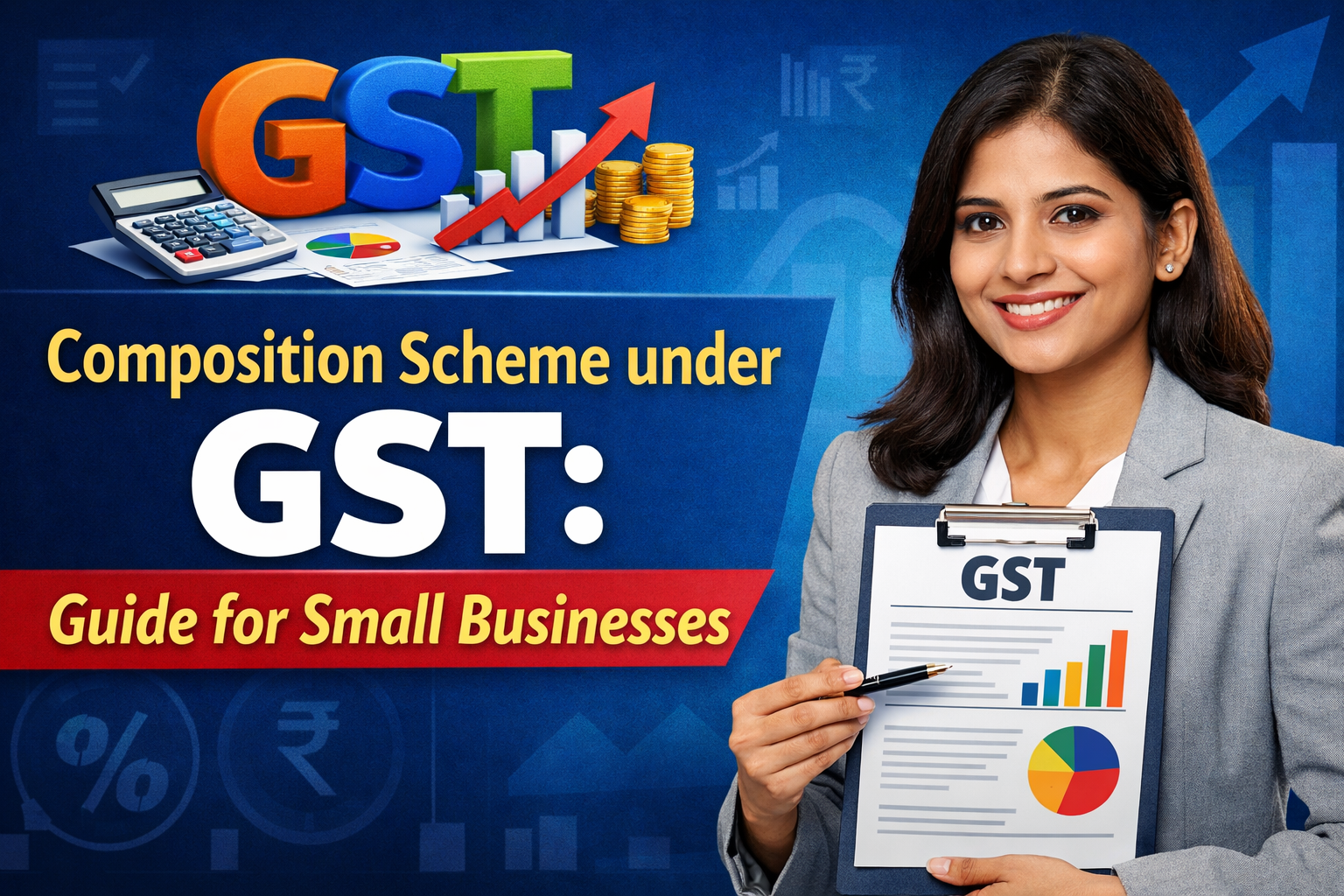
This is exactly where understanding the Composition Scheme under GST becomes crucial.
It’s designed to simplify taxation for small businesses—but many entrepreneurs either misunderstand it or fail to use it strategically.
In this guide, we’ll break down the Composition Scheme under GST, explain how it works, and help you decide whether it fits your business structure—while also showing how professional HR and compliance support can make your journey smoother.
What is Composition Scheme under GST?
The Composition Scheme under GST is a simplified tax scheme introduced for small taxpayers to reduce compliance burden.
Instead of paying GST at standard rates, eligible businesses can pay tax at a fixed, lower rate based on turnover.
In simple terms: You pay less tax with fewer compliance requirements—but with certain limitations.
Eligibility Criteria
- Annual turnover up to ₹1.5 crore
- ₹75 lakh for special category states
Key Types / Components of Composition Scheme
The scheme varies based on the type of business:
1. Manufacturers & Traders
Tax Rate: 1% of turnover
2. Restaurants (excluding alcohol)
Tax Rate: 5% of turnover
3. Service Providers (Limited Scheme)
Tax Rate: 6% of turnover
Turnover Limit: ₹50 lakh
Core Conditions
- No Input Tax Credit (ITC)
- No interstate sales allowed
- Cannot collect GST from customers
- Must issue a Bill of Supply
How Composition Scheme Works (Step-by-Step)
Here’s how businesses operate under this scheme:
Step 1: Check Eligibility
Ensure your turnover and business type qualify.
Step 2: Apply for the Scheme
- File Form CMP-02 on GST portal
- Opt at the beginning of the financial year
Step 3: Pay Tax at Fixed Rate
- Calculate tax on total turnover
- Pay quarterly using CMP-08
Step 4: File Annual Return
Submit GSTR-4 once a year
Step 5: Maintain Basic Records
- Issue Bill of Supply
- Mention composition status clearly
Benefits of Composition Scheme under GST
Why small businesses prefer it:
- Lower tax liability
Pay as low as 1% GST - Simple compliance
Quarterly payments instead of monthly filings - Minimal documentation
No complex ITC tracking - Cost-effective
Reduced accounting and compliance expenses - Better focus on core operations
Spend less time on tax management
Use Cases / Applications
The scheme is ideal for businesses with local operations and simple structures.
Best suited for:
- Small retailers and shop owners
- Local manufacturers
- Small restaurants
- Freelancers with limited turnover
Not suitable for:
- Businesses doing interstate trade
- Companies needing Input Tax Credit
- Rapidly scaling startups
Challenges / Common Mistakes
While the scheme simplifies taxation, it comes with trade-offs.
Key Challenges
- No Input Tax Credit
Increases overall cost for some businesses - Limited expansion scope
Cannot sell across states - Turnover restrictions
Must switch to regular GST if limit is crossed
Common Mistakes
- Choosing composition without analyzing business growth plans
- Ignoring impact of ITC loss
- Missing compliance deadlines
- Using incorrect invoices
Why Professional HR & Compliance Support Matters?
While GST is a financial compliance, businesses often overlook the HR and operational side of compliance, which is equally critical.
As your business grows, managing:
- Payroll
- Employee compliance
- Workforce management
- Documentation
…can become just as complex as tax compliance.
That’s where EDP Services comes in—not for GST filing, but for strengthening your business foundation through HR and workforce solutions.
Why Choose EDP Services
EDP Services specializes in end-to-end HR outsourcing and workforce management solutions, helping businesses stay compliant, efficient, and scalable.
How EDP Adds Value
- Streamlines HR operations
- Ensures labour law compliance
- Reduces administrative burden
- Helps businesses scale efficiently
- Provides technology-driven HR solutions
While you simplify taxes with GST schemes, EDP simplifies your workforce management.
Case: Growing Retail Business
A small retail business opted for the Composition Scheme under GST to reduce tax complexity.
Challenge:
As the business expanded:
- Hiring increased
- Payroll became complex
- Compliance risks grew
Solution:
The company partnered with EDP Services for:
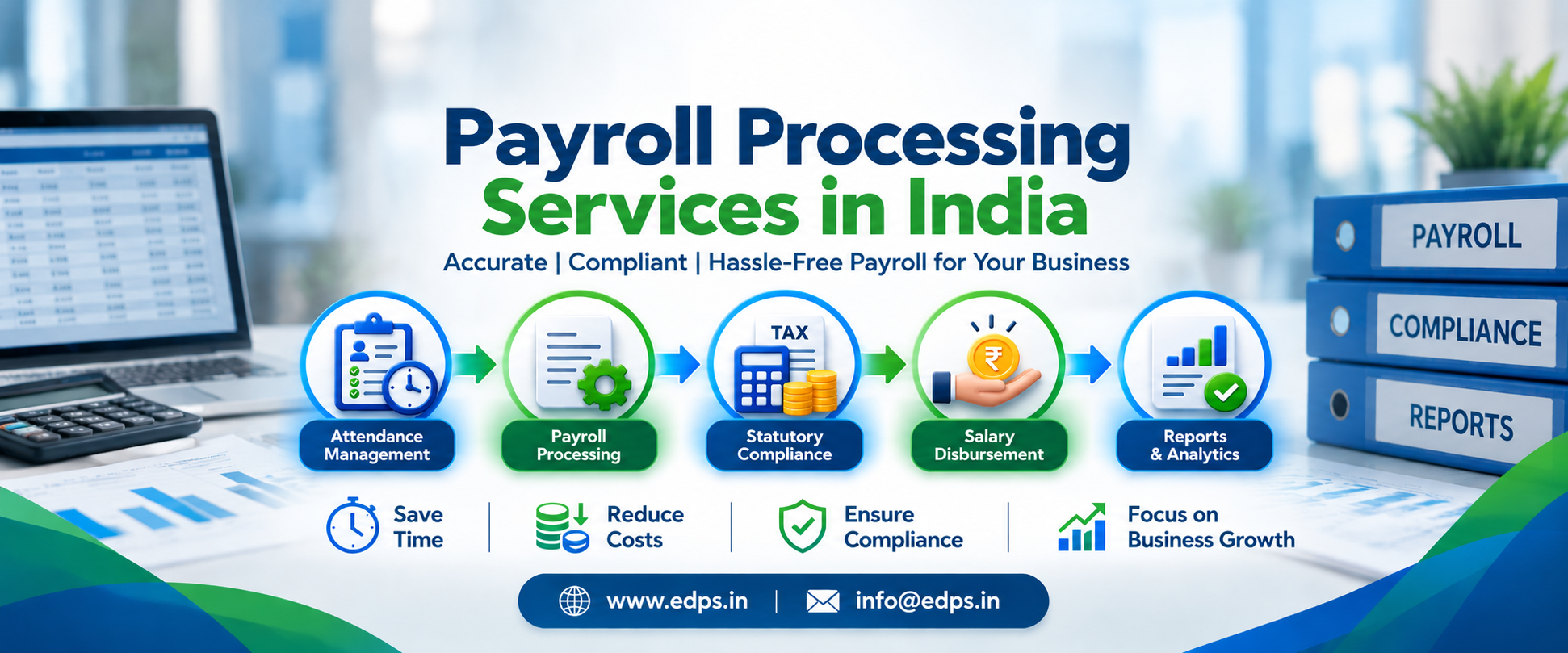
- Payroll outsourcing
- HR compliance management
- Workforce structuring
Result:
- Smooth HR operations
- Reduced compliance risks
- More time to focus on growth
Outcome: Business scaled efficiently with simplified tax + structured HR systems.
Conclusion:
The Composition Scheme under GST is a smart choice for small businesses seeking simplicity—but only when aligned with their growth strategy and operational model.
At the same time, taxation is just one piece of the puzzle.
To truly scale your business, you need:
- Strong HR systems
- Efficient payroll management
- Compliance-driven processes
That’s where EDP Services makes the difference.
Looking to streamline your workforce and compliance operations?
Visit www.edps.in and explore how EDP can support your growth journey
Simplify your taxes. Strengthen your workforce. Scale with confidence.