

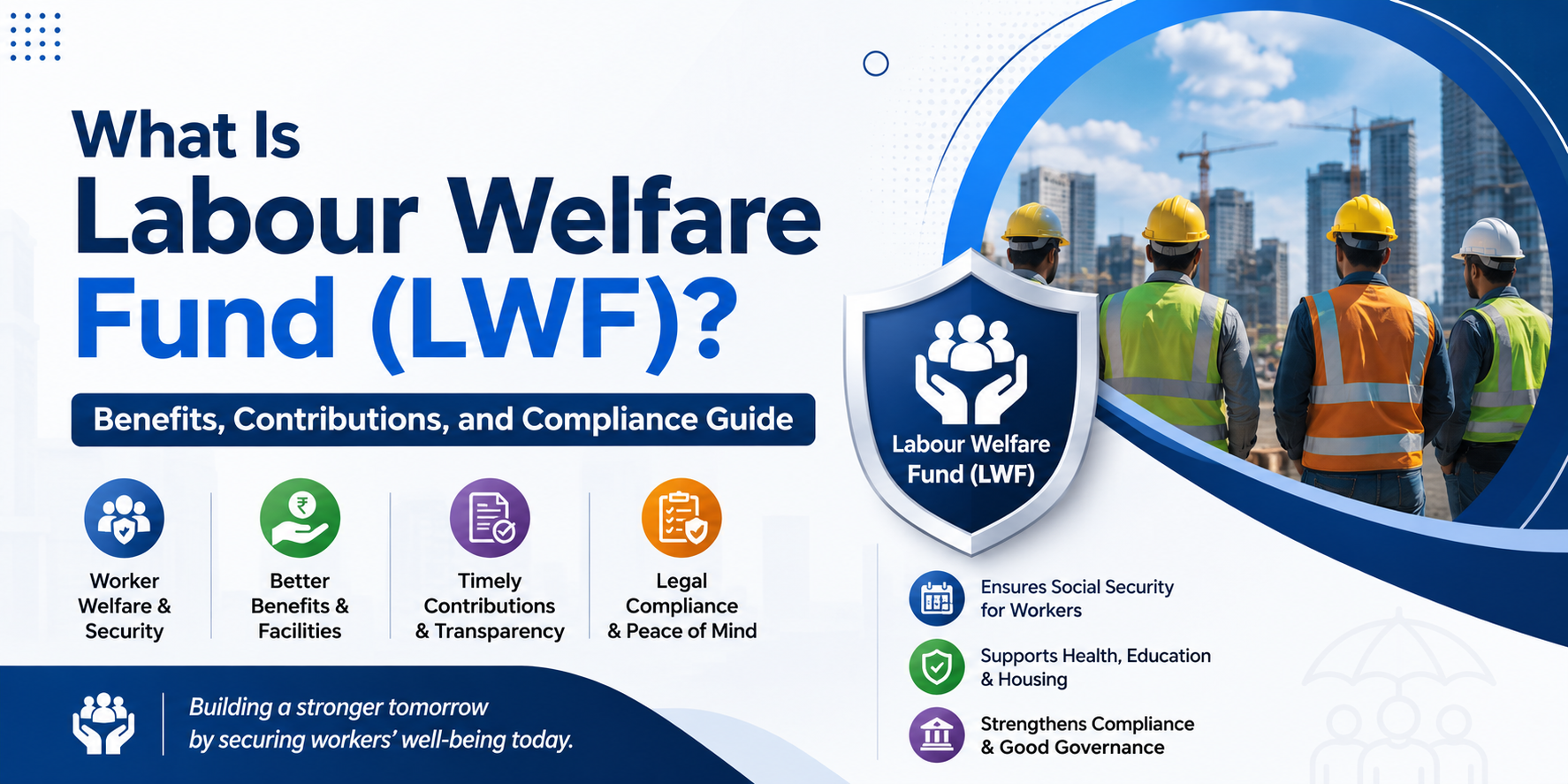
What Is Labour Welfare Fund (LWF)? Benefits, Contributions, and Compliance Guide
Labour Welfare Fund (LWF) is a statutory welfare initiative designed to improve the quality of life of employees and their families. The fund is created through contributions from employers, employees, and in some cases the government. The collected amount is used to support various welfare programs such as healthcare assistance, educational support, housing schemes, and skill development initiatives.
For businesses, understanding Labour Welfare Fund regulations is essential to maintaining compliance and avoiding penalties. For employees, LWF provides access to welfare benefits that can improve financial security and overall well-being.
What Is Labour Welfare Fund (LWF)?
The Labour Welfare Fund (LWF) is a welfare scheme established under state-specific Labour Welfare Fund Acts in India. Its primary objective is to promote the welfare of workers by providing financial and social support through various government-sponsored programs.
The fund is generally financed through contributions from employers and employees. Since labour laws are largely administered at the state level, LWF rules, contribution rates, and compliance requirements may differ from one state to another.
The main purpose of LWF is to ensure that workers receive benefits beyond their regular salaries and statutory entitlements, contributing to a healthier and more secure workforce.
Objectives of the Labour Welfare Fund
The Labour Welfare Fund serves several important objectives, including:
-
Improving the living standards of workers.
-
Providing financial assistance during emergencies.
-
Supporting employee education and skill development.
-
Promoting healthcare and medical assistance programs.
-
Enhancing social security for workers and their families.
-
Encouraging employee welfare through recreational and community development initiatives.
By focusing on these objectives, LWF helps create a more productive and satisfied workforce.
How Does LWF Contribution Work?
The Labour Welfare Fund is funded through contributions made by both employees and employers. The exact contribution amount depends on the state regulations applicable to the organization.
Employee Contribution
A small amount is deducted from an employee's salary as a contribution toward the Labour Welfare Fund. This deduction is generally minimal and varies by state.
Employer Contribution
Employers are required to contribute a specified amount on behalf of each eligible employee. In many states, the employer's contribution is higher than the employee's contribution.
State-Wise Variations
One of the most important aspects of LWF compliance is understanding state-specific requirements. Different states may have different:
-
Contribution rates
-
Due dates
-
Filing procedures
-
Applicability criteria
-
Employer obligations
Organizations operating across multiple states should carefully track local compliance requirements to avoid penalties.
Key Benefits of Labour Welfare Fund
The Labour Welfare Fund supports a wide range of welfare schemes that directly benefit employees and their families.
Education Assistance
Many welfare boards provide educational assistance to workers' children through:
-
Scholarships
-
Educational grants
-
Financial aid for higher education
-
School-related support programs
These initiatives help reduce the financial burden of education on working families.
Medical Support
Healthcare-related benefits are among the most valuable services funded through LWF.
Common benefits may include:
-
Medical reimbursements
-
Health assistance programs
-
Financial support during serious illnesses
-
Welfare-based healthcare schemes
These programs help employees access essential healthcare services when needed.
Housing and Welfare Schemes
Some Labour Welfare Funds support housing and community welfare initiatives, including:
-
Housing assistance programs
-
Community development projects
-
Welfare centers
-
Recreational facilities for workers and families
Such initiatives contribute to improved living conditions and social well-being.
Skill Development Programs
Modern workplaces require continuous learning and development. LWF-backed programs often support:
-
Vocational training
-
Technical skill development
-
Career advancement initiatives
-
Employment enhancement programs
These opportunities help workers improve their employability and earning potential.
LWF Compliance for Employers
Employers have specific responsibilities regarding Labour Welfare Fund compliance. Failure to meet these obligations can result in penalties and legal complications.
Registration Requirements
Businesses operating in states where LWF is applicable may need to register with the relevant labour welfare authorities.
Registration requirements can vary depending on:
-
State regulations
-
Industry type
-
Employee count
-
Business structure
Filing and Payment Process
Employers must:
-
Calculate applicable contributions.
-
Deduct employee contributions accurately.
-
Add employer contributions.
-
Deposit the amount within prescribed timelines.
-
Maintain proper compliance records.
Many organizations use payroll software to automate these processes and reduce compliance risks.
Penalties for Non-Compliance
Failure to comply with Labour Welfare Fund regulations may lead to:
-
Monetary penalties
-
Interest on delayed payments
-
Compliance notices
-
Legal consequences under applicable labour laws
Timely compliance helps organizations avoid unnecessary financial and regulatory issues.
Common Challenges and Best Practices
While Labour Welfare Fund compliance may seem straightforward, organizations often face challenges such as:
-
Incorrect payroll deductions
-
Missed filing deadlines
-
Lack of awareness about state-specific rules
-
Inadequate record maintenance
To ensure smooth compliance, employers should:
-
Conduct regular compliance reviews.
-
Stay updated with state labour regulations.
-
Use reliable payroll management systems.
-
Maintain accurate employee records.
-
Train HR and payroll teams on statutory requirements.
Following these best practices can significantly reduce compliance risks.
Conclusion
The Labour Welfare Fund (LWF) plays a vital role in supporting employee welfare and social security. Through contributions from employers and employees, the fund helps finance education assistance, healthcare programs, housing support, and skill development initiatives that improve workers' quality of life.
For employers, understanding Labour Welfare Fund requirements is essential for maintaining legal compliance and building a positive workplace culture. By ensuring timely contributions and proper record-keeping, organizations can meet their statutory obligations while contributing to employee well-being and long-term workforce development.