
Payroll Outsourcing Services in India: Complete Guide to Payroll Management, Processing & Compliance
Payroll is one of the most important business functions in any organization. While many people associate payroll with simply paying employee salaries, it is actually a comprehensive process that includes salary calculations, attendance management, statutory deductions, tax compliance, payslip generation, record maintenance, and timely salary disbursement.
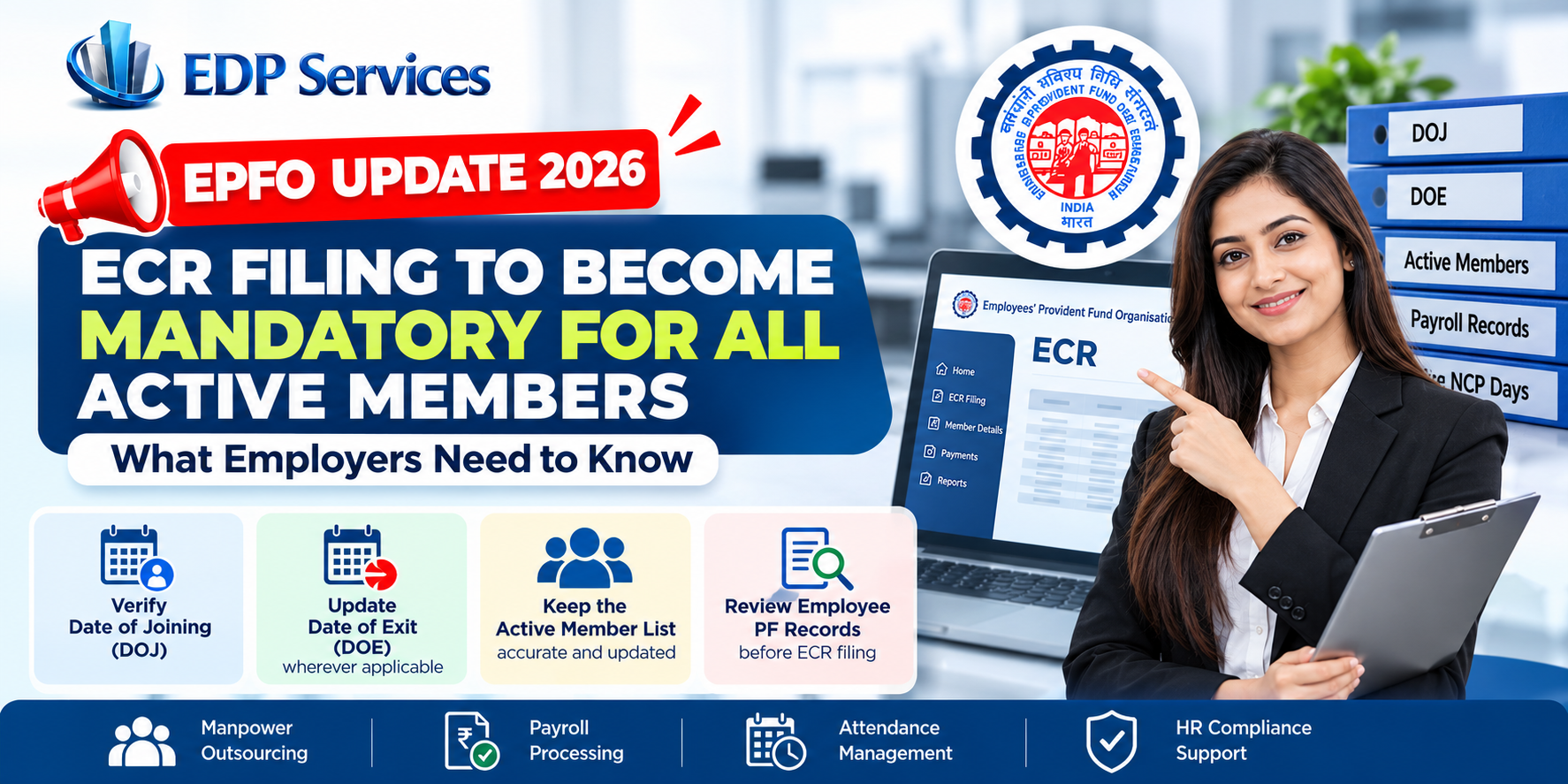
In today's rapidly evolving regulatory environment, businesses must comply with multiple labour laws and statutory requirements, including Employees' Provident Fund (EPF), Employees' State Insurance (ESI), Professional Tax (PT), Tax Deducted at Source (TDS), Labour Welfare Fund (LWF), gratuity, bonus, and state-specific labour regulations. Even a small payroll error can lead to compliance penalties, financial losses, and reduced employee trust.
Whether you're a startup, SME, or large enterprise, managing payroll efficiently is essential for maintaining operational excellence and ensuring employee satisfaction. Many organizations are now adopting automated payroll software or partnering with trusted payroll outsourcing companies to improve accuracy, reduce administrative workload, and stay compliant with changing regulations.
This comprehensive guide explains everything you need to know about payroll management in India, including payroll processing methods, payroll calculations, statutory compliance, payroll outsourcing benefits, and best practices. You'll also learn how EDP Services helps businesses simplify payroll while ensuring complete statutory compliance and timely salary processing.
What is Payroll?
Payroll is the process of calculating, managing, and distributing employee salaries while ensuring compliance with applicable labour laws and tax regulations. It involves determining employee earnings, applying statutory and voluntary deductions, calculating taxes, generating payslips, and transferring salaries to employees on time.
Payroll is more than salary processing. It includes maintaining employee records, calculating overtime, managing leave and attendance, processing reimbursements, depositing statutory contributions, filing government returns, and maintaining payroll documentation for audits and legal compliance.
An efficient payroll system helps businesses:
- Pay employees accurately and on time.
- Ensure compliance with Indian labour laws.
- Reduce payroll errors and financial risks.
- Improve employee satisfaction and trust.
- Maintain accurate payroll records for audits.
- Save time through automation and streamlined workflows.
As organizations expand across multiple cities and states, payroll becomes increasingly complex. Outsourcing payroll to an experienced service provider helps businesses maintain compliance while allowing HR and finance teams to focus on strategic business growth.
Why is Payroll Important?
Payroll directly impacts employee satisfaction, statutory compliance, financial reporting, and overall business efficiency. A well-managed payroll process ensures employees receive accurate salaries on time while helping organizations meet all regulatory obligations.
1. Ensures Accurate Salary Payments
Employees expect salaries to be credited accurately and on schedule. Timely payroll processing improves employee confidence, strengthens workplace morale, and enhances organizational credibility.
2. Maintains Statutory Compliance
Indian businesses must comply with various payroll-related regulations, including EPF, ESI, Professional Tax, TDS, Labour Welfare Fund, Bonus Act, Gratuity Act, and state-specific labour laws. Proper payroll management helps organizations avoid penalties, notices, and legal complications.
3. Improves Financial Accuracy
Payroll is one of the largest operating expenses for most organizations. Accurate payroll processing ensures reliable budgeting, cost control, financial reporting, and tax planning.
4. Reduces Compliance Risks
Automated payroll systems and experienced payroll professionals minimize manual errors, ensure accurate statutory deductions, and simplify regulatory reporting.
5. Enhances Employee Experience
Accurate payslips, timely reimbursements, transparent salary calculations, and quick resolution of payroll queries contribute to a positive employee experience.
Key Components of Payroll
A complete payroll process consists of several interconnected components that ensure accurate salary processing and statutory compliance.
Employee Earnings
Employee earnings form the foundation of payroll calculations and generally include the following:
- Basic Salary
- House Rent Allowance (HRA)
- Dearness Allowance (DA), where applicable
- Special Allowance
- Conveyance or Transport Allowance
- Performance Bonus
- Sales Incentives
- Overtime Payments
- Leave Encashment
- Arrears and Salary Revisions
- Reimbursements
Payroll Deductions
Payroll deductions reduce the employee's gross salary to determine the final take-home salary. These deductions may include:
- Employees' Provident Fund (EPF)
- Employees' State Insurance (ESI)
- Professional Tax (PT)
- Tax Deducted at Source (TDS)
- Labour Welfare Fund (LWF)
- Salary Advances or Loans
- Health Insurance Premiums
- Other authorised deductions
Statutory Compliance
Every payroll cycle requires businesses to comply with applicable central and state regulations. This includes timely calculation, deduction, deposit, and filing of statutory contributions and returns.
Payslip Generation
After payroll processing is completed, employees receive detailed payslips showing salary components, deductions, employer contributions, tax deductions, and net salary.
Payroll Records
Organizations should maintain complete payroll records, employee salary history, statutory filings, attendance reports, and tax documents to support audits and ensure regulatory compliance.
Payroll Components at a Glance
| Payroll Component | Description |
|---|---|
| Employee Earnings | Basic Salary, HRA, Allowances, Bonus, Incentives, Overtime |
| Statutory Deductions | EPF, ESI, Professional Tax, TDS, Labour Welfare Fund |
| Voluntary Deductions | Health Insurance, Loans, Salary Advances, Other Approved Deductions |
| Payroll Compliance | Government filings, statutory deposits, labour law compliance |
| Payslip Generation | Monthly salary statement for employees |
| Payroll Records | Employee payroll history, reports, statutory documentation |
Each of these components plays a vital role in ensuring an efficient, compliant, and transparent payroll process for organizations across India.
Payroll Processing Methods:
Choosing the right payroll processing method is essential for ensuring payroll accuracy, statutory compliance, operational efficiency, and employee satisfaction. As businesses grow, payroll becomes increasingly complex due to changing labour laws, tax regulations, multi-state operations, and expanding workforces. Selecting the right payroll model helps organizations reduce manual effort, improve compliance, and streamline payroll operations.
Today, businesses in India generally choose one of the following payroll processing methods.
1. Manual Payroll Processing
Manual payroll processing is commonly used by startups and small businesses with a limited workforce. HR or finance teams calculate salaries using spreadsheets or basic accounting software while manually processing attendance, leave records, overtime, bonuses, statutory deductions, and tax calculations.
Although this method may appear cost-effective initially, it becomes increasingly difficult to manage as the organization grows. Manual payroll requires continuous monitoring of changes in EPF, ESI, Professional Tax, TDS, Labour Welfare Fund, and state-specific labour laws. It also increases the risk of payroll errors, delayed salary payments, inaccurate statutory filings, and compliance penalties.
Advantages
- Low initial investment
- Suitable for very small businesses
- Simple payroll requirements
Limitations
- Time-consuming
- Higher risk of calculation errors
- Difficult to scale
- Compliance challenges
- Heavy administrative workload
2. Payroll Software
Payroll software automates routine payroll tasks, making salary processing faster, more accurate, and easier to manage. Modern payroll systems integrate attendance, leave management, employee databases, HRMS, and accounting software to create a seamless payroll workflow.
Payroll software can automatically calculate salaries, statutory deductions, taxes, reimbursements, bonuses, overtime, and generate digital payslips. It also simplifies payroll reporting, audit trails, and compliance management.
While payroll software significantly improves efficiency, organizations still require payroll professionals to interpret changing regulations, verify calculations, and manage statutory filings accurately. Book Your Free Payroll Software DEMO
Advantages
- Automated payroll calculations
- Improved payroll accuracy
- Faster salary processing
- Digital payslips and reports
- Integration with HRMS and attendance systems
Limitations
- Requires software implementation
- Needs payroll expertise for compliance
- Subscription and maintenance costs
3. Payroll Outsourcing
Payroll outsourcing is the preferred solution for organizations looking to improve payroll accuracy while reducing administrative effort and compliance risks. Businesses partner with an experienced payroll outsourcing company to manage the complete payroll lifecycle.
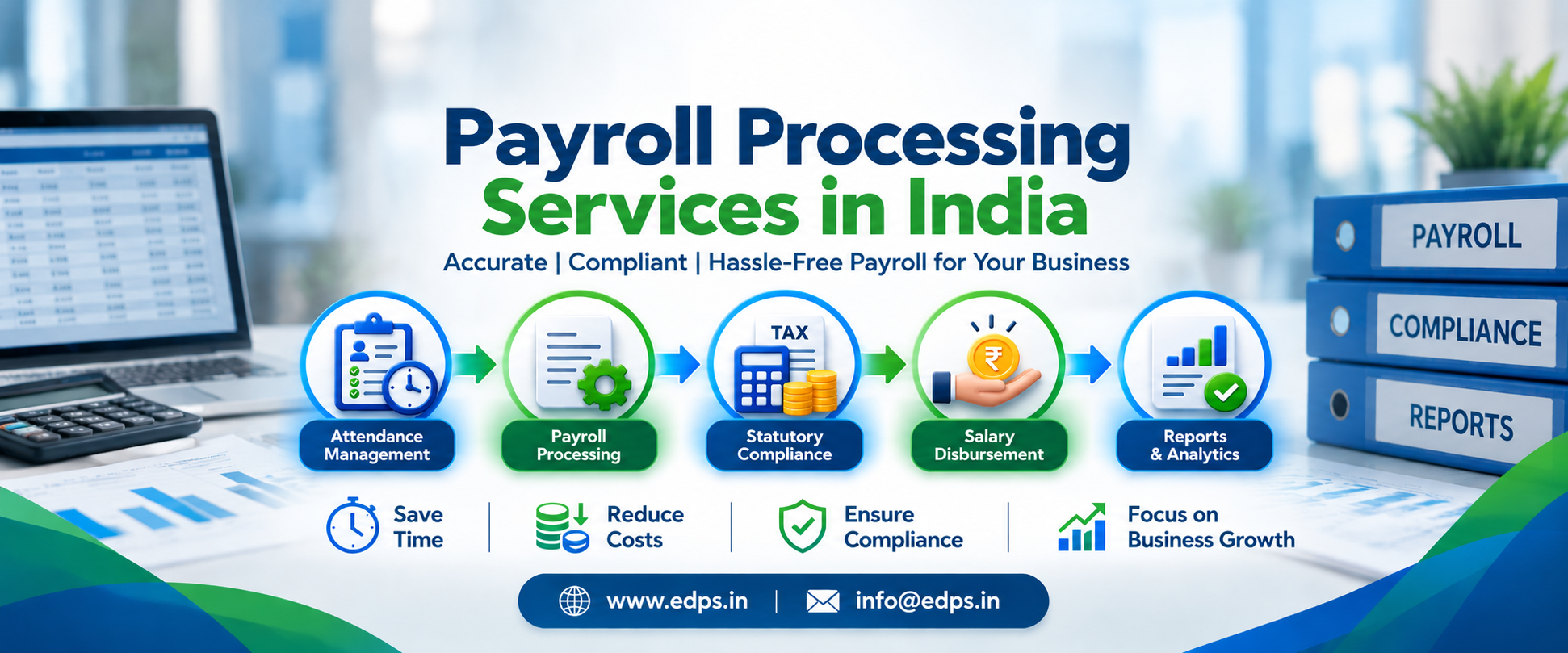
Payroll outsourcing providers handle employee onboarding, salary calculations, attendance integration, reimbursements, statutory deductions, PF and ESI administration, Professional Tax, TDS, payroll reporting, payslip generation, salary disbursement, and statutory return filing.
By outsourcing payroll, organizations gain access to experienced payroll professionals, advanced payroll technology, and continuous compliance support without investing in additional internal resources.
Advantages
- End-to-end payroll management
- Highest payroll accuracy
- Complete statutory compliance
- Reduced compliance risks
- Dedicated payroll experts
- Scalable for growing businesses
- Lower administrative costs
Limitations
- Requires choosing a reliable payroll partner
Payroll Processing Methods Comparison
The table below compares the three payroll processing methods to help businesses choose the most suitable approach.
| Payroll Method | Best For | Accuracy | Compliance Risk | Administrative Effort | Scalability |
|---|---|---|---|---|---|
| Manual Payroll | Small Businesses | Medium | High | High | Low |
| Payroll Software | Growing Businesses | High | Medium | Medium | High |
| Payroll Outsourcing | Startups, SMEs & Enterprises | Very High | Low | Very Low | Very High |
Step-by-Step Payroll Process
A structured payroll process ensures employees receive accurate salaries while helping organizations comply with statutory regulations. Every payroll cycle follows a series of carefully managed steps.
Step 1: Collect Employee Information
Maintain accurate employee records, including personal information, employment details, salary structure, bank account information, tax declarations, attendance policies, and statutory registrations.
Step 2: Record Attendance & Leave
Collect attendance data, overtime, shift details, leave records, holidays, and work schedules from attendance systems or HRMS platforms before payroll processing begins.
Step 3: Calculate Gross Salary
Calculate employee earnings by combining the basic salary, allowances, incentives, overtime, bonuses, reimbursements, and any other applicable earnings.
Step 4: Calculate Statutory Deductions
Apply all mandatory deductions, including EPF, ESI, Professional Tax, TDS, Labour Welfare Fund, and any authorised voluntary deductions based on applicable regulations.
Step 5: Process Net Salary
After deducting statutory and voluntary contributions from the gross salary, determine the employee's final take-home salary.
Step 6: Generate Payslips
Create detailed salary slips showing earnings, deductions, employer contributions, tax deductions, and net salary for each employee.
Step 7: Disburse Salaries
Transfer salaries to employees through secure banking channels within the scheduled payroll cycle.
Step 8: Deposit Statutory Contributions
Deposit EPF, ESI, Professional Tax, TDS, and other statutory contributions with the respective government authorities within the prescribed due dates.
Step 9: File Statutory Returns
Complete all required statutory filings and maintain payroll compliance with central and state regulations.
Step 10: Maintain Payroll Records
Store payroll reports, salary registers, tax records, statutory filings, attendance data, and employee payroll history for future audits and compliance requirements.
Payroll Process Workflow
| Payroll Stage | Activity |
|---|---|
| Employee Information | Collect employee details, salary structure and bank information |
| Attendance Management | Verify attendance, leave, overtime and shift records |
| Salary Calculation | Calculate gross salary and additional earnings |
| Deductions | Apply EPF, ESI, PT, TDS, and other deductions |
| Net Salary | Calculate take-home salary |
| Payslip Generation | Create employee salary slips |
| Salary Disbursement | Transfer salaries to employee bank accounts |
| Compliance | Deposit statutory dues and file government returns |
| Payroll Reports | Maintain payroll records and audit documentation |
Which Payroll Method is Best?
While manual payroll may be suitable for businesses with a very small workforce, growing organizations require greater efficiency, compliance, and scalability. Payroll software simplifies calculations through automation, but businesses must still manage statutory updates and regulatory filings.
For organizations seeking complete accuracy, regulatory compliance, reduced administrative effort, and expert support, Payroll Outsourcing remains the most efficient and cost-effective solution. Partnering with an experienced payroll outsourcing provider like EDP Services enables businesses to streamline payroll operations, minimise compliance risks, improve payroll accuracy, and focus on core business growth while experienced professionals manage every aspect of payroll processing.
How Is Payroll Calculated in India?
Payroll calculation in India is a structured process that ensures employees receive accurate salaries while complying with statutory regulations and labour laws. Every payroll cycle involves calculating employee earnings, applying statutory deductions, processing income tax, and determining the final take-home salary.
A well-managed payroll calculation process not only ensures timely salary payments but also helps organizations maintain compliance with regulations related to EPF, ESI, Professional Tax (PT), Tax Deducted at Source (TDS), Labour Welfare Fund (LWF), Bonus, and Gratuity.
Step 1: Calculate Gross Salary
Gross Salary is the total earnings payable to an employee before any deductions are applied.
It generally includes:
- Basic Salary
- House Rent Allowance (HRA)
- Dearness Allowance (DA), where applicable
- Special Allowance
- Conveyance Allowance
- Medical Allowance (where applicable)
- Performance Bonus
- Sales Incentives
- Overtime Payments
- Leave Encashment
- Arrears & Salary Revisions
- Reimbursements
Formula:
Gross Salary = Basic Salary + Allowances + Bonus + Incentives + Overtime + Other Earnings
Step 2: Calculate Statutory Deductions
After calculating the gross salary, mandatory statutory deductions are applied based on applicable laws and employee eligibility.
These deductions may include:
- Employees' Provident Fund (EPF)
- Employees' State Insurance (ESI)
- Professional Tax (PT)
- Tax Deducted at Source (TDS)
- Labour Welfare Fund (LWF)
The applicable deductions vary depending on salary structure, employee eligibility, and state-specific regulations.
Step 3: Calculate Income Tax (TDS)
TDS is calculated based on the employee's annual taxable income, selected tax regime, exemptions, eligible deductions, and investment declarations. The applicable monthly TDS amount is deducted before salary is credited.
Step 4: Include Additional Earnings
If applicable, organizations include additional earnings before final payroll processing.
- Performance Incentives
- Sales Commission
- Attendance Bonus
- Shift Allowance
- Night Shift Allowance
- Overtime
- Leave Encashment
- Reimbursements
- Salary Arrears
Step 5: Apply Other Deductions
Besides statutory deductions, organizations may deduct approved voluntary or contractual amounts such as:
- Health Insurance Premium
- Salary Advance Recovery
- Employee Loans
- Meal Coupons
- Transport Recovery
- Other Company Approved Deductions
Step 6: Calculate Net Salary
After deducting all statutory and voluntary deductions, the remaining amount becomes the employee's net salary or take-home salary.
Formula:
Net Salary = Gross Salary − Total Deductions
Payroll Calculation Example
| Salary Component | Amount (₹) |
|---|---|
| Basic Salary | 30,000 |
| HRA | 12,000 |
| Special Allowance | 6,000 |
| Performance Bonus | 2,000 |
| Gross Salary | 50,000 |
| EPF | 1,800 |
| Professional Tax | 200 |
| TDS | 2,000 |
| Total Deductions | 4,000 |
| Net Salary | ₹46,000 |
Payroll Compliance Requirements in India
Payroll compliance is one of the most critical responsibilities for employers in India. Businesses are required to comply with various central and state labour laws while ensuring timely statutory deductions, deposits, and filings.
Failure to comply with payroll regulations can result in penalties, legal notices, interest liabilities, and reputational risks. Maintaining accurate payroll records and filing statutory returns on time helps organizations remain compliant and avoid unnecessary legal complications.
Major Payroll Compliance Requirements
| Compliance | Purpose |
|---|---|
| Employees' Provident Fund (EPF) | Retirement savings contribution for eligible employees. |
| Employees' State Insurance (ESI) | Medical and social security benefits for eligible employees. |
| Professional Tax (PT) | State-specific employment tax applicable in certain states. |
| Tax Deducted at Source (TDS) | Income tax deducted from employee salaries. |
| Labour Welfare Fund (LWF) | State welfare contributions where applicable. |
| Payment of Bonus | Bonus payable to eligible employees under applicable law. |
| Payment of Gratuity | Retirement benefit payable to eligible employees. |
| Shops & Establishments Compliance | Compliance with state-specific employment regulations. |
Payroll Compliance Checklist
| Compliance Activity | Status |
|---|---|
| Employee Master Updated | ✔ |
| Attendance Verified | ✔ |
| Salary Calculated | ✔ |
| EPF Deducted | ✔ |
| ESI Deducted | ✔ |
| Professional Tax Applied | ✔ |
| TDS Calculated | ✔ |
| Payslips Generated | ✔ |
| Salary Credited | ✔ |
| Statutory Returns Filed | ✔ |
Common Payroll Challenges Faced by Businesses
As businesses grow, payroll management becomes increasingly complex. Some of the most common payroll challenges include:
- Frequent changes in labour laws and tax regulations
- Managing payroll across multiple states and locations
- Manual payroll errors and duplicate entries
- Delayed salary processing
- Incorrect statutory deductions
- Missed compliance deadlines
- Managing reimbursements and incentives
- Employee payroll queries and dispute resolution
- Maintaining payroll data security and confidentiality
- Generating accurate statutory and management reports
Implementing an automated payroll system or partnering with an experienced payroll outsourcing provider significantly reduces these challenges while improving payroll accuracy, compliance, and operational efficiency.
Benefits of Payroll Outsourcing
Payroll outsourcing has become the preferred choice for businesses looking to improve efficiency, ensure statutory compliance, and reduce administrative workload. By partnering with a trusted payroll outsourcing company like EDP Services, organizations can streamline payroll operations while allowing their HR and finance teams to focus on strategic business priorities.
1. Improved Payroll Accuracy
Professional payroll specialists use advanced payroll systems and standardized processes to ensure accurate salary calculations, statutory deductions, reimbursements, bonuses, and tax computations, significantly reducing the risk of payroll errors.
2. Complete Statutory Compliance
Keeping up with changing labour laws and tax regulations can be challenging. Payroll outsourcing ensures compliance with EPF, ESI, Professional Tax, TDS, Labour Welfare Fund, Bonus, Gratuity, and other applicable statutory requirements.
3. Time & Cost Savings
Outsourcing payroll eliminates repetitive administrative tasks, reduces internal workload, and minimizes the need for dedicated payroll resources, resulting in significant operational cost savings.
4. Enhanced Data Security
Payroll data contains confidential employee and salary information. Professional payroll providers implement secure systems, restricted access controls, and data protection practices to safeguard sensitive information.
5. Scalable Payroll Solutions
Whether your organisation has 20 employees or 20,000, outsourced payroll solutions can easily scale with your business without disrupting payroll operations.
6. Better Employee Experience
Timely salary payments, accurate payslips, faster query resolution, and transparent payroll processes contribute to improved employee satisfaction and trust.
Payroll Outsourcing vs In-House Payroll
| Feature | In-House Payroll | Payroll Outsourcing |
|---|---|---|
| Payroll Accuracy | Depends on internal expertise | High accuracy with payroll specialists |
| Compliance Management | Managed internally | Handled by experts |
| Administrative Workload | High | Minimal |
| Software Investment | Required | Included |
| Regulatory Updates | Internal responsibility | Managed by payroll provider |
| Scalability | Limited | Highly scalable |
| Cost Efficiency | Higher operational cost | Better long-term ROI |
Best Practices for Payroll Management
Following proven payroll management practices helps organizations improve accuracy, strengthen compliance, and ensure smooth payroll operations.
Automate Payroll Processes
Use modern payroll software to automate salary calculations, attendance integration, statutory deductions, and payroll reporting while reducing manual effort.
Maintain Accurate Employee Records
Keep employee information, salary structures, attendance, leave records, tax declarations, and bank details updated to prevent payroll discrepancies.
Stay Updated with Regulatory Changes
Regularly monitor changes in labour laws, tax regulations, EPF, ESI, Professional Tax, and other statutory requirements to maintain compliance.
Conduct Regular Payroll Audits
Review payroll reports, statutory deductions, and salary calculations periodically to identify and correct discrepancies before payroll is processed.
Protect Payroll Data
Implement strong security measures to safeguard confidential employee information, salary records, and payroll reports from unauthorized access.
Communicate Transparently
Provide employees with detailed payslips and clear explanations of salary components, deductions, reimbursements, and statutory contributions.
Why Choose EDP Services for Payroll Outsourcing?
At EDP Services, we combine experienced payroll professionals with advanced payroll technology to deliver secure, accurate, and fully compliant payroll outsourcing solutions for businesses across India.
| Why Businesses Trust EDP Services | Benefits |
|---|---|
| Experienced Payroll Professionals | Dedicated payroll experts with industry knowledge. |
| 100% Statutory Compliance | Compliance with EPF, ESI, PT, TDS, LWF, Bonus & Gratuity. |
| Accurate Payroll Processing | Timely salary processing with minimal errors. |
| Advanced Payroll Technology | Automated payroll workflows and reporting. |
| Secure Data Management | Confidential handling of employee payroll information. |
| Dedicated Support | Quick resolution of payroll and compliance queries. |
| Scalable Solutions | Payroll services for startups, SMEs, and enterprises. |
Industries We Serve
EDP Services provides payroll outsourcing solutions for Blue-Collar, White-Collar, and Hybrid Manpower across multiple industries.
| Industry | Payroll Solutions |
|---|---|
| Information Technology (IT & ITES) | Payroll & HRMS Integration |
| Healthcare & Hospitals | Shift & Compliance Payroll |
| Manufacturing | Factory & Contract Workforce Payroll |
| Retail & E-commerce | Multi-location Payroll |
| Banking & Financial Services (BFSI) | Secure Payroll Processing |
| Logistics & Supply Chain | Blue-Collar Workforce Payroll |
| Education | Faculty & Staff Payroll |
| Hospitality | Shift-Based Payroll Management |
| Real Estate & Construction | Project Workforce Payroll |
| Pharmaceuticals | Compliance-Focused Payroll |
| Telecom & Media | Enterprise Payroll Solutions |
| Startups, SMEs & Enterprises | Scalable Payroll Outsourcing |
Trusted by Industry Leaders
EDP Services is proud to deliver reliable payroll outsourcing, HR, and Compliance solutions to some of India's most respected organizations, including Maruti Suzuki, Lumax, PepsiCo, BSNL, Kubota, Sakata, ERDC, and Automobile Carriers.
Automate Your Payroll Process with EDP Services
Managing payroll requires accuracy, compliance, and continuous attention to changing regulations. From employee onboarding and salary processing to statutory deductions, tax calculations, payslip generation, and government filings, every payroll cycle demands precision.
EDP Services provides end-to-end payroll outsourcing solutions that simplify payroll management for businesses across India. Our payroll experts ensure timely salary processing, accurate statutory compliance, secure payroll data management, and seamless reporting—allowing your HR and finance teams to focus on business growth instead of administrative tasks.
Whether you're a startup, SME, or large enterprise, our technology-driven payroll solutions help reduce compliance risks, improve payroll accuracy, and deliver a better employee experience.
Conclusion
Payroll is more than processing salaries—it's a critical business function that directly impacts compliance, financial accuracy, and employee satisfaction. As payroll regulations continue to evolve, businesses need reliable systems and experienced professionals to ensure accurate salary processing and statutory compliance.
By implementing efficient payroll practices or partnering with a trusted payroll outsourcing company, organizations can reduce administrative burden, improve compliance, minimize payroll errors, and focus on strategic growth.
If you're looking for a reliable payroll partner, EDP Services offers secure, scalable, and fully compliant payroll outsourcing solutions tailored to your business needs. Our experienced payroll professionals and advanced payroll technology help organizations streamline payroll operations while ensuring employees are paid accurately and on time—every payroll cycle.
Ready to Simplify Your Payroll?
Partner with EDP Services for accurate payroll processing, statutory compliance, and hassle-free payroll management.
- ✔ Payroll Outsourcing Services
- ✔ Payroll Processing
- ✔ PF, ESI & TDS Compliance
- ✔ Professional Tax Management
- ✔ Payslip Generation
- ✔ Multi-State Payroll Processing
- ✔ HRMS & Attendance Integration
- ✔ Dedicated Payroll Experts
Contact EDP Services today and experience secure, accurate, and compliant payroll outsourcing for your business.
Frequently Asked Questions
EDP Services is a leading HR outsourcing and recruitment partner offering end-to-end solutions including payroll, compliance, skill development, and talent acquisition—backed by 29+ years of industry experience.
It’s a secure, web-based platform that enables remote management of HR functions like payroll, recruitment, onboarding, and compliance—accessible 24/7 from any device.
A reliable outsourcing partner should have industry experience, strong compliance knowledge, transparent processes, secure data handling, and responsive client support. Always check their track record, service scope, and legal expertise before finalizing.
Selecting the wrong partner can lead to compliance violations, data security issues, service delays, hidden costs, and poor employee experience. Proper evaluation and a clear checklist help minimize these risks.
The laws mandate that basic pay should be at least 50% of total wages, which may increase PF contributions, gratuity payouts, and long-term employee benefits while slightly reducing take-home salary.
Payroll is the process of calculating and paying employee salaries while managing deductions such as taxes, provident fund (PF), employee state insurance (ESI), professional tax, and other statutory contributions. It also includes maintaining payroll records and ensuring compliance with labor and tax laws.
In a company, payroll refers to the system used to manage employee compensation. It covers salary calculations, overtime, bonuses, reimbursements, tax deductions, payslip generation, and timely salary disbursement.
Payroll typically includes the following:
- Basic salary
- Allowances
- Overtime pay
- Bonuses and incentives
- Tax deductions (TDS)
- PF and ESI contributions
- Professional Tax (where applicable)
- Leave deductions
- Net salary payment
- Payslip generation
The primary purpose of payroll is to ensure employees receive accurate and timely salaries while helping businesses comply with tax regulations and labor laws. A well-managed payroll system also improves employee satisfaction and reduces compliance risks.
Payroll works by collecting employee attendance and salary data, calculating earnings and deductions, processing taxes and statutory contributions, generating payslips, transferring salaries, and filing required government returns.
The main types of payroll are the following:
- Manual Payroll
- In-house Payroll Software
- Outsourced Payroll Services
- Cloud-Based Payroll Systems
Each option offers different levels of automation, control, and compliance support.
Payroll processing is the complete workflow of calculating employee wages, applying deductions, verifying payroll data, paying employees, generating reports, and maintaining compliance with applicable tax and labor regulations.
Payroll is usually processed monthly, but some organizations process payroll weekly, bi-weekly, or semi-monthly depending on company policy and local regulations.
Common payroll documents include:
- Employee ID and personal details
- PAN and Aadhaar
- Bank account details
- Salary structure
- Attendance records
- Leave records
- Investment declarations
- PF and ESI information (if applicable)
Salary is the fixed amount an employee earns for their work, while payroll is the complete process of calculating, managing, and distributing that salary after accounting for deductions, taxes, benefits, and compliance requirements.
Payroll outsourcing is the practice of hiring a third-party payroll service provider to manage payroll calculations, tax compliance, salary processing, statutory filings, and payroll reporting on behalf of a business.
Payroll is important because it ensures employees are paid correctly and on time. It also helps businesses comply with legal requirements, avoid penalties, maintain accurate financial records, and build employee trust.