
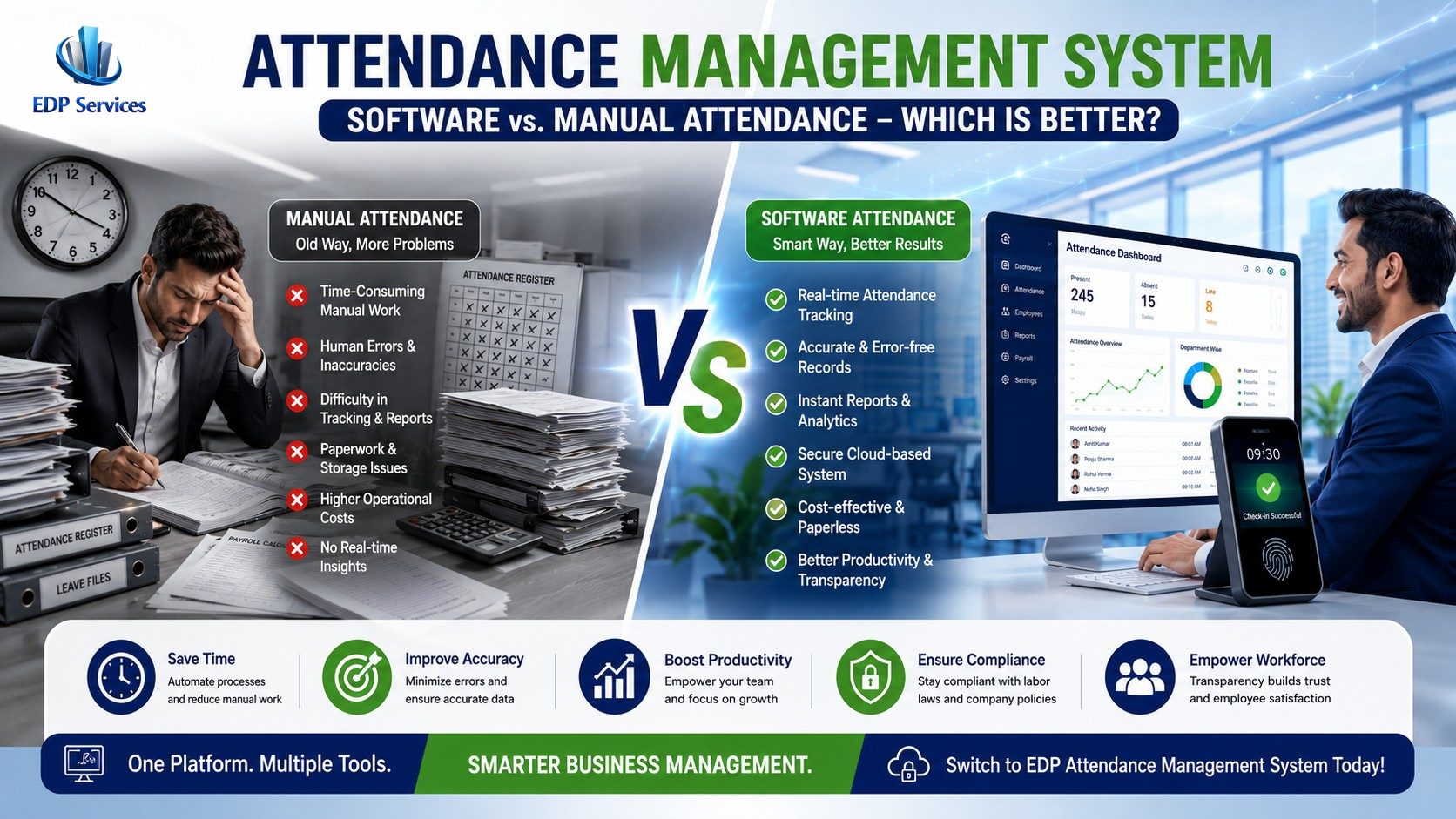
Attendance Management System: Software vs. Manual Attendance – Which Is Better?
Attendance management might feel like a mundane administrative task; however, it impacts payroll accuracy, productivity, compliance, and workforce planning. When businesses grow, it's quite hard to keep up with attendance with traditional attendance registers and spreadsheets, which leads most organizations to switch to an Attendance Management System.
However, is attendance software truly superior to paper attendance? Or is the classical way still existent?
Let's now compare both ways so you can choose the best solution for your business.
What Is an Attendance Management System?
An Attendance Management System (AMS) refers to the software that records and tracks employee attendance automatically. They can mark attendance via biometric devices, facial recognition systems, RFID cards, and mobile apps, or via GPS or web-based check-ins.
Real-time attendance reports, working time tracking, overtime calculation, and payroll software integration of the application help organizations maintain compliance more effortlessly.
However, attendance software is quite superior in eliminating manual errors and minimizing administrative work when compared with traditional paper-based registers.
What Is Manual Attendance Management?
Manual attendance management is when an employee records their time. It involves maintaining a record of employee time in & out on paper registers, Excel spreadsheets, or handwritten timesheets. Human resources personnel or supervisors manually keep track of employee check-in & out timings in the old way and calculate attendance for salary processing.
This method has been used for decades, but it becomes more unmanageable with the increasing number of employees.
Attendance Management Software vs. Manual Attendance
|
Feature |
Attendance Management Software |
Manual Attendance |
|
Accuracy |
Highly accurate with automated tracking |
Prone to human errors |
|
Time Tracking |
Real-time monitoring |
Manual recording |
|
Payroll Integration |
Automatic |
Manual calculations |
|
Reporting |
Instant reports and dashboards |
Time-consuming |
|
Remote Workforce Support |
Yes |
Very limited |
|
Compliance |
Easier documentation and recordkeeping |
Higher compliance risks |
|
Security |
Digital records with access control |
Paper records can be lost or damaged |
|
Scalability |
Suitable for growing businesses |
Difficult to manage large teams |
Benefits of Attendance Management Software
Improved Accuracy
When attendance is taken manually, there are chances for calculation errors and duplication of entries or missing out on records. The attendance application reduces errors as it records employee working hours over time automatically.
Saves Time
HR teams have to track attendance every single month. Having an automated attendance monitoring system takes care of the immediate need for recording hours and frees up HR to handle other important tasks.
Payroll Automation
Modern attendance systems are directly integrated with Payroll software. Salary calculations are automated, and these can change automatically as per attendance, overtime, leave, or late arrivals—leading to enhanced accuracy in payroll.
Real-Time Employee Tracking
Real-time visibility of attendance status, absenteeism, late arrivals, and shift details—whatever managers want to check. This leads to better workforce planning and operational efficiencies.
Better Compliance
For labor law compliance and audits, you need to keep track of attendance. Digital systems also keep attendance history safe and easy to find whenever you need it.
Remote and Hybrid Work Support
As hybrid and remote work are becoming more common, employees can mark attendance via mobile apps, GPS-based check-ins, or a web portal using this software, simplifying your workforce management.
Advantages of Manual Attendance
Manual attendance still works well in certain situations.
-
Low implementation cost
-
No software or hardware investment
-
Suitable for very small businesses with a handful of employees
-
Easy to understand without technical training
However, these benefits often diminish as the organization expands.
Limitations of Manual Attendance
Businesses relying on manual attendance frequently face several challenges:
-
Time-consuming record maintenance
-
Human calculation errors
-
Buddy punching or proxy attendance
-
Difficulty managing multiple office locations
-
Delayed payroll processing
-
Limited reporting capabilities
-
Poor visibility into employee attendance trends
-
Higher administrative workload
As workforce size increases, these issues can significantly impact productivity and operational efficiency.
Which Businesses Should Use Attendance Management Software?
Attendance software is an ideal solution for organizations such as the following:
-
Manufacturing companies
-
IT and software firms
-
Healthcare organizations
-
Retail businesses
-
Educational institutions
-
Logistics and transportation companies
-
Hospitality businesses
-
BPO and customer support centers
-
Enterprises with multiple office locations
-
Companies with remote or hybrid employees
Even small businesses planning future growth can benefit from implementing an automated attendance system early.
How to Choose the Right Attendance Management System?
When selecting attendance software, consider features such as the following:
-
Biometric or facial recognition support
-
Mobile attendance with GPS tracking
-
Shift and roster management
-
Leave management integration
-
Payroll integration
-
Real-time reporting dashboards
-
Cloud accessibility
-
Data security and user permissions
-
Compliance reporting
-
Scalability for future business growth
Choosing software that integrates with your HR and payroll processes can improve overall workforce management.
Conclusion
While manual attendance may be sufficient for very small organizations, it becomes inefficient as businesses grow. An attendance management system offers greater accuracy, faster payroll processing, improved compliance, real-time visibility, and significant time savings.
For businesses aiming to improve operational efficiency and reduce administrative workload, investing in attendance management software is a practical long-term decision. By automating attendance tracking, organizations can focus more on employee productivity and business growth while ensuring accurate workforce records every day.