
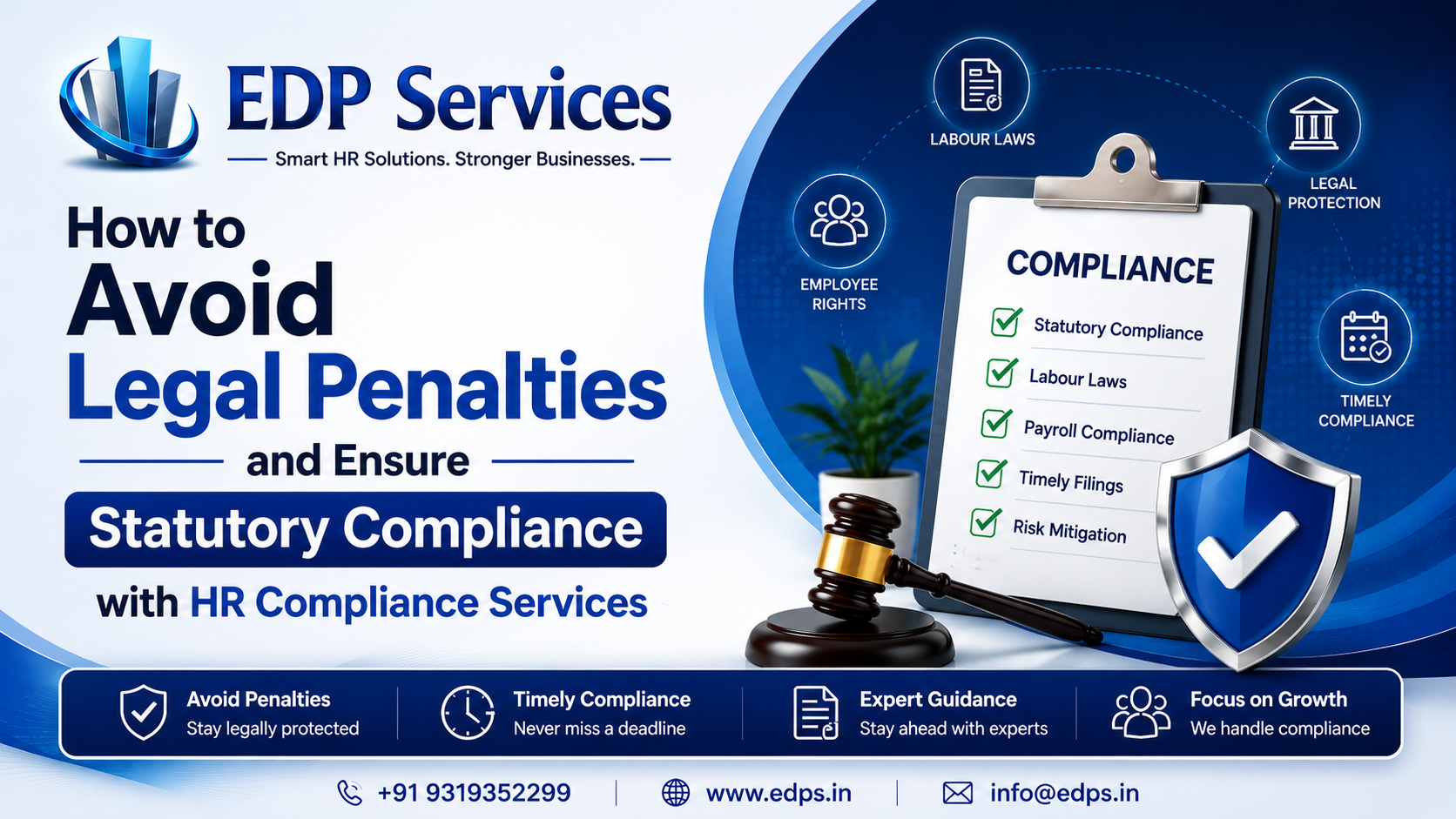
Effective HR Compliance Services: A Better Way To Avoid Legal Penalties
In India, the operating environment for businesses has now become increasingly regulated, and compliance with labour laws and statutory requirements is no longer voluntary. Employers with a multitude of legal obligations to track—from employee onboarding and payroll processing to provident fund contributions and workplace policies—are already bogged down. A modest compliance slip, for example, a failure to file a statutory return on time or incorrect payroll information, may result in financial costs, statutory notices, employee disputes, and brand damage.
As organizations grow, it becomes difficult to manage these functions. Labour regulations differ from one State to another, and compliance requirements continue to change over time due to new government notifications and amendments. The challenge for so many businesses is to implement these changes for 2023 while remaining scrupulously focused on their core business operations.
And this is where HR Compliance Services prove to be indispensable. These assist companies in ensuring compliance with relevant labour legislation, proper employee record maintenance, timely statutory filings, and a reduction in the chances of a legal breach. Regardless of whether you operate a startup, SME, or large enterprise, an efficient compliance framework saves time and money while keeping your business safe from unnecessary legal challenges.
In this blog, we will discuss what HR compliance is, its significance, common compliance requirements in India, the implications of non-compliance, and how Professional HR Compliance Services help a business avoid related issues, build operational confidence, and reduce legal penalties.
What Are HR Compliance?
HR Compliance relates to organizations adhering to all relevant employment law, labour laws, and statutory requirements concerned with human resources. Such areas include keeping accurate records of employees working in an organization, following all payroll-related procedures, and complying with various government filing requirements and workplace policies.
Some of the main areas covered under HR compliance are Provident Fund (PF), Employees’ State Insurance (ESI), Professional Tax, Minimum Wages, Gratuity, Bonus, etc. In addition to the above, compliance may also require ensuring adequate maternity benefits along with the safety and welfare of employees within the workplace. As these laws change at regular intervals, companies need to be constantly aware of any change in the legislation.
By providing robust HR Compliance Services, companies ensure legal protection, transparency, and a relationship of trust with their employees.
Why HR Compliance Is Important for Every Business?
HR compliance safeguards against any potential business disputes or legal concerns. By becoming a compliant business organization, companies reduce exposure to labour checks, government evaluations, and employee disputes.
Moreover, HR compliance enhances employee confidence and builds brand reputation while mitigating business risks. In addition to preventing heavy financial penalties for missing application deadlines, failed to be a compliant establishment, and the improper submission of documents related to any labour legislation.
Common HR Compliance Requirements in India
Indian organizations have to manage numerous statutory compliance regulations based on the sector, size, and workplace they are operating in. Below are the prevalent ones:-
- Employees' Provident Fund (EPF)
- Employees' State Insurance (ESI)
- Professional Tax (where applicable)
- Labour Welfare Fund
- Minimum Wages Compliance
- Payment of Bonus Act
- Payment of Gratuity Act
- POSH (Prevention of Sexual Harassment) compliance
- Shops and Establishments Act
To avoid future hassles, businesses must keep clear records and meet these requirements on time.
Common Compliance Mistakes Businesses Make
Most businesses encounter some difficulty with compliance, often due to relatively basic mistakes that could have been avoided. Common examples are as follows:
-
Delayed statutory filings
-
Incorrect payroll calculations
-
Incomplete employee records
-
Missing compliance documentation
-
Failure to track changes in labour laws
If left untreated, what appear to be small, simple errors add up to potentially costly and damaging government notices, grievances from disgruntled employees, or other related financial penalties.
Legal Penalties Businesses Can Face
Penalties for breach of labour laws: Non-compliance with labour laws can result in severe penalties. The following may occur depending on the item of breach:
- Financial penalties and fines
- Interest on delayed statutory payments
- Labour department inspections
- Legal disputes with employees
- Business reputation damage
- Heightened regulatory scrutiny by the regulators
It's nearly always more expensive to fix a compliance failure than it would have been to manage compliance proactively.
How Does HR Compliance Services Help Businesses Avoid Legal Penalties?
Pro HR Compliance Services enables organizations to develop a systematic way of complying with statutory obligations and employment law requirements. Rather than addressing compliance issues as they arise, companies can recognize and rectify potential risks early on.
Information about the statutory deadlines is keep track of by the compliance team, and the returns are filed on time to avoid penalties for late submission. They also prepare accurate records of employees, payroll, and the statutory registers to be produced for audit purposes.
Another benefit of labour law specialists is that they keep your business up-to-date on the changes in labour law. Regulators can make amendments to the law, and labour law professionals assist your organization in adapting to new rules without interfering with daily workflow.
HR Compliance Services also assist with payroll compliance by verifying correct salary calculations, statutory deductions, and employer contributions. We conduct periodic compliance audits and internal audits to identify gaps before authorities do.
The presence of legal knowledge, "harmonized" contractual and processing models, and ongoing monitoring of legal compliance play a major role in significantly diminishing legal risks to a business and focusing companies on growth rather than compliance issues.
Advantages of outsourcing HR compliance evils
Employers of all sizes can derive benefits from outsourcing HR compliance, which include the following:
- Reduced legal and financial risks
- Timely statutory filings
- Improved payroll accuracy
- Access to compliance specialists
- Lower administrative workload
- Better operational efficiency
- More time on developing business
Time is so resource-consuming and costly to build and sustain compared with outsourcing; for wide-ranging organizations with a large number of best-practice projects taking place at once, it is likely to be better value.
Signs Your Business Needs HR Compliance Services
Your organization may benefit from professional HR Compliance Services if:
- Your workforce is growing rapidly.
- You operate in multiple states.
- Compliance deadlines are frequently missed.
- Payroll errors occur regularly.
- You lack dedicated compliance expertise.
- Disputes with employees and government notices are more frequent.
Being aware of these indicators can safeguard you against potential legal issues down the line.
How to Choose the Right HR Compliance Service Provider?
When selecting an HR compliance partner, consider the following factors:
- Experience in labour law compliance
- Expertise across multiple industries
- Strong payroll and statutory compliance capabilities
- Technology-driven compliance tracking
- Transparent reporting and documentation
- Responsive customer support
Choosing an experienced service provider ensures your business remains compliant while reducing administrative complexity.
Conclusion
Every organization faces change in the regulatory environment, so staying compliant is vital today. Even minor non-compliance can result in penalties, litigation, and excessive business risks. Professional HR Compliance Services functions as up-to-date tools that help obtain records, record appropriately, and meet statutory deadlines, and instead act as a compliant workplace provider.
So, whether you are a startup, SME, or large enterprise, you should work with a reliable compliance expert and avoid many legal problems so you can concentrate on business growth. EDP Services offers a comprehensive technical solution to ensure statutory compliance, provide business support to minimize legal and financial risks, and help ensure long-term business success.