
Permanent Recruitment vs Contract Hiring: A Detailed Comparison
One of the key factors when building an effective team is choosing the right staffing model. Many companies get confused between contract staffing and permanent staffing, as each of the services offers several benefits depending on the needs of the business.
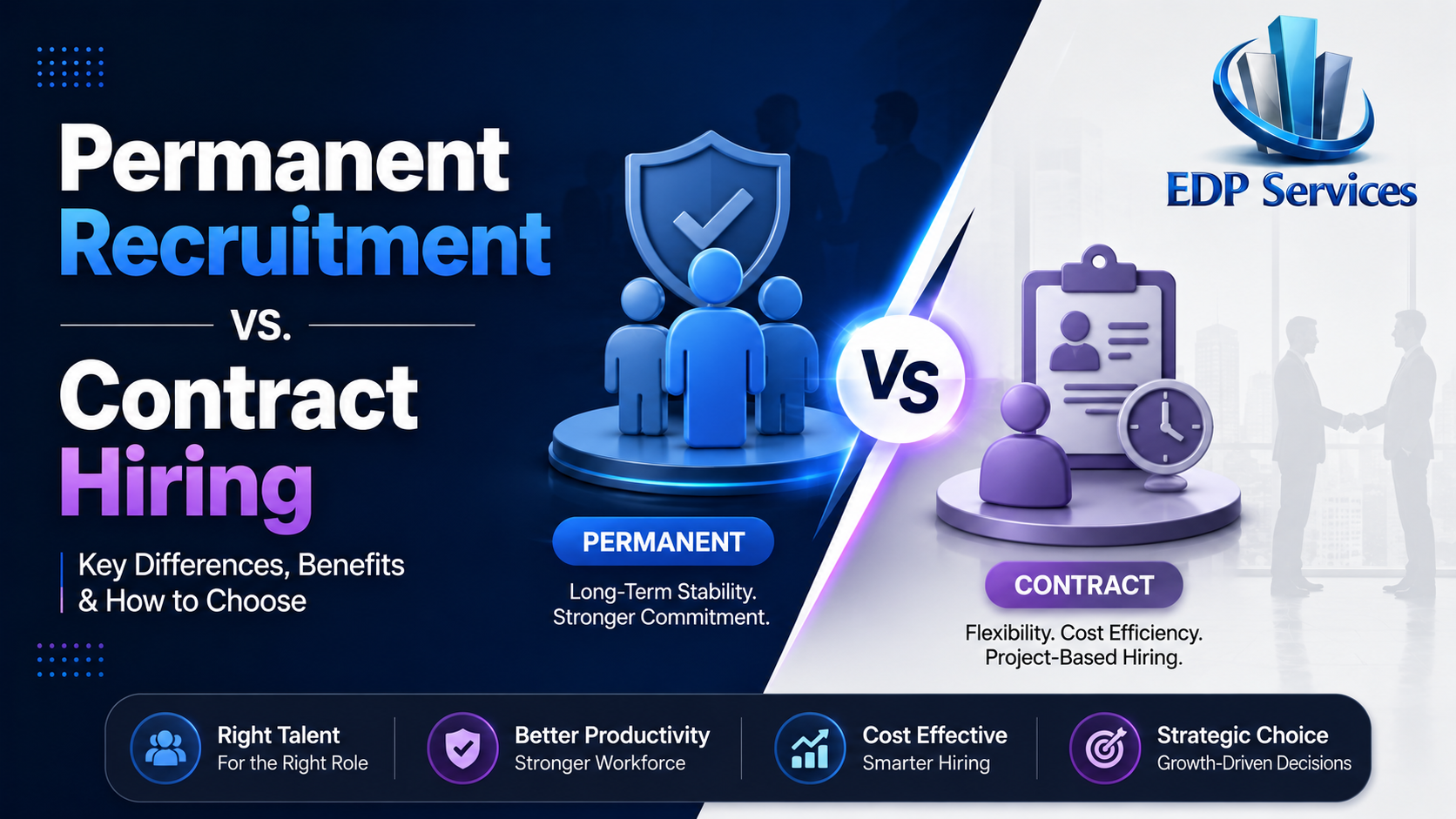
Permanent Staffing is the employment of permanent employees for permanent positions. Contract Staffing is the hiring of professionals for a limited period, project or temporary basis for the purpose of meeting temporary demands. Knowing the differences between these two forms of staffing assists companies in making appropriate workforce-related decisions.
In this article, we present an analysis of permanent staffing and contract staffing along with their pros and cons, the situations under which each kind of staffing should be used, and how specialized staffing companies such as EDP Services can assist companies in choosing the best staffing model.
What Is Permanent Recruitment?
Permanent recruitment: hiring employees for long-term periods of time within an organization. They are an integral part of the company and are almost always given a benefits package, including salary packages, paid leave, insurance, and professional development.
Permanent recruitment includes sourcing (both sourcing and interviewing) and skill assessment to finally select the right fit for a particular job. Companies have cast their net wide, looking not only for technical skills when they hire but also for cultural fit at a company that will invest in these employees as long-term assets.
Companies would typically favor permanent positions for core business roles, where there needs to be stability and consistency in an employee, something that would grow alongside the organization.
What Is Contract Hiring?
Contract Hiring—Contract hiring is when you hire people for a defined time, a particular project, or short-term business necessity. The duration of a contract can be variable according to the needs of the company and can go from some months to some years.
This type of recruitment gives companies an easy way to find skilled workers without any long-term commitment to recruitment. Contract workers can be useful for many reasons, whether it’s project-based work, seasonal needs, urgent job openings, or jobs that require people with very specific skills.
This is the degree of workforce flexibility companies need. Contract hiring allows companies to have more flexibility in scaling their workforce with changing needs of the market.
Permanent Recruitment vs Contract Hiring: Key Differences
|
Factor |
Permanent Recruitment |
Contract Hiring |
|
Employment Duration |
Long-term employment |
Fixed-term employment |
|
Job Security |
Generally higher |
Depends on contract period |
|
Hiring Speed |
Usually slower |
Faster hiring process |
|
Flexibility |
Lower flexibility |
Higher flexibility |
|
Cost Structure |
Long-term employee investment |
Project-based cost |
|
Benefits |
Usually included |
Depends on agreement |
|
Best For |
Core and long-term roles |
Temporary projects and urgent needs |
There is a wide range of commitment and flexibility inherent in these various hiring models. Contract hiring allows companies to bring in talented people quickly, while permanent hiring provides stability to teams.
Benefits of Permanent Recruitment
There are many benefits to permanent recruitment for businesses looking for a steady, reliable workforce.
Employee Retention:
They are more likely to develop loyalty to the company, which helps avoid frequent turnover and maintain a strong and stable workforce.
Long-Term Commitment:
Permanent workers provide a closer connection to company objectives and drive the business forward in terms of longevity.
Strong Company Culture:
Companies need a positive workplace environment, and long-service employees understand the values of the company, processes, and teamwork.
Skill Development:
Permanent employees have long-term value for companies, and that results in companies being able to invest in training and career growth.
Benefits of Contract Hiring
With contract hiring, a business can work more flexibly while allowing for quicker access to professionals with various advancements.
Faster Recruitment:
Companies can fulfill immediate needs in hiring without lengthy protocol processes.
Workforce Flexibility:
Companies are able to grow and shrink based on demand and market conditions.
Specialized Skills:
Companies can hire specialists on a contract basis for a specific project without making a long-term commitment.
Cost Management:
Contract hiring can help businesses manage workforce costs by allowing them to engage specialized professionals for defined projects or periods, although the overall cost depends on the role, contract terms, and market rates.
Disadvantages of Permanent Recruitment
Long-term hiring does offer job security; however, it does come with its own challenges:
-
The recruitment process may take longer, since we need to deep dive into every candidate.
-
Organizations have commitments to salary and benefits for an extended period.
-
Transitioning the workforce is much harder when the demand of the business changes.
Disadvantages of Contract Hiring
Contract hiring comes with some restrictions, however.
-
Contract workers may find it difficult to develop a long-term attachment to the organization.
-
But contracts end, and the uncertainty of that renewal can be terrifying for businesses.
-
Constantly increasing overtime can put a strain on onboarding workers.
-
Some contract workers may have lower engagement with company culture.
Permanent Recruitment vs. Contract Hiring—What is Best For You?
Everyone will have a preferred hire model, but there is no one model that is best for all organizations. That decision is driven by business needs and staffing goals.
Permanent is typically a better choice for critical positions where the team is dedicated to delivering ongoing work or where employee development is important.
In short-term projects, urgent employment needs, or special skills, contract hiring can give you immediate and much more flexible solutions.
How EDP Services Can Help You Choose the Right Hiring Model
The right recruitment expertise can ensure you pick the right hiring approach. Overview of EDP Services—EDP Services assist businesses in determining their workforce requirements and deciding on the optimal hiring model to facilitate their organizational goals, expenditure, and operational efficiency.
Understanding Business Needs
At EDP Services, we assess multiple factors—role requirements, project timeline, skills required, and future business plans—to decide on recruiting permanent employees or hiring on contract.
Connecting Businesses With Qualified Talent
Searching for the right candidates takes up a lot of time. EDP Services provides companies with a competitive edge in the job market for talent, thus solving talent sourcing challenges for both long-term and short-term positions.
Faster and More Effective Recruitment
EDP Services oversees the basic recruitment tasks, such as sourcing, screening, and assessment of candidates, which allows companies to speed up their hiring while not compromising on quality.
Flexible Workforce Solutions
Unlike other services, EDP Services gives businesses the option to hire permanently or hire on a temporary basis for any business expertise they require.
How to Choose the Right Hiring Model for Your Business?
Before choosing a method of hiring, organizations must ask themselves the following:
-
Time Period of the Designation or Project
-
Available recruitment budget
-
Required skills and expertise
-
Business growth plans
-
Need for workforce flexibility.
Having a proper understanding of these elements can avoid mistakes in hiring and result in an effective workforce strategy.
Common Mistakes Companies Make When Choosing a Hiring Model
Most companies build their hiring model around the cost of the moment. It should also consider other factors like employee buy-in, project duration, and future business requirements.
Having permanent employees for short-duration projects or contract workers employed for key long-term positions can create unnecessary complications. Evaluate the needs of your business—in other words.
Conclusion
Permanent recruitment and contract hiring are both extremely effective solutions depending on your business situation. While using permanent recruitment builds stability within the team and long-term expertise, contract hiring allows more flexibility and faster hiring for specific skill sets.
The answer is based on the goals of the company, what the company needs in terms of human resources, and what the future plans of the company are. Working with seasoned recruitment partners, such as EDP Services, companies can avoid the guesswork in hiring and better position their workforce strategy for sustained success.
Frequently Asked Questions
- Job posting (internal & external)
- Resume parsing
- Candidate pipeline tracking
- Interview scheduling
- Feedback & scoring
- Offer release & onboarding
Yes. Recruiters, interviewers, and hiring managers can be assigned role-based access. Each user gets their own dashboard to view tasks, candidate stages, and interview schedules.
EDP Services helps businesses strengthen workforce support through structured, professional, and reliable solutions that improve training coordination, operational efficiency, and talent readiness.
Payroll is important because it ensures employees are paid correctly and on time. It also helps businesses comply with legal requirements, avoid penalties, maintain accurate financial records, and build employee trust.
Reputable payroll providers use secure systems, access controls, encryption, and established data protection practices to safeguard sensitive employee information.
Yes. Payroll outsourcing providers can manage payroll for organizations operating across multiple offices or states while addressing location-specific payroll requirements and compliance obligations.
Blue-collar bulk hiring is the process of recruiting a large number of operational or manual workers within a short period to meet business requirements.
Using faster onboarding, WhatsApp communication, local hiring, and recruitment partners can significantly reduce no-show rates.
Recruitment agencies provide access to a larger talent pool, faster hiring, compliance support, and lower recruitment costs.