
Third Party Payroll Services in India - Complete Guide for Companies
Once it was HR payables or the account department’s easy monthly business to run payroll in India. A couple of wage concepts, countless laws and any number of state regulations: managing ruler’s pays is generally very complex and takes too much time. A small misstep can lead to compliance problems and unhappy employees. To deal with this complexity, many employers are opting to have third parties manage the entirety of their payroll process.
Payroll processing in India is no more a simple monthly routine for HR or accounts departments. Numerous pay systems, numerous laws and regulations and various states’ will – managing pays is a tangled web that’s costly in time. Even a small error could lead to compliance problems and unhappy employees. In order to cope with such complexity, many corporations now resort to using third party payroll processors for performing their entire payroll process.
Third Party Payroll Services: What Are They?
Third party payroll Third party payroll services require you to offshore some or all of your payrolls in a country-specific or multi-country model, as opposed to performing the services end-to-end. The customer can calculate employees gross and that net salaries, deductions, statutory contributions as per the company’s policies/employee data. Common components include base pay, allowances, overtime, rewards and bonuses and deductions. It also allows for compliance aspects such as Provident Fund, Employee State Insurance, Professional Tax and TDS (Tax Deducted at Source) per Indian laws. Core is to provide accurate and timely production and also to do so in compliance with all applicable laws, regulations as well as company policies thus minimising the workload of HMSHost s own HR team.
How Do These Services Work?
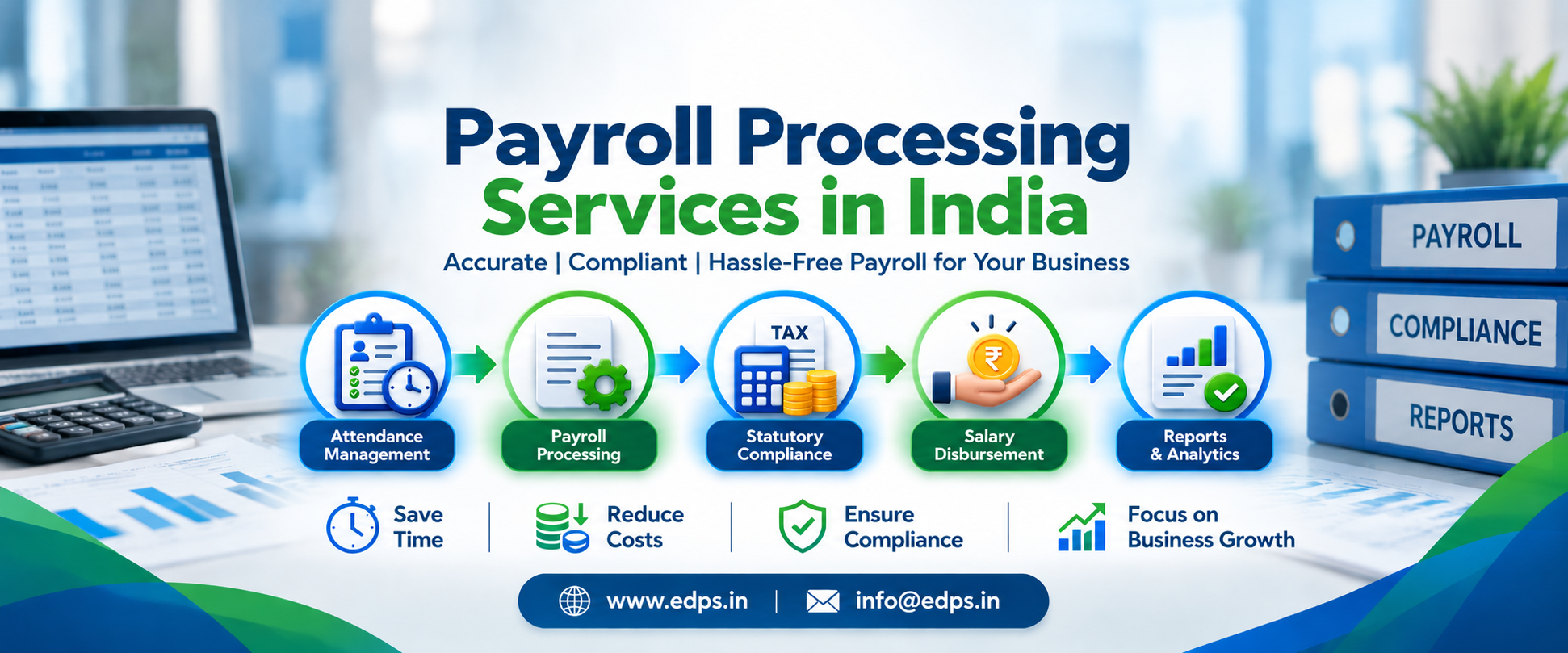
It typically starts with an on-boarding stage where the provider learns about the company organisation structure, wage policy and compliance requirements. Details of employee master data, CTC and existing payroll history are compiled and transferred into the service provider’s payroll system. Company provides all input like attendance, leave, new joiners, resignations, salary changes(sequence) in each payroll run which includes a file with variable pay and another file containing reimbursement. Based on these inputs, the provider runs payroll, processes all legal rules and produces salary registers, bank files and pay slips. With the internal company audit, the service provider may also arrange or make payment of salaries and statutory deductions.
Majority of the external service providers help with monthly and periodic statutory fillings. This could be with PF & ESI returns, Professional Tax payments, TDS deposits or year-end tax statements for employees. Many provide employee self-service portals, on which employees can download payslips, check tax information and submit requests, cutting down on time consuming HR queries. Sophisticated providers sync systems with HR, attendance, and accounting software to avoid having to handle data manually as well as errors.
Combined these features make for a simplified payroll that can cater for small and large businesses.
Advantages Of Third Party Payroll Services:
Speedy internal HR and finance teams is a major one. Instead of dedicating days a month to complex calculations and reconciliations, they are able to direct their attention to strategic efforts around hiring, retention and performance. Cost efficiency is another big plus, as businesses are not compelled to invest extensively in specialized softwares and infrastructure, nor a full-time payroll staff. With a third party, they generally pay an expected amount per employee or flat fee and then get professional expertise and technology.
Nowhere does compliance become more essential than in the situation of India, where third-party providers ensure organisations remain simpatico with ever-shifting rules. These service providers keep tabs on changes to laws at both the federal and state levels, then configure their systems accordingly so that accurate calculations are made and filings are generated timely. This helps to minimize the potential for notices, penalties and interest due to non-compliance. Precision is also enhanced because robotic payroll mechanisms are able to reliably handle complex rules and exceptions that cannot always be easily replicated on a manual spreadsheet. Third party payroll services are easily scalable; companies can scale in growth, seasonal peaks and multi-location operations without constantly having to invest in building internal payroll capacity.
Possible Risks and Challenges
Despite the benefits, payroll outsourcing does carry some risk that companies need to consider. Data privacy is an issue, because the payroll systems include private data such as salaries, bank account numbers and identification numbers. Organisations must also make sure the provider follows security best-practice, carries certification and signs a tight confidentiality agreement. There is also an element of reliance on the speed and availability of the provider, particularly close to payroll cut-off time.
An additional hurdle may be reduced flexibility to cater for completely bespoke or very bespoke pay policies at the payroll end. Unusual pay structures may not be readily accommodated by conventional systems without some modification or manual intervention. Inaccurate payouts or re-runs may also result from miscommunication, such as when input files are shared after the fact between the business and provider. The level of support varies between service providers, so companies must assess quality and escalation process. The majority of these issues can be minimized through choosing the right partner, establishing service levels and maintaining disciplined internal payroll data management processes.
Who Should Use These Services?
Outsource Payroll to a Third Party Outsource payroll services generally works best for small and mid-sized companies that don’t have their own internal payroll department. Startups and fast-growing businesses may use them to develop a professional payroll operation without joining the growing number of costly tools and specialist staff. Companies with presence in several Indian states gain from centralised IT management which is familiar/local to the variation of labour laws and regulations. High-turnover or seasonal industries like retail, logistics, staffing and manufacturing can benefit from managing payroll through an outsourced provider.
Even larger organizations can benefit from third party payroll services, particularly for certain divisions or locations of business or in difficult areas of compliance. Multinational companies new to India often team up with local payroll experts to help tackle the idiosyncrasies of Indian legislation and avoid costly early blunders. Professional services, IT and knowledge-based firms that need confidentiality and high accuracy may prefer specialists to very lean in-house teams. BROADER MARKET OPPORTUNITY Most businesses feel some amount of pain from the payroll and people portion of their business, with accuracy or compliance issues often nagging employers that lack the resource bandwidth to solve them.
Curbs on correlation in the age of infomap.
There is a promising future for third party payroll services in India as laws, technology and people models change. Compliance is becoming harder and more visible as new labour codes, digital portals and enforcement become stricter. Meanwhile, remote work, hybrid teams and gig-based roles are forcing companies to rethink how they keep track of attendance, payment and benefits. Increased use of technology and a desire for more flexible payroll solutions are driving demand for expert-led services.
And service providers make increasing use of cloud, automation and integration with HR and accounting systems. A lot are layering on sophisticated analytics so companies can track payroll costs, and trends and compliance metrics in real time. A few Indian providers are also broadening into global payroll, serving companies with employees in multiple countries or helping foreign companies pay staff in India. This is making third party payroll a strategic function that contributes to the decision-making process rather than just being a back-office operation.
Learn More: About Payroll || Best Outsourcing Partner in India
Conclusion and Call to Action
Third party payroll services in india give organizations a trustworthy method of managing an important process with more efficiency, accuracy and conformity. By working with experienced providers, businesses can save time, be cost-effective and ensure their employees are paid accurately and on time. The trick is to select a vendor with leading technology, domain experience and established security & compliance capability. With the right partner, payroll is transformed from a recurring pain in the neck into a smooth process that helps businesses thrive.
If your business is considering a third party payroll service, think about your pain points—e.g., making too many mistakes, worrying about compliance or not having enough resources within the company. Create a shortlist of several potential providers, compare them in terms of their offerings, pricing and references and request a live demonstration on their platform. Include HR, finance and leadership in the decision-making process so that your solution is aligned with your operations and compliance requirements. When set up and executed properly, third party payroll can get your teams well out of the weeds so they can concentrate on what’s most important - growing your business & keeping customers happy.
Frequently Asked Questions
Yes. For enterprise clients, custom modules or workflow automation can be requested and delivered via a dedicated tech team.
All employee records are stored securely with access restricted on a need-to-know basis. Data transfer is encrypted, and strict confidentiality agreements are signed with our staff handling sensitive information.
HRM software helps small businesses save time, reduce administrative costs, improve accuracy, and enhance employee experience. It centralizes HR data, streamlines payroll and attendance, improves compliance management, and allows business owners to focus more on growth rather than daily HR tasks.
Absolutely. Most modern HRM software solutions in India are scalable and modular. Small businesses can start with core HR and payroll features and later add advanced modules such as performance management, recruitment, training, and analytics as their workforce and operational needs expand.