
HR compliance mistakes can lead to legal penalties, employee disputes, and financial losses—here are the top HR compliance mistakes companies should avoid.
Managing a business involves more than hiring employees and processing salaries. Employers must maintain accurate employee records, follow applicable employment laws, meet statutory obligations, and establish clear workplace policies. Overlooking these responsibilities can lead to financial penalties, employee disputes, and reputational damage. Understanding the most common HR compliance mistakes can help businesses identify risks early and build more organised, compliant workplace practices.
Some companies are just passing through errors without realizing it that might be minor in nature but could cost them in the form of legal notices, financial penalties, employee conflicts, and reputation damage. What you need to know about the Top HR compliance mistakes. Businesses that know how to make and avoid the top HR compliance mistakes are less likely to take unnecessary risks and more likely to create a compliant, safe place to do business.
In this blog, we'll cover the most common compliance errors, what they can cost you, and some straight-forward preventatives.
What is HR compliance?
HR compliance is all of your activity as an organization in staying compliant with employment law and related regulations and your own policies during an employee lifecycle. It includes the hiring process, payroll, employee benefits, workplace safety, recordkeeping, taxation, and firing.
In the simplest terms, the meaning of legal compliance is that one handles business in a way that is consistent with the laws of the land. Similarly, statutory compliance in human resources is related to mandatory legal requirements, e.g., PF, ESI, PT, TDS, labour law registrations, and filing of statements.
Proper HR compliance management effectively covers employer and employee obligations and minimizes legal exposure.
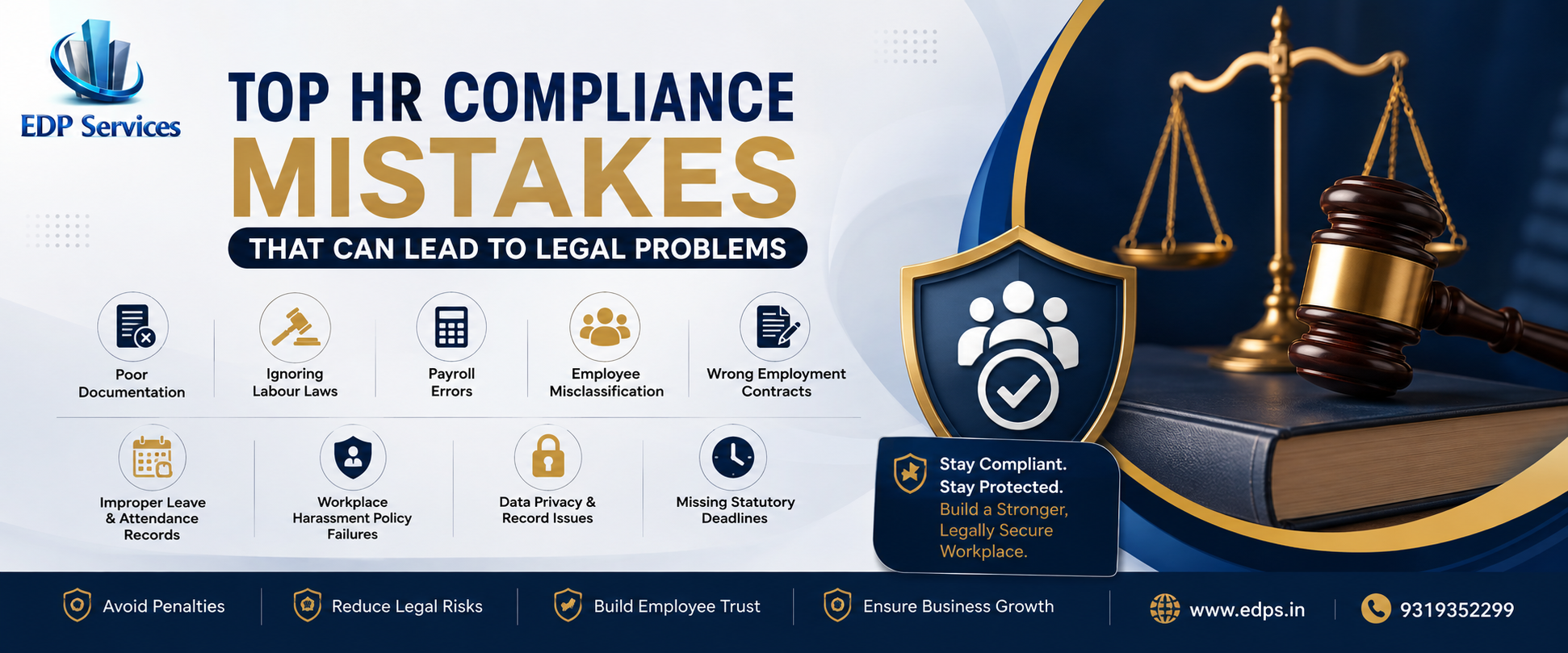
Top 10 HR Compliance Mistakes: That Can Lead to Legal Problems
Many organizations repeat the same errors. Below are the Top HR compliance mistakes every business should avoid.
1. Poorly Documented Employees
One common HR compliance mistake is to keep employees' records incomplete.
Lack of documents like offer letters, identity proofs, attendance records, or resignation letters can also cause legal hassles in case of audits or employee litigation.
For example: An employee raised a complaint, but against the same, there is no signed employment agreement on file to act as proof for the organization.
2. Labour Laws in HR are being overlooked.
Companies need to track labour laws in HR to make sure they can comply with all the legal requirements. Violation of wage laws, hours of work laws, overtime regulations, or laws related to employee benefits may result in penalties imposed by the government, employee conflicts and legal action. Periodic compliance inspections assist companies in detecting problems at an early stage, minimizing risks, and remaining legally compliant.
3. Payroll Compliance Issues
Errors on payroll can lead to employees distrusting your organization and possibly to legal issues.
Here are a few common payroll errors:
- Check the proper calculations of salaries
- Delayed payments of salaries
- Wrong Tax Deduction
- Missing Statutory Deductions (PF, ESI, PT, or TDS)
- Mistakes in loan recovery or any other deduction of an employee
4. TDS, PT, ESI, and PF Compliance Mistakes
Many companies do not manage to deposit the statutory deductions on time.
They are:
● Provident Fund (PF)
● Employees' State Insurance (ESI)
● Professional Tax (PT)
● Tax Deducted at Source (TDS)
Payments not made on time or filings that aren’t accurate could lead to penalties, interest and legal notices.
5. Employee Misclassification
Full-time employees being designated as freelancers or independent contractors to save money is a major compliance issue. Incorrect classification results in tax liabilities, due benefits, and legal disputes.
6. Wrong Employment Contracts
The obligations of the parties, the salary and benefits offered to the employee, and other terms (such as the required notice period, clauses regarding confidentiality, and the company rules on the matter) should be specified in the employment contract.
One of the most common HR compliance errors is to apply outdated or incomplete contracts, which can create unnecessary legal problems.
7. Improper Leave and Attendance Records
The records for leave balances, attendance, overtime, and holidays should be properly kept by businesses. Bad record-keeping can complicate the resolution of employee disputes and meeting labour inspections.
8. Workplace Harassment Policy Failures
Anti-harassment policies should be clearly stated in all organizations; employees should be made aware of these policies, and there should be an internal complaint procedure.
Not addressing complaints in the workplace can carry heavy legal implications and can undermine employee confidence.
9. Data Privacy and Employee Record Issues
Maintain Personal Employee Information: Employee records hold sensitive personal data. Payroll information, identity documents, and performance records need to be stored securely without risk of unauthorized access.
If an organization allows employee data to be compromised, it can be found non-compliant too.
10. Missing Statutory Compliance Deadlines
Late statutory filings are still one of the biggest HR compliance errors in business. Late submissions of PF, ESI, PT, TDS, or labour law filings may invite penalties and increase compliance risks.
Compliance calendars and automated alerts make it easier for the company to meet deadlines.
How These Mistakes Can Affect a Business
Neglecting HR compliance can lead to several long-term business challenges, including:
- Legal notices from government authorities
- Financial penalties and interest charges
- Employee complaints and legal disputes
- Business disruptions during inspections
- Damage to the company's reputation
- Loss of employee trust and confidence
- Increased compliance and operational costs
The earlier businesses identify the top HR compliance mistakes, the easier it becomes to prevent costly legal issues and maintain smooth business operations.
How EDP Services Helps You Avoid HR Compliance Mistakes
Managing compliance internally can be challenging, especially for growing businesses.
EDP Services helps organizations simplify HR Compliance by providing the following:
- HR compliance management
- Payroll outsourcing services
- Statutory compliance support
- Labour law compliance assistance
- Employee documentation management
- Digital employee record maintenance
- Timely statutory filings
- Compliance risk assessment
- Expert HR consultation
- End-to-end HR solutions
With experienced professionals and structured compliance processes, EDP Services helps businesses reduce legal risks while focusing on growth.
Best Practices to Stay HR Compliant
Follow these practical tips to reduce compliance risks:
- Review HR policies regularly.
- Stay updated with changing labour laws.
- Maintain complete employee documentation.
- Conduct periodic HR compliance audits.
- Automate payroll calculations wherever possible.
- File PF, ESI, PT, and TDS on time.
- Train HR teams on legal updates.
- Maintain accurate attendance and leave records.
- Secure employee data with proper access controls.
- Seek professional HR compliance support when needed.
These practices significantly reduce the chances of making the Top HR compliance mistakes.
Conclusion
HR compliance is essential for protecting your business from legal risks, financial penalties, and employee disputes. By avoiding the Top HR compliance mistakes and ensuring timely statutory compliance, organizations can build a secure and compliant workplace. With expert support from EDP Services, businesses can simplify HR compliance management, stay updated with legal requirements, and focus on sustainable growth with confidence.
Frequently Asked Questions
HR compliance means making sure that the company adheres to all laws or regulations as well as industry guidelines regarding the treatment of employees. This means adhering to the rules regarding benefits, wages such as workplace safety, non-discrimination, tax deductions and rights of employees. This helps safeguard both the employees and the company by reducing legal risks and ensuring ethical business practices.
Yes. Our payroll solutions are designed to manage compliance and statutory filings for large employee bases.
Yes. A good HRM software automates payroll calculations and ensures compliance with Indian labor laws. It manages PF, ESI, professional tax, income tax deductions, and statutory reports, reducing errors, penalties, and manual workload for small business owners.
Outsourcing payroll to specialists significantly reduces compliance risks by ensuring accurate filings and adherence to updated labor laws.
Yes, most payroll outsourcing companies manage PF, ESI, TDS, professional tax, and labor law compliance.
HR managers influence salary structures, declarations, payroll inputs, reimbursements, and final settlements. Errors in these areas can directly affect TDS accuracy and employee tax experience.
Yes. Professional payroll providers assist businesses in managing statutory payroll requirements, preparing payroll records, and supporting timely compliance activities in accordance with applicable regulations.