
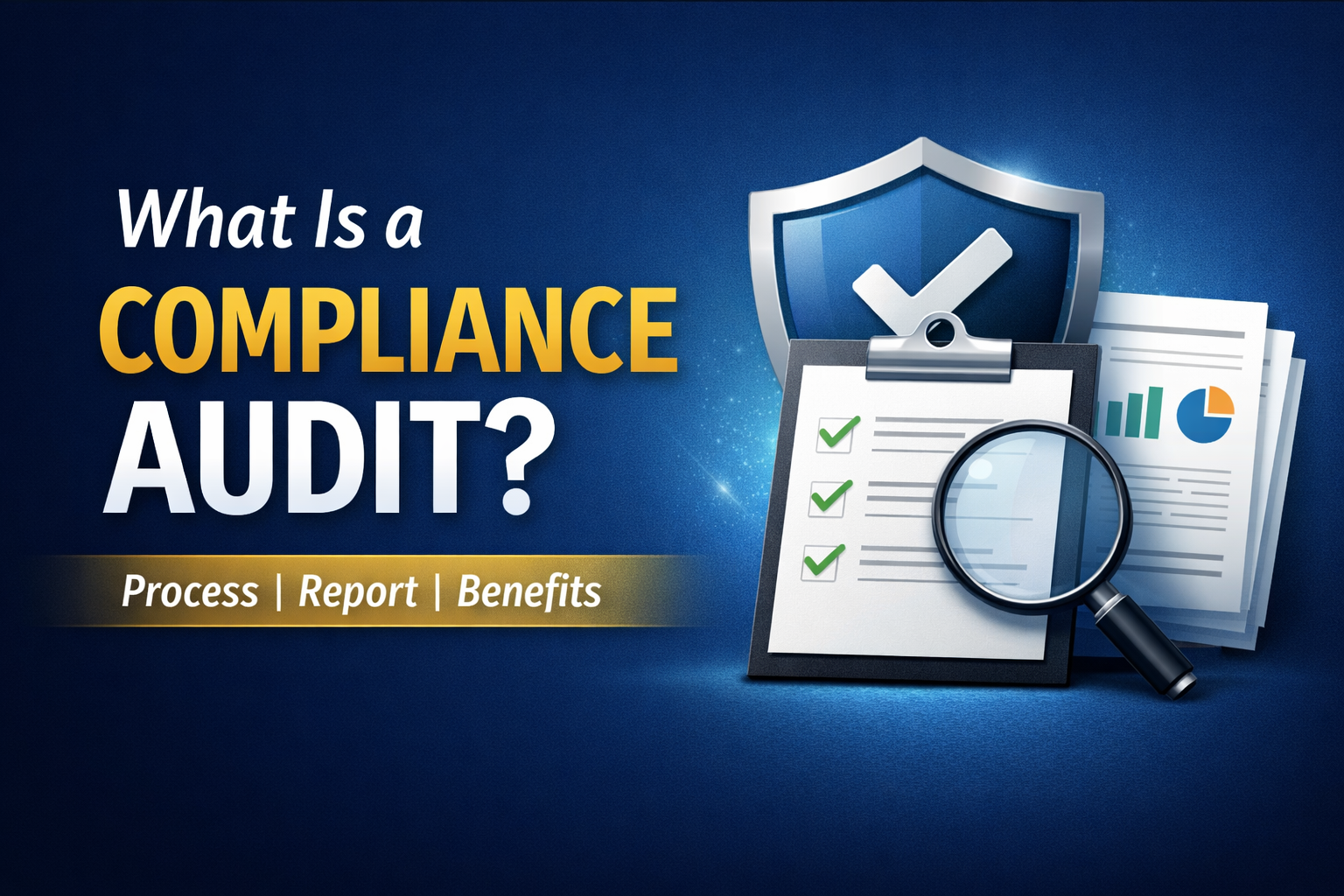
What Is a Compliance Audit?
A compliance audit is a systematic, objective evaluation of an organization to assess whether it complies with applicable laws, regulatory requirements, internal policies, and recognized industry standards. Instead of a formality that should just be ticked off, it becomes a critical step that determines whether the business is acting responsibly, ethically, and legally.
A compliance audit should not just be about finding fault. It seeks to identify deficiencies before they lead to litigation, financial losses, or reputational damage. By evaluating such processes, documentation, and internal controls, organizations can proactively address weaknesses and strengthen their governance framework.
A typical compliance audit involves:
- Examination of policies, contracts, and operational records
- Interviewing key individuals to gain an understanding of processes and responsibilities
- Conducting on-site inspections where necessary
- Evaluation of internal control systems and monitoring mechanisms
The findings are summarized in an audit report, including observations, risk areas, identified deficiencies, recommendations for improvement, and a corrective action plan.
Fundamental Purposes of a Compliance Audit
While the exact goals will differ depending on the industry or regulatory environment, most compliance audits are intended to meet four overarching objectives:
Evaluate Internal Controls
Evaluate the efficiency and effectiveness of systems established to ensure compliance with laws and regulations.
Detect and Prevent Non-Compliance
Spot deviations early enough to prevent exposure to penalties and litigation and to preserve business continuity.
Measure Adherence to Standards
Identify whether the organization complies with specific audit criteria, regulatory requirements, and industry best practices.
Identify Gaps and Weaknesses
Point out structural or process deficiencies and propose actionable remedies.
Protect Organizational Integrity
Show transparency and accountability to reinforce stakeholder trust.
Together, these aims reduce regulatory pressures while maintaining its trustworthiness with clients, investors, regulators, and employees.
What is a Compliance Audit Report?
The audit report is a formal document that communicates the results of the compliance audit. The audit report provides an unequivocal, fact-based assessment of whether the organization met its compliance obligations over a defined period.
This report typically includes:
- Audit scope and objectives
- Areas reviewed
- Key findings and observations
- Risk implications
- Recommendations for improvement
- An action plan with clear timelines and who is responsible for what
The report serves as a diagnostic assessment tool for management and provides a path for leadership to make intelligent, strategic decisions regarding governance, risk management, and compliance.
How do we conduct a compliance audit? A compliance audit reviews key areas.
A full compliance audit generally entails the assessment of the following areas:
Regulatory Compliance
The audit assesses the organization's compliance with relevant laws and regulations that govern the industry in which it operates. These include labor laws, tax rules, environmental regulations, data protection laws, and other legal compliance requirements.
Internal Policies and Procedures
Internal Policies and Procedures evaluate compliance with protocol, reporting hierarchy, approval process, and method of dispatch or execution.
Industry Standards and Best Practices
State of the Art—Industry leaders present comparisons of organizational processes and benchmarks to ensure that the entire organization maintains competitiveness and operates at a high level of operational excellence.
Risk Management Framework
The framework examines the extent to which the organization identifies, evaluates, and mitigates risks related to noncompliance. This involves examining internal control safeguards and controls.
Advantages of Doing a Compliance Audit
A properly conducted compliance audit provides tremendous strategic and operational benefits:
Early Risk Detection
Early risk detection involves identifying legal, financial, and operational risks as they emerge in a business process, ensuring they do not escalate or increase long-term risk exposure and the cost of correction.
Legal and Statutory Assurance
Regular audits ensure that you comply with applicable legislation to mitigate the risk of fines, penalties, and regulatory action by the Auditing regulatory body.
Improved Internal Processes
Through auditing, they expose non-value-adding workflows, gaps in documentation, and obsolete processes, facilitating process optimization.
Enhanced Trust and Credibility
You instill greater confidence among clients, investors, regulators, and employees in organizations that demonstrate regulatory discipline.
Stronger Data Governance
Information management practices that address data security minimize breaches by ensuring sensitive data is handled securely.
Increased Operational Efficiency
Eliminating unnecessary procedures and bottlenecks empowers the team to enhance performance and optimize resource utilization.
Reduced Financial Liabilities
There are far worse repercussions for companies that fail to comply than lawsuits, exposure to fraud, and other unforeseen financial problems.
Culture of Accountability
Regular audits strengthen accountability at all levels within the organization and, in turn, foster respect for recordkeeping and ethical conduct.
Informed Decision-Making
This level of audit granularity helps leadership determine which risks to address first and how to address them, enabling strategic planning for sustainable growth.
Readiness for Expansion
Companies with a robust compliance framework are better prepared for certifications, partnerships, and scaling.
Essential Compliance Audit Requirements
However, to have a productive compliance audit, some basic elements need to be present:
Regulatory Expertise
Auditors need to know a lot about codes and have a strong understanding of regulatory changes.
Clearly Defined Objectives
Before aligning with the organization's priorities, define the audit scope, objectives, and areas of interest.
Structured Audit Plan
An audit plan should lay out the methodology, scheduling, resource allocation, and documentation procedures.
Risk-Based Approach
A risk assessment enables you to prioritize where your compliance exposure is highest.
Documentation Review
The documentation review involves scrutinizing all relevant records, such as policies, contracts, financial statements, and operational logs, to ensure their accuracy and completeness.
Guidelines for the effective implementation of a compliance audit are essential.
Compliance audits should follow a set of guidelines to achieve meaningful results, including
Establish Clear Audit Criteria
Determine the laws, regulations, internal policies, and industry standards that will guide the performance assessment.
Analyze Findings Systematically
Look for patterns, systemic vulnerabilities, and fraudulent root causes.
Evaluate Impact
Evaluate the impact of compliance gaps on the organization's operational continuity, financial performance, and reputation.
Communicate Transparently
Develop a comprehensive audit report and communicate the results to management, audit committees, and other stakeholders.
Compliance Audit Policy and Procedures
The compliance audit policy ensures consistency in maintaining high compliance standards throughout the organization. It guarantees consistent reliability, straightforwardness, and responsibility in all tasks.
Policy Objectives
- Ensure compliance with laws and regulations.
- Identify and mitigate compliance risks.
- Foster organization-wide standards of ethical behavior.
- Assure stakeholders about governance practices.
Implementation Measures
- Conduct periodic compliance audits.
- Conduct employee awareness and training programs.
- Revise policies periodically in response to regulatory changes.
- Enforce disciplinary measures for non-compliance.
Compliance policies should be adhered to, and non-adherence may lead to corrective action, disciplinary procedures, or termination (up to and including termination), depending on the severity of the violation.
Building a Culture of Compliance
It is not a process of regulation but a long-term investment in sustainability—a compliance audit. Integrating compliance into the organization's culture transforms it from a mere afterthought to an integral part of business operations.
By embedding compliance audits across statutory requirements, factory laws, payroll systems, vendor due diligence, establishment conditions, and approval centralization, firms are setting themselves up for sustainable growth and reducing risk exposure.
Prioritizing transparency, accountability, and regulatory discipline, organizations can enhance governance and operational performance while building long-lasting stakeholder trust.
Frequently Asked Questions
- Payroll processing
- Statutory compliance (PF, ESI, PT, etc.)
- Recruitment & onboarding
- Employee record management
- Performance tracking
- Exit formalities
- Provident Fund (PF)
- Employee State Insurance (ESI)
- Professional Tax (PT)
- Labour Welfare Fund (LWF)
- Shops & Establishment Act compliance
Including monthly returns and audits.
Yes. You can initiate FnF from the HR panel, and it will calculate unpaid days, encashed leaves, notice period deductions, etc., and generate settlement reports.
Yes. Our payroll solutions are designed to manage compliance and statutory filings for large employee bases.
Yes. A good HRM software automates payroll calculations and ensures compliance with Indian labor laws. It manages PF, ESI, professional tax, income tax deductions, and statutory reports, reducing errors, penalties, and manual workload for small business owners.
Yes, most payroll outsourcing companies manage PF, ESI, TDS, professional tax, and labor law compliance.