
Running a business in India is not just about managing your employees, serving your customers, and making money. Every business also has to comply with the relevant laws, regulations, and reporting requirements. These compliance legal requirements help businesses keep proper records, ensure employee rights are protected, and operate responsibly.
For business owners, HR managers, and employers, keeping track of regulatory changes can be difficult. Requirements can range based on the size, industry, location, and number of employees of the company. Not complying with a required filing or legal obligation can result in penalties, disputes, and undue risks for the business.
In this guide, we cover the key areas of business compliance in India, how to build a compliance checklist that works, and how professional HR and payroll solutions can help businesses comply with their obligations.
What Are Compliance Legal Requirements?
Compliance legal requirements are the laws, rules, regulations, and official obligations that a business must follow in its operations. They have various sections, including employment, payroll, tax, workplace safety, employee welfare, and company administration. An employer, for instance, may be required to keep employee records, ensure timely payment of salaries, make all applicable statutory contributions, and file necessary returns within the prescribed deadlines.
It is through this knowledge of legal compliance requirements in India that businesses can identify their obligations and put in place processes to ensure compliance on an ongoing basis.
Why Is Legal Compliance Necessary for Companies?
Legal compliance is important for all businesses, no matter how small. A well-defined compliance system prevents fatal errors and makes everyday work go more smoothly.
Here are some key takeaways:
Legal Risks Are Mitigated: Complying with relevant legislation protects companies from fines and lawsuits due to non-compliance.
Supports Employee Welfare: Proper wage payment, statutory benefits, and workplace policies contribute towards employee welfare.
Enhances record management: Proper documentation facilitates audit, inspections and reporting.
Enhances business credibility: Ethical business practice may subtly contribute to improving relations with employees, customers and business partners.
Facilitates growth: Established compliance processes facilitate management of a growing workforce and new business locations.
You shouldn’t adopt a compliance-to-the-inspection mentality. It should be ingrained in how you run your business.
Key Compliance Legal Obligations for Businesses in India in 2026
The following are some areas to focus on when you are designing a business compliance program.
1. Labour Law Compliance
Compliance with labour laws is even more crucial for firms with permanent employees, contractual workers or outsourced manpower.
India’s four Labour Codes have been notified on 21st November, 2025. According to the Ministry of Labour and Employment, Central Rules under the four Codes were notified on 8th May, 2026. Enterprises should evaluate the specific relevant provisions, regulations and requirements of the states where they operate. Official government update.
Key areas to review include:
-
Applicable minimum wage and timely wage payment requirements.
-
Working hours, overtime, and leave provisions.
-
Employee welfare and social security obligations.
-
Workplace health and safety requirements.
-
Employment records and statutory reporting.
-
Applicable requirements for contract labour and outsourced workers.
The exact obligations depend on the establishment, workforce, industry, and applicable government rules. Businesses should verify their requirements rather than assume that one checklist applies to every employer.
2. HR Compliance and Employee Documentation
HR compliance involves following applicable employment rules and maintaining proper employee-related documentation.
A well-organized HR process helps businesses manage employee information and maintain consistent workplace practices.
Important records and processes may include:
-
Appointment letters and employment agreements.
-
Employee identification and joining documents.
-
Attendance, working hours, and leave records.
-
Salary details and payroll records.
-
Leave policies and applicable workplace policies.
-
Resignation, exit formalities, and full-and-final settlement records.
Employers should also review applicable requirements relating to workplace harassment prevention, including the Prevention of Sexual Harassment (POSH) Act, 2013, where relevant.
Keeping employee records accurate and updated makes it easier to respond to audits, employee queries, and regulatory requirements.
3. Payroll and Social Security Compliance
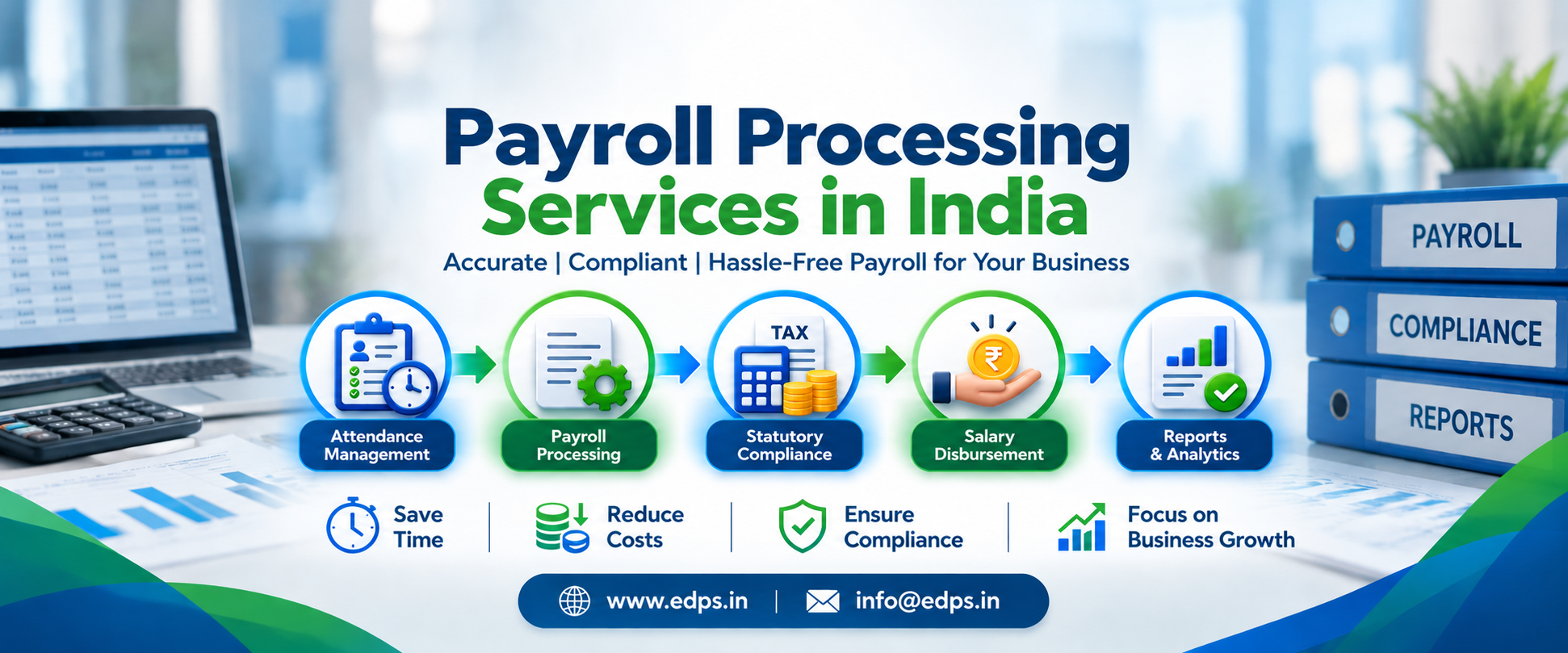
Payroll compliance is another important part of the legal compliance requirements in India. Employers must ensure that salary calculations, deductions, and applicable statutory contributions are handled correctly.
Depending on eligibility and applicability, payroll processes may involve:
-
Correct calculation and timely payment of salaries.
-
Applicable provident fund (EPF) contributions.
-
Employees' State Insurance (ESI) contributions where applicable.
-
Tax deduction at source (TDS) and related reporting.
-
Applicable professional tax obligations.
-
Statutory bonus, gratuity, and other employee benefits, where applicable.
-
Timely submission of required returns and records.
Errors in payroll can affect both employees and employers. For this reason, businesses should regularly verify salary structures, employee data, statutory calculations, and filing deadlines.
Professional payroll support from providers such as EDP Services can help businesses organize payroll processes and coordinate routine payroll administration.
4. Company, Tax, and Financial Compliance
Apart from HR responsibilities, businesses may have company law, taxation, and financial reporting obligations.
These can include:
-
Filing applicable annual returns and financial statements.
-
Maintaining accounting records and supporting documents.
-
Filing income tax returns and meeting applicable advance tax obligations.
-
GST registration, returns, and payment requirements, where applicable.
-
Maintaining invoices and records of business transactions.
-
Renewing applicable registrations, licences, and permits.
The requirements depend on the business structure, turnover, activities, and relevant thresholds. Companies, partnerships, proprietorships, and other entities may have different obligations.
Businesses should work with qualified accounting or legal professionals when determining their specific filing and reporting responsibilities.
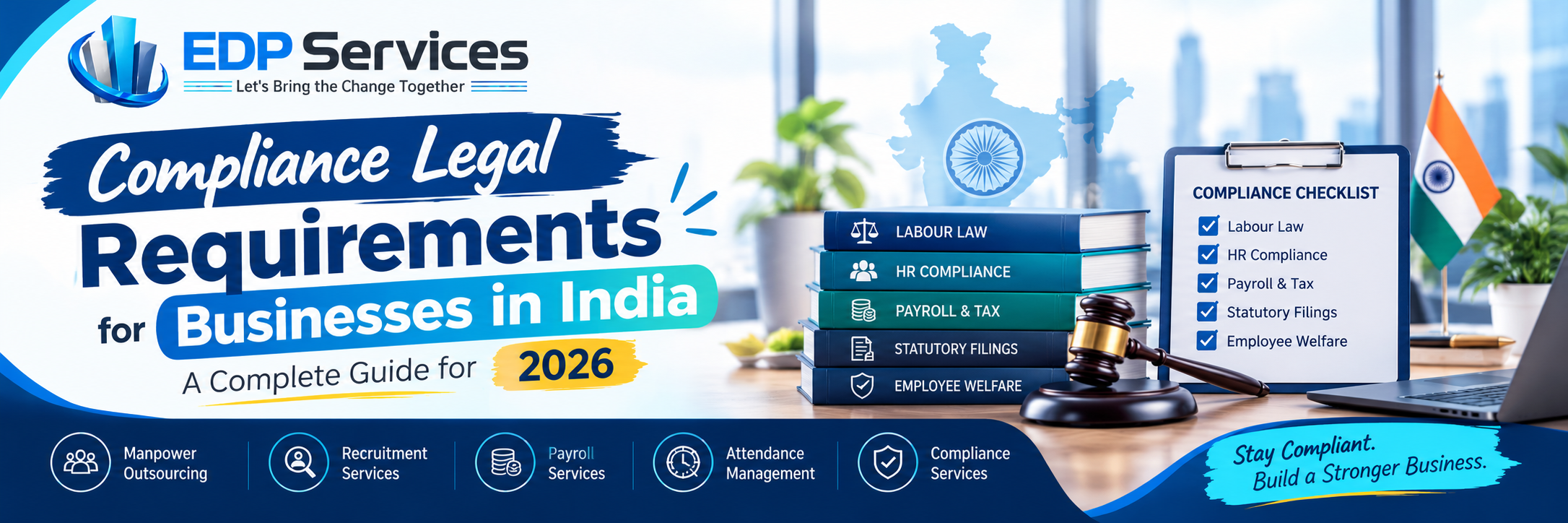
Business Compliance Checklist for 2026
A practical business compliance checklist helps businesses track their obligations, deadlines, and supporting documents in one place.
Use the following checklist as a starting point:
-
Review applicable registrations, licences, and permits.
-
Verify employee records and employment documentation.
-
Check attendance, leave, and working-hour records.
-
Review salary calculations and wage payment timelines.
-
Verify applicable EPF, ESI, TDS, and other statutory obligations.
-
Track required tax returns and company filings.
-
Review workplace safety and applicable employee protection policies.
-
Maintain records of statutory payments, returns, and acknowledgements.
-
Monitor changes in central and state regulations.
-
Assign responsibility for each compliance task and deadline.
This checklist should be customised according to your business. It is a planning aid, not a complete list of every legal obligation.
Common Compliance Mistakes Businesses Should Avoid
Even businesses with established HR teams can overlook important compliance tasks. Common mistakes include:
- Missing deadlines: Late filings or payments may result in interest, penalties, or other consequences.
- Retaining incomplete records: It would be difficult to get verification for attendance registers, salary disbursement documents, and employment documents that are incomplete.
- Employing out-of-date methods: Payroll calculations, policies, or reporting methods might have to be modified as a result of legal or regulatory changes.
- Disregarding state-specific differences: Businesses that span multiple states may find that they have to contend with a patchwork of varying rules and procedures.
- Treating outsourced work as automatically compliant: Engaging a service provider doesn’t necessarily absolve a business of all its legal requirements. Employers and principal employers also should appreciate what they owe and keep an eye on what they must do.
Regular reviews and clearly defined responsibilities can mitigate these risks.
How Professional HR and Compliance Services Can Help
Managing HR administration, payroll, attendance, and compliance simultaneously can put pressure on internal teams. Professional support can help businesses organise routine processes and improve documentation.
EDP Services provides workforce-related solutions, including manpower outsourcing, payroll services, time and attendance management, recruitment, and compliance services.
Depending on the agreed scope, professional support can assist businesses with employee data management, payroll coordination, attendance records, compliance tracking, and routine administrative activities.
Businesses should clearly define responsibilities with their service provider and verify that applicable statutory obligations are being met. For specialized legal interpretations, audits, or complex compliance matters, qualified legal and tax professionals may also be required.
Conclusion
Understanding compliance legal requirements is essential for businesses that want to manage employees responsibly and operate with confidence. From labour law compliance and employee documentation to payroll, taxation, and company filings, each applicable obligation needs proper planning and regular monitoring.
Start by preparing a business compliance checklist, assigning responsibilities, reviewing deadlines, and keeping records organized. Most importantly, review legal updates regularly because requirements can change and vary across states and industries.
EDP Services can support businesses with workforce administration, payroll, attendance management, manpower outsourcing, and related compliance processes. Contact EDP Services to discuss your workforce management requirements and get your free consultation.
Disclaimer: This blog provides general information and is not legal, tax, or professional advice. Compliance obligations vary by business and jurisdiction. Verify current requirements with the relevant government authorities or qualified professionals before taking action.